
OKINAWA-While the world watches mounting military tensions in the South China Sea, another,
The situation increases the risk of an accidental confrontation — and could draw other countries, like the United States, into a conflict. It’s a topic President Trump will likely bring up with Chinese President Xi Jinping at his Mar-a-Lago estate this week.
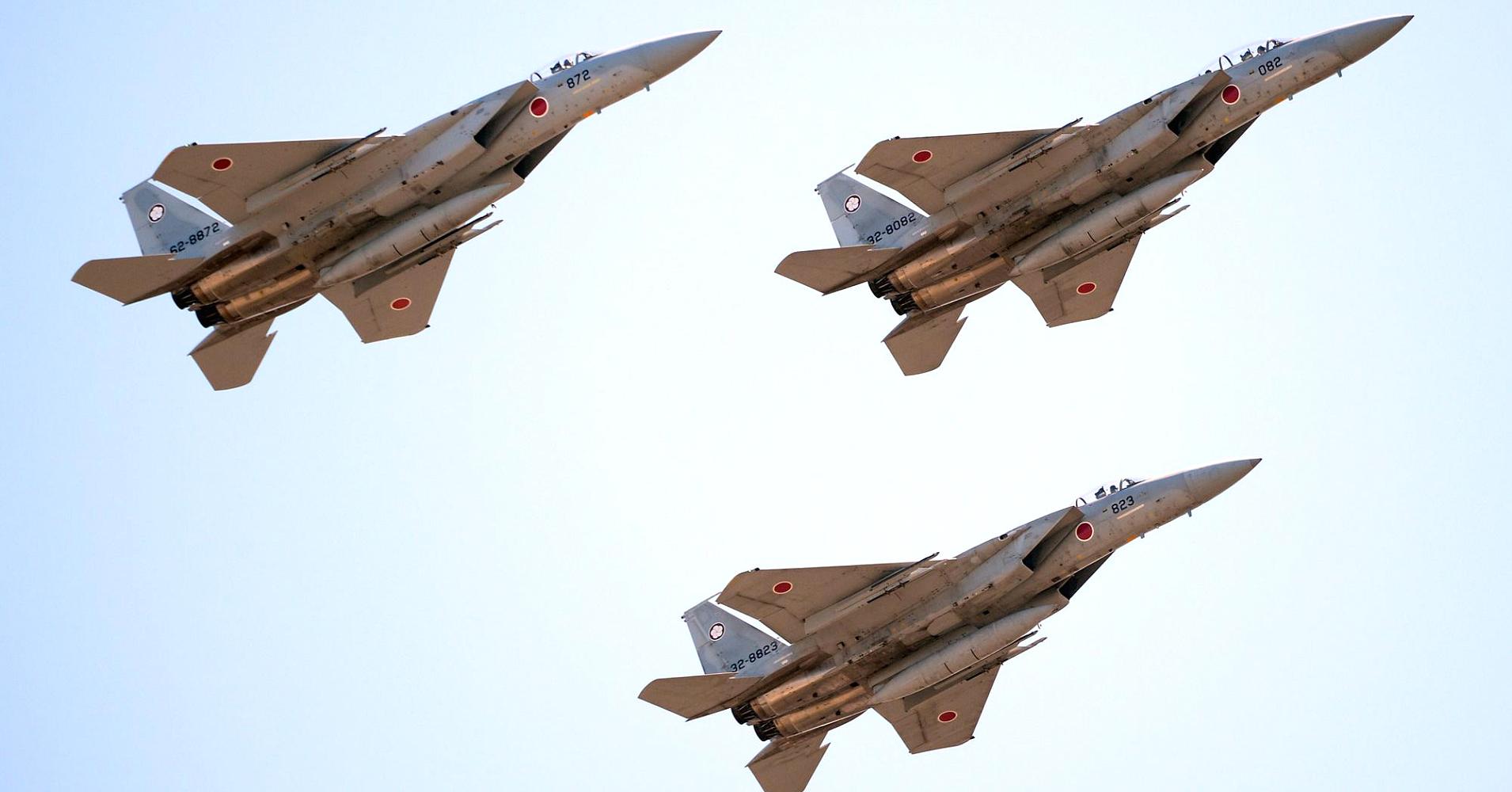
From the departure lounge at Naha International Airport on the Japanese island of Okinawa, passengers can easily see what’s going on. Between the regular comings and goings of commercial airliners, first one, then two, then two more F-15 fighter jets streak down the runway that Japanese Air Self Defense Forces (JASDF) share with Naha’s regular airline traffic. Rising rapidly from the tarmac, the quartet of combat aircraft heads out to sea to intercept yet another Chinese military aircraft — usually other fighter jets, sometimes a bomber or reconnaissance plane — flying into or close to Japanese airspace.
Such airborne intercepts are on the rise over the East China Sea, with Japan now averaging roughly two intercepts of Chinese aircraft per day since April of last year, nearly twice as many as in the 12 months prior. In response to the uptick in Chinese military activity in airspace Japan considers its responsibility, JASDF has doubled the number of fighter aircraft at its Naha Air Base, adding a second squadron of F-15Js — the Japanese version of the U.S.-made F-15 fighter jet — in January of last year.
The increased intrusion of Chinese military air traffic into airspace protected by the JASDF, along with the uptick in aerial intercepts, heightens the risk of an accident or misunderstanding between the two militaries — a situation that could rapidly escalate, given the already heightened military tensions in the region. Such an incident, intentional or not, could quickly spiral, potentially drawing U.S. forces in the region into the fray.