

AFP | Getty Images
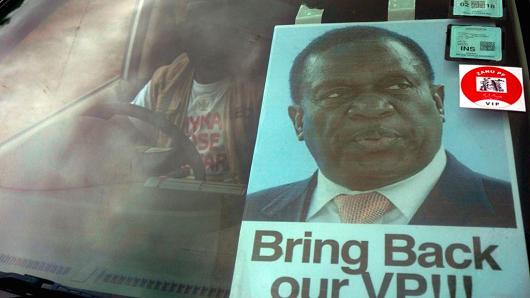
A man takes part in a demonstration demanding the resignation of Zimbabwe’s president with a sign featuring deputy president Emmerson Mnangagwa in the windshield of his car on November 18, 2017 in Harare.
A leading guerrilla fighter during Zimbabwe’s War of Liberation in the 1970s, Mnanagwa’s powerful hand in government following independence saw him rise to top spymaster of the country’s Central Intelligence Organization. In the 1980s, he oversaw the Gukurahundi massacres, a civil conflict during which thousands of Zimbabweans from the ethnic Ndele group were killed. Still feared by many and largely believed to be responsible, he has denied any responsibility.
Veterans of the liberation war have long dominated Zimbabwean politics. Mnangagwa’s leadership of the Joint Operations Command kept him in good stead with the country’s security forces, whose support paved the way for his impending accession to the presidency.
A note of caution
“The coup is unlikely to bring about a new democratic era. There are significant uncertainties over, for instance, a transitional government and a timeframe for elections,” Alisha Patel, Africa analyst at AKE, told CNBC on Friday.
“Before talk of IMF funding and a resumption of ties with Western donors can even begin, the victors of this coup will need to restore the constitutional order. On top of this, they face a divided party, an economic crisis, and a political context which has stifled, rather than encouraged, democracy.”
Others are more optimistic. Analysts have suggested major economic growth potential for the southern African nation following years of damaging economic mismanagement and international sanctions. Zimbabwe is one of the world’s top producers of platinum and lithium, among other highly valued extractives. Currently, poverty exceeds 70 percent and Zimbabwe ranked 154 out of 176 nations in Transparency International’s 2016 Corruption Perceptions Index.
“Mnangagwa’s apparent support for pro-business reforms are cause for cautious optimism after decades of mismanagement under Mugabe,” said Ryan Turner, analyst at Protection Group International.
‘People are





