

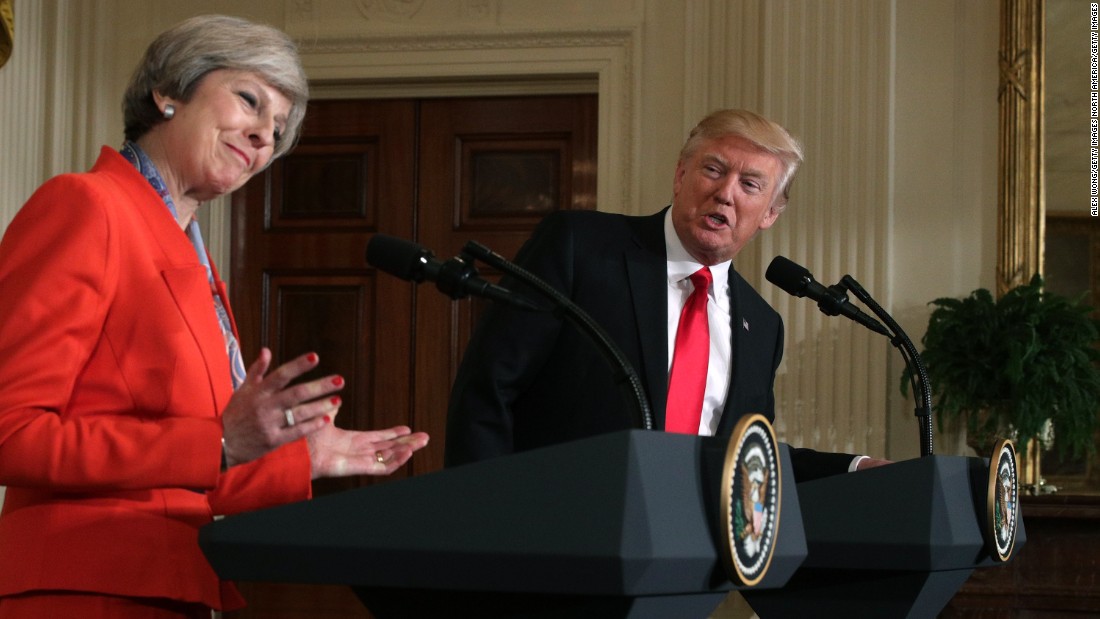
As it turns out, May and the President have more in common than she might claim: on authoritarian instincts, they are kindred spirits.
The proposed Espionage Act would update the Official Secrets Act, which was narrowly targeted at breaches of national security.
The new law is supposedly needed for the digital age, yet is so broad in scope it would threaten anyone who leaked government information and those who handled it with jail terms of up to 14 years.
Even though the proposals are at an early stage, they need to be taken seriously. As British Home Secretary, May built a reputation as a “lock them up” authoritarian. Now she seems to have ambitions to be the most illiberal Prime Minister to have ever inhabited 10 Downing Street. It is one thing to get tough on crime; it is quite another to view journalists and whistleblowers as potential criminals.
What is worrying is that the British government probably sees the Espionage Act as something that would have public support.
This creeping incursion into a free press is fast turning into open season on the media — and that’s just fine in the eyes of politicians like Trump and May.
Politicians in the UK and US are using the failure of the media to get election results right — from the 2015 British General Election to the Brexit referendum and Trump’s victory — as a license to turn the term “fake news” into a weapon to target legitimate journalism.
In the House of Commons last week, May repeated Kellyanne Conway’s expression “alternative facts,” while her opposite number, Jeremy Corbyn, used a Trump favorite “fake news” in an interview with the BBC — the national broadcaster — rejecting reports that he was considering standing down as leader of the Labour Party.
There is no denying that “fake news” exists, on dubious websites shared on Facebook, but when the term is used to describe legitimate, professional journalism based on authoritative, multiple sources, the public should be very worried indeed.
If the “mainstream media” is maligned as an untrustworthy source, where will voters get their information? From those very same dodgy “fake news,” websites which can proliferate unregulated? From politicians themselves, unchecked and unaccountable?
The UK Espionage Act would, of course, go far beyond criticizing legitimate reporting as “fake news,” as bad as that is. It would seriously impinge the media’s ability to expose corruption and wrongdoing by those in authority.
Never in modern times has press freedom been so under threat — and never before has it been so vital for democracy.






