
Trump will also have his first session with Russian President Vladimir Putin after the U.S. leader called Russia’s behaviour “destabilising”, a description the Kremlin rejected.
Merkel, who is running for a fourth term in a September election, stressed on Thursday that she was committed to an open international trading system, despite fears of U.S. protectionism under Trump.
“We’re united in our will to strengthen multilateral relations at the G20 summit…We need an open society, especially open trade flows,” she said in Berlin.
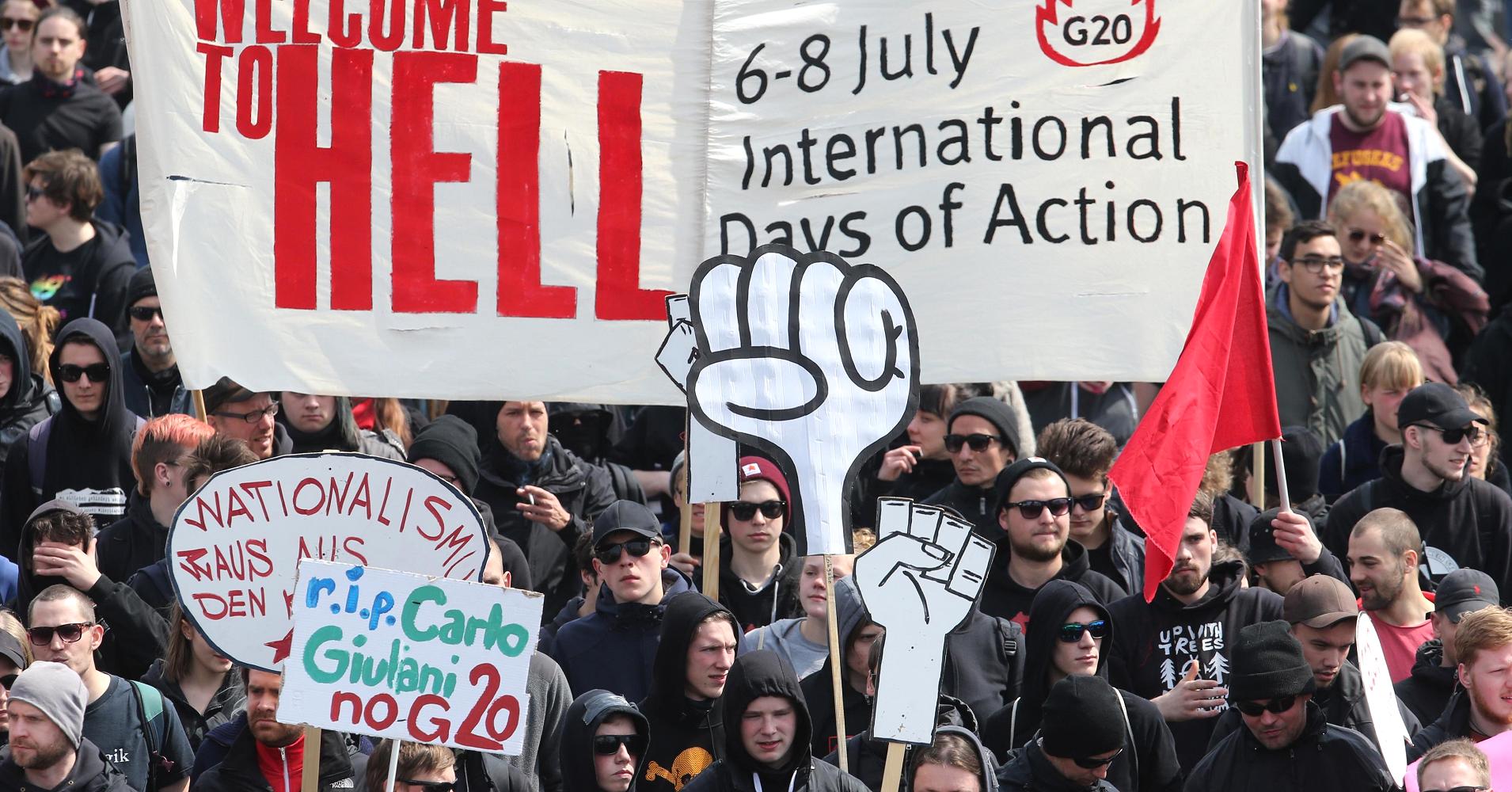
Several small demonstrations in Hamburg this week have passed off relatively peacefully. On Wednesday more than 7,000 mainly young and beer-drinking revelers staged a march waving placards denouncing capitalism and G20 leaders.
But a fire overnight at a luxury Porsche car dealership in the north of the city that damaged eight vehicles could be a foretaste of what’s to come. Police said they were investigating whether it was an arson attack linked to the summit.
Locals are unhappy with Merkel’s decision to hold the summit in the centre of Germany’s second-largest city to show healthy democracies could tolerate protests, as they are worried about property damage by leftist militants.
After Hamburg authorities curbed camping by protesters, the St Pauli football club offered 200 sleeping places in their stadium as “a clear signal for human rights, freedom of expression and the right to demonstrate”.
Up to 20,000 police officers will be on duty to watch over the main demonstration, dubbed “Welcome to Hell” by the alliance of anti-capitalist groups who organised it.
Protesters say the G20 has failed to solve many of the issues threatening world peace, including climate change, worsening inequality and violent conflicts.”