

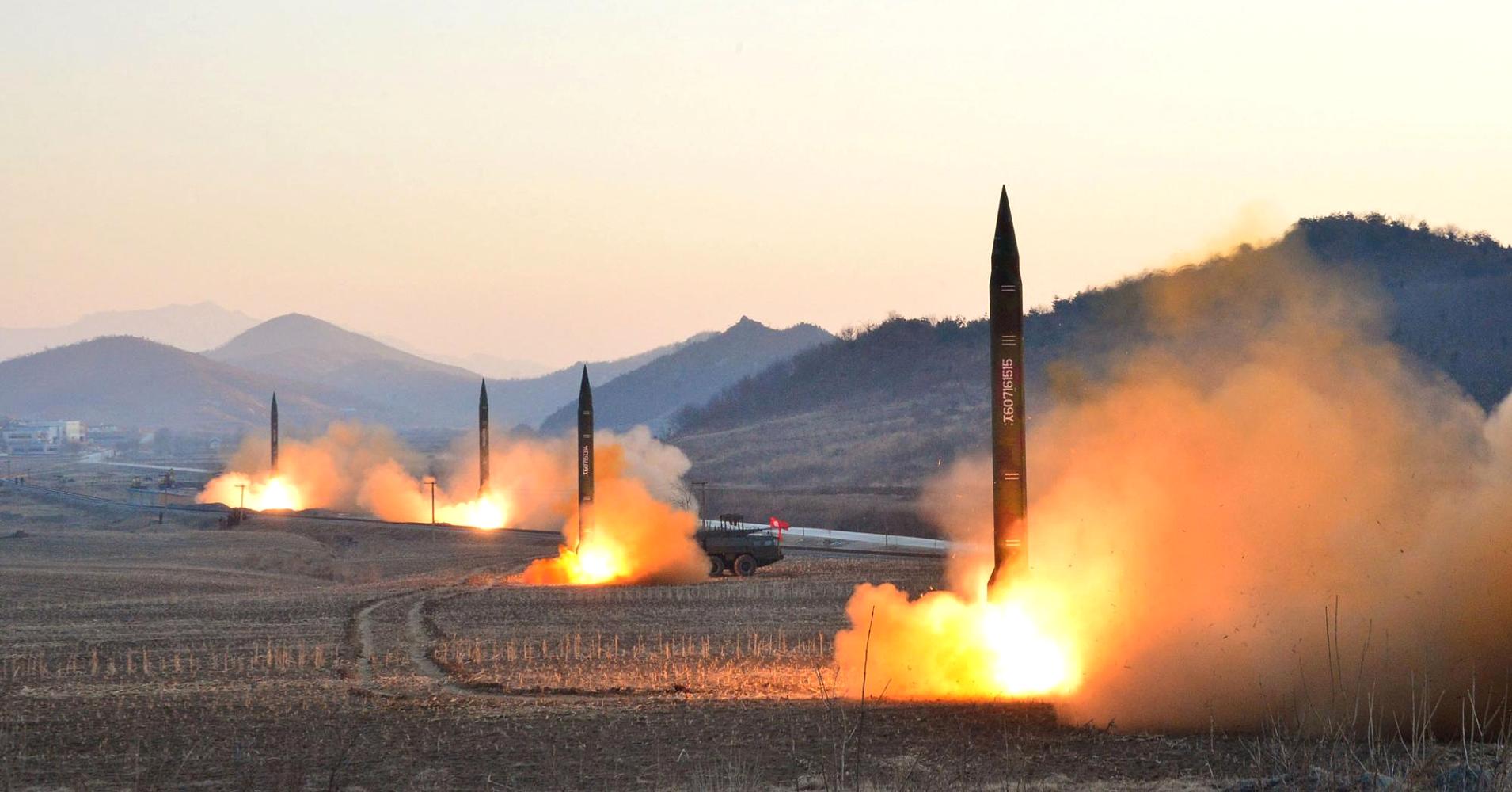
China, North Korea’s main ally, publicly opposes Pyongyang’s nuclear plans and announced on February 22 it would suspend all coal imports to the country to increase the pressure on the nation’s regime. However, Beijing reacted angrily to the U.S. deployment of THAAD as the radars could conceivably cover large parts of Chinese territory, including its capital city.
Tensions between the world’s largest economies had already been inflamed by the new U.S. administration as Trump, who previously accused China of being a currency manipulator, had suggested that if China were unable to solve the problem caused by North Korea then the U.S. should act to make trade “very difficult” for Beijing.
“Any remarks made by Trump should be taken with a grain of salt. However, the combination of more hawkish security advisors in the U.S. administration and North Korea’s progression in developing an Inter-Continental Ballistic Missile (ICBM) that could reach the US with a nuclear warhead points to a rising risk of a military confrontation,” von Mehren added.
A White House internal review of strategy on North Korea, which began in mid-February, featured both military force as well as regime change in order to neutralize Pyongyang’s nuclear-weapons threat, according to a Wall Street Journal report citing sources which could not be verified by CNBC.






