
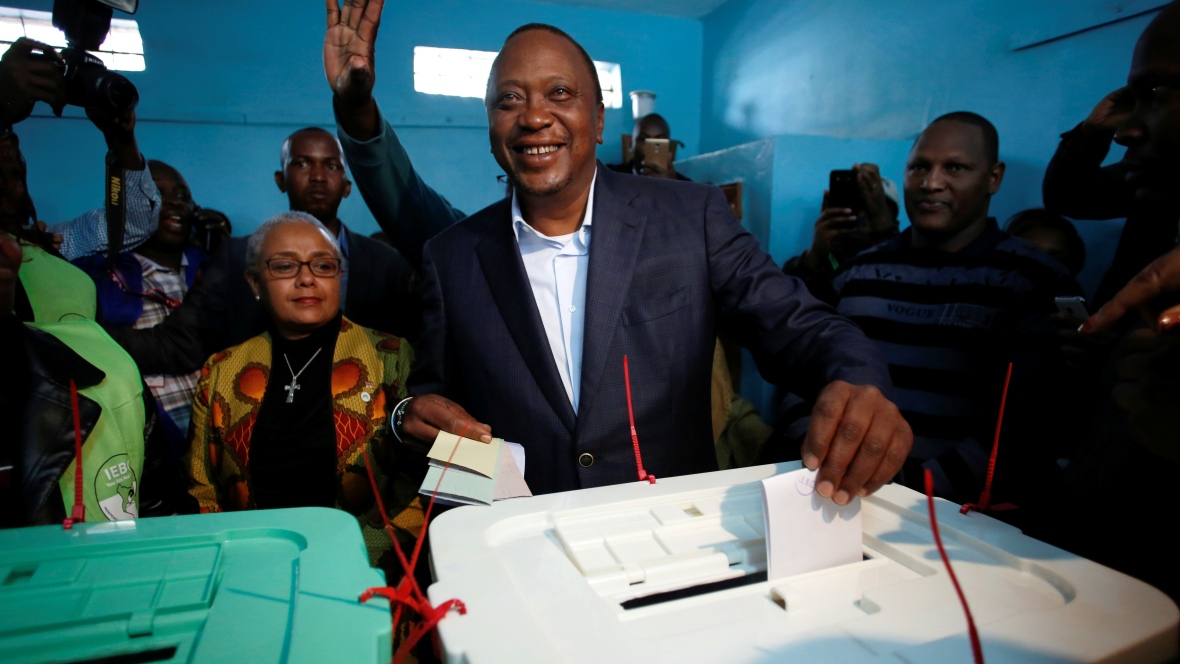
Uhura Kenyatta has been re-elected as president in Kenya, the electoral commission in the East African country announced Friday evening.
Wafula Chebukati, chair of the Independent Electoral and Boundaries Commission, said Kenyatta earned just over 54 per cent of the vote with a turnout of over 19 million. He expressed confidence the election was “credible, fair and peaceful.”
Kenyatta, 55-year-old leader of the Jubilee Party, wins a second term in office.
Just before the announcement, a senior official from the opposition said it “wouldn’t be a party” to a process he characterized as a “charade” because its concerns had not been addressed by the electoral commission.
“We raised some very serious concerns, they have not responded to them,” said James Orengo, one of the lieutenants for candidate Raila Odinga, who tallied 44.7 per cent of the vote.
Earlier in the day, Kenya’s opposition coalition the National Super Alliance had said it would accept the result of this week’s presidential vote if the election commission granted it access to see raw data on its computer servers.
International monitors questioned
The move was a significant climb-down from its previous position when the coalition rejected figures released by the commission and said Odinga should be declared president.
The opposition has continually made allegations of corrupted ballots since Monday’s vote, but several international monitors from a group that included former U.S. secretary of state John Kerry, former South Africa president Thabo Mbeki and officials from the European Union, said they could find no credible evidence to support the contentions.
“When these characters, when you hear their names, they look like heaven,” said Orengo, who questioned the motives of the visiting monitors.
Orengo did not appeal for calm in disputing the result.
“Nobody should think that this is the end of the matter,” he said. “Going to court is not an alternative.”
Odinga questioned the results of the two previous elections, and many Kenyans feared the dispute would lead to violent protests after more than 1,000 people were killed following the contested 2007 vote.
Those fears were heightened in the run-up to the election, when senior electoral official Chris Msamdo was found dead, the victim of an apparent homicide.
At least four have died this week since the vote as a result of violence thought to be related to election protests.