
Questions have been raised about Trump’s choice of his son-in-law, Jared Kushner, who entered the White House with no government experience, to oversee Middle East peace efforts, along with Trump’s longtime business lawyer, Jason Greenblatt, as on-the-ground envoy.
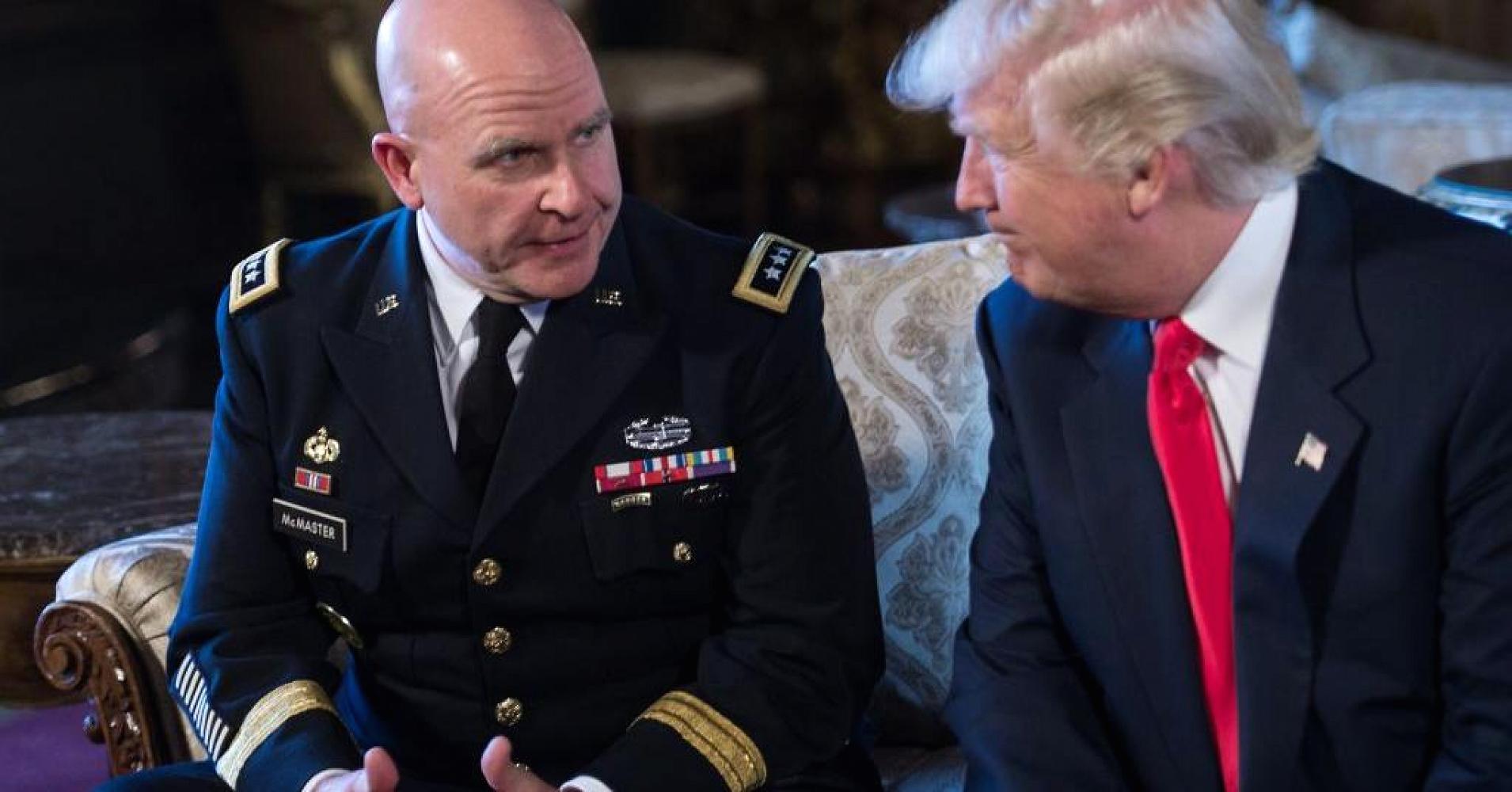
A decorated Army general, McMaster said “arduous circumstances,” including Islamic State militancy and a growing regional threat from Iran “may allow us to resolve what some have regarded as intractable problems, problems like disputes between Israel and the Palestinians.”
“President Trump has taken a typically unconventional and fresh approach to this problem,” McMaster said in a rare public speech.
Having campaigned on an “America First” platform, Trump has acted forcefully against Syrian President Bashar al-Assad with no clear policy prescription and engaged in brinkmanship with North Korea over its nuclear and missile programs.
The White House has been vague about what Trump hopes to accomplish with Abbas. U.S.-brokered peace talks collapsed in 2014.
A White House official, speaking on condition of anonymity, said Trump would press the Palestinian leader to halt payments by the PLO to families of militants jailed by Israel and to stop anti-Israel incitement by Palestinian media.
The administration seeks to enlist Israel’s Sunni Arab neighbors, who share Israeli concerns about Shi’ite Iran, to help rejuvenate Middle East peacemaking.
Abbas under pressure at home
Abbas, who governs in the West Bank while Hamas militants rule Gaza, is under pressure at home to avoid making major concessions to Trump, especially with an ongoing hunger strike by hundreds of Palestinian prisoners held by Israel.
Nabil Abu Rdainah, a spokesman for Abbas, said the Palestinian leadership “is committed to a political track that leads to a real peace.”
But Palestinian officials say it will be hard for Abbas to return to the negotiating table without a long-standing pre-condition of a freeze on Jewish settlement expansion on land Israel occupied in 1967 which Palestinians want for a state.
Trump’s pro-Israel rhetoric during the 2016 election campaign raised concern among Palestinians about whether their leaders will get a fair hearing. He has also been unclear about whether he supports a two-state solution, a bedrock of U.S. policy for decades.
Trump’s promise to move the U.S. Embassy to Jerusalem from Tel Aviv, strongly opposed by Palestinians, has been shifted to the back burner, and he has asked Netanyahu to put unspecified limits on settlement activity.
Trump told Reuters last week: “There is no reason there’s not peace between Israel and the Palestinians – none whatsoever.”