
“Some Chinese officials saw the TPP as part of the new U.S. containment policy,” private bank Brown Brothers Harriman said in a note this week, pointing to similar American alliances with countries surrounding the Soviet Union.
It’s hard not to view China as the main beneficiary of Trump’s decision to pull the U.S. out of the pact shortly after taking office in January, BBH said.
Trump had claimed the broad 12-nation trade deal was a “disaster” that would hurt U.S. manufacturing.
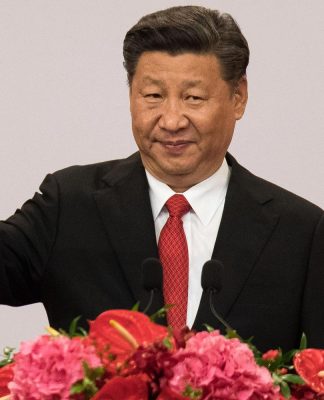
“The U.S.’s apparent retreat from the liberal global order it was instrumental in creating has left a leadership vacuum that also works in China’s interest,” BBH said, noting the mainland’s president, Xi Jinping, can portray himself as a defender of the current multilateral system.
That’s elevated the importance of another regional trade deal, the Regional Comprehensive Economic Partnership.
Spearheaded by China and excluding the U.S, RCEP is expected to enhance Beijing’s influence among its Asian peers.
The mainland is already the biggest trading partner for the bulk of Asian countries, but it’s gradually increasing its political and economic sway by leading projects that impact the region. Those included the Asian Infrastructure Investment Bank and the “One Belt, One Road” infrastructure program.
It’s China’s rising sway that’s making its neighbors nervous.
Kotaro Tamura, an Asia fellow at the Milken Institute and former senator and parliamentary secretary in charge of economic and fiscal policy in Japan, said China’s apparent gain has raised the TPP to the level of a national security concern for his country.
While the TPP had been considered all but dead after Trump’s withdrawal, the 11 nations remaining in the trade partnership agreed in May to pursue a deal without the U.S., examining options for bringing it into force “expeditiously.”
“TPP is a unique asset for Japan to attract and to impact Southeast Asian countries through trade for the benefit of Japanese security,” Tamura said this week.
Without the TPP, Japan would likely need to rely largely on economic aid to gain influence within Southeast Asia, he said.
“If we have the means to have a multilateral trade scheme, it can keep those countries on Japan’s side,” he said, noting that Japan has tried to be among the leaders in reviving the deal.
Others noted that the TPP-11 effort was creating interesting alliances.