
JUNG YEON-JE/AFP/Getty Images
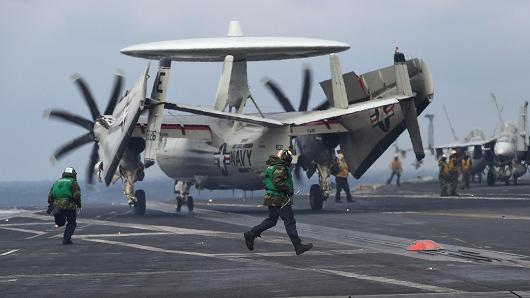
An E-2C Hawkeye lands on the deck of the USS Carl Vinson aircraft carrier during a South Korea-US joint military cxercise in seas east of the Korean Peninsula on March 14, 2017. The Carl Vinson Strike Group is participating in the annual joint Foal Eagle exercise between South Korea and the US.
“Clearly, what the Syrian situation does is illustrate that the Trump administration is willing to use force,” Adrian Mowat, managing director and chief Asian/EM equity strategist at J.P. Morgan, told CNBC on Monday.
The American airstrikes on the war-torn nation took many by surprise. Trump was known for his nonintervention stance on the matter and previously warned against U.S. involvement — in 2013, the Republican tweeted “we should stay the hell out of Syria.”
Now marked down as one of the president’s numerous policy flip-flops, strategists haven’t ruled out the possibility of further U.S. action in Syria, noting Washington’s continued presence in the region.
“Since the missile strike, the U.S. has continued to fly sorties over Syrian airspace. They have been flying F22s, the most advanced fighters you can put in that airspace, to make sure the Syrians don’t respond by turning on their air defense systems or the Russians don’t retaliate,” said Richard Fontaine, president of policy think-tank The Center for a New American Security.
The same heavy-handed attitude applies to Pyongyang, who has been ramping up its nuclear threats in recent months.
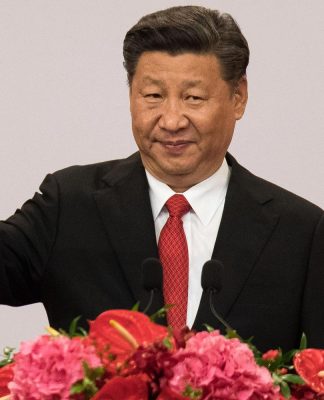
Following a failed ballistic missile launch on March 22 and the firing of four missiles towards the Sea of Japan on March 6, the pariah state test-launched yet another ballistic missile last Wednesday ahead of Trump’s summit with Chinese President Xi Jinping.