

Trump’s schedule included no reference to any such meetings. Shen Dingli, a professor of American studies at Fudan University in Shanghai, said: “Such meetings are very unlikely to happen. Such a move would hinder [Trump’s] agenda to make American great again. This would annoy China, and it doesn’t look like Trump will do this.”
More from Financial Times:
Wall Street warns Trump team of Brexit ‘point of no return’
Bill Clinton’s oratory marries argument and passion
Venezuela’s debt struggle poses more questions for investors
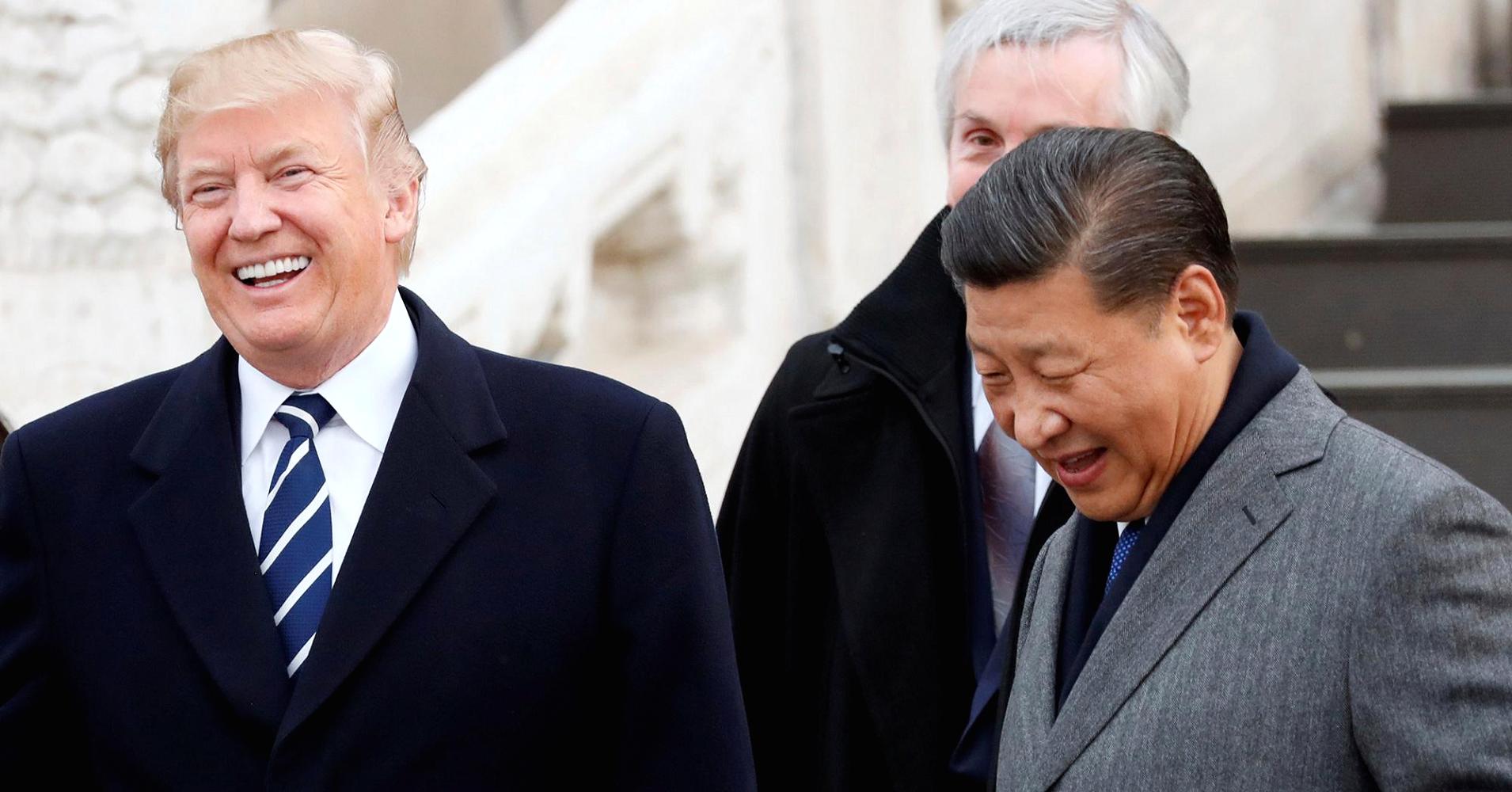
Instead, Trump congratulated Xi on his re-anointment as paramount leader by the 19th Communist party Congress last month, tweeting before his flight to Beijing: “I very much look forward to meeting with President Xi, who is just off his great political victory.” The first item on the itinerary was a tour of Beijing’s Forbidden City, the former imperial residence in Beijing. Trump and First Lady Melania are scheduled to attend a private dinner with Xi and Peng, with more substantive meetings between the two presidents scheduled for Thursday.
The famously smoggy skies in Beijing were uncharacteristically clear for the occasion, while Beijing was under virtual lockdown — the Forbidden City had been shut to tourists since late on Tuesday to prepare for Trump’s visit, many roads were closed, and Beijing was blanketed with a heavy police and military presence.
China–US deals agreed during Trump visit
JD.com, the Chinese e-commerce group, agreed to buy $1.2 billion of U.S. pork and beef over the next three years, one of the biggest deals signed during the state visit on Wednesday.
The agreement includes buying at least $200 million of beef over three years from the Montana Stockgrowers Association, a deal made possible after China lifted a ban on beef exports from the United States in May, one of the few concessions granted to the Trump administration during its first 100-day period of talks with China.
JD will also invest $100 million to build the first beef-processing facilities in Montana to build up its supply chain there.
Separately, Minnesota-based wastewater treatment company Viroment also signed $800 million of deals, to build plants with various partners in China. Aside from individual business deals, many of which were agreed separately to the state visit, no broader trade deal was announced.
Wilbur Ross, the U.S. Commerce Secretary, said that $9 billion in new corporate deals had been signed on Wednesday between Chinese and U.S. companies, with more to come on Thursday. The U.S. trade delegation accompanying Trump is dominated by manufacturing and industrial companies, such as Boeing and DowDuPont.
“Addressing the imbalance in China trade has been the main focus of collaborative discussions between presidents Trump and Xi. Achieving fair and reciprocal treatment for the companies is a shared objective,” Ross said.
However, observers are skeptical that the contracts can make a dent in the US’ $347 billion annual trade deficit in goods with China.
“We are hoping the contracts do not overshadow the need for structural changes in the economic relationship,” said Bill Zarit, a former U.S. diplomat who now heads the American Chamber of Commerce in China. “There are ways for the Chinese to show they are addressing the deficit without addressing the structural issues.”
Mark Duval, president of Terex China, said of the deals: “I imagine these are mostly memoranda of understanding being signed today, but [the state visit] does increase the speed and the scale of deals.”
Just ahead of Trump’s 11-day, five-nation tour of Asia, U.S. trade representative Robert Lighthizer promised a tougher approach. “We have tried it [China’s] way for 25 years,” Lighthizer told Fox News. “The result of their way [will be] a $750 billion goods deficit and an overall goods-and-services deficit of $500 billion. These are staggering numbers. We ought to try something else.”






