
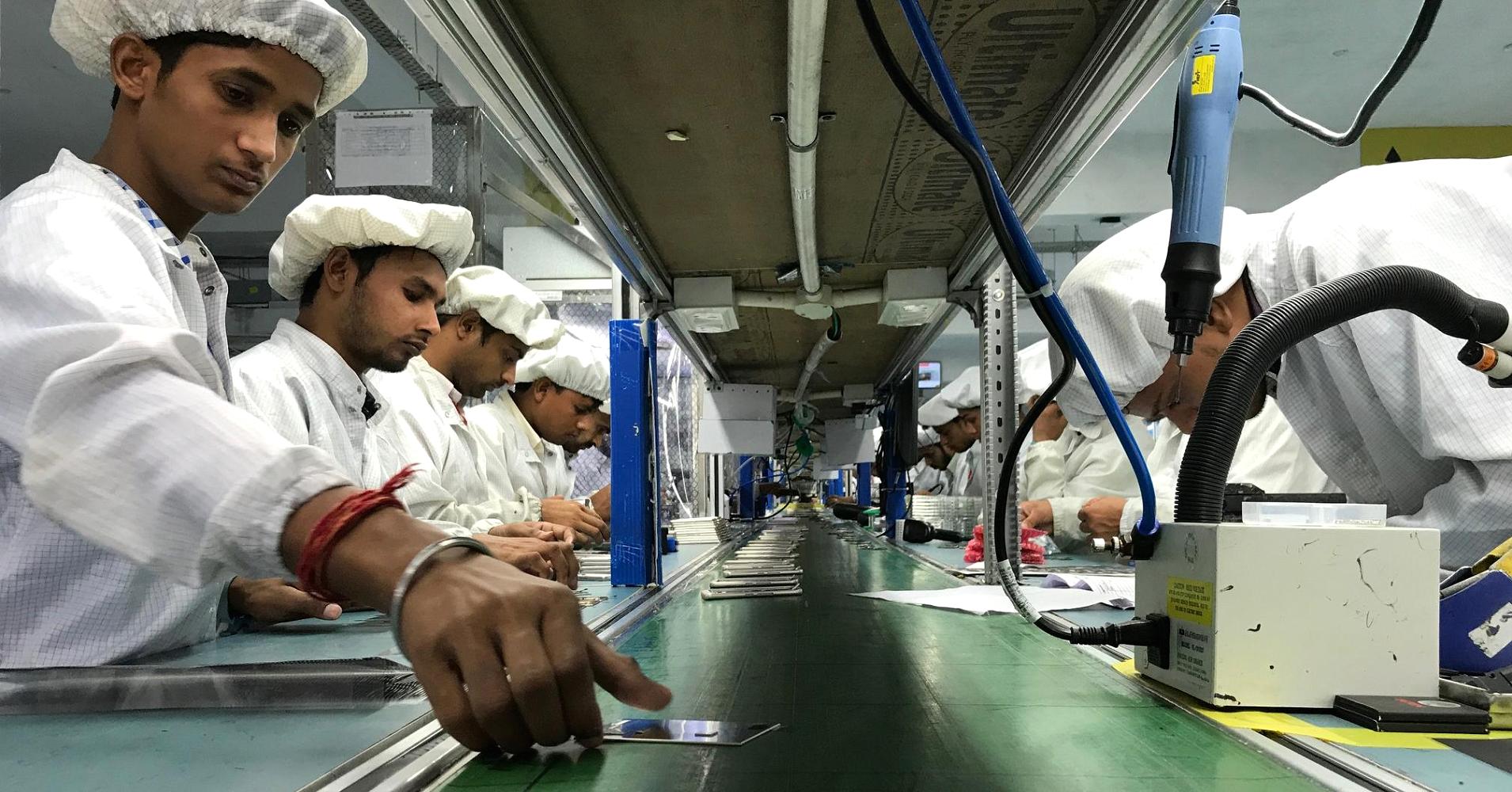
Intex workers pull 8.5-hour shifts every day. Each wears a white lab coat and chef-like hat. Each repeats the same tasks in robotic fashion — sorting through components at the front of the assembly line, packaging the final product at the end of the line. The phones are dropped, scratched and squeezed daily to ensure quality control.
The factory churns out 15,000 smartphones and 10,000 feature phones a day. But Intex CFO Rajeev Jain has his eye on another figure: The 70-30 ratio of imported-to-domestic components.
“We are focused on reducing the imported content,” Jain said. “By 2019, most of the components are going to be domestic only. This percentage should definitely reverse.”
Jain says that reversal is key to Intex lowering the cost of its handsets — and ultimately competing with foreign players at home. While the company has five factories throughout India, just one is dedicated to developing components. It’s in the process of building a sixth plant, to reduce its imports from 70 to 20 percent in the next two years.
That effort to sell cheaper, locally produced smartphones has taken on increased importance since November last year, when the government pulled more than 80 percent of banknotes from circulation in an effort to tackle black money. That forced millions of unbanked users onto smartphones to utilize digital payments platforms like Paytm.
Yet internet penetration remains just over 30 percent in a country with an estimated population of over a billion. While the government has challenged local handset makers to develop low-cost smartphones that make digital transactions accessible to the masses, Jain said larger infrastructure issues have proven to be a large hurdle.