

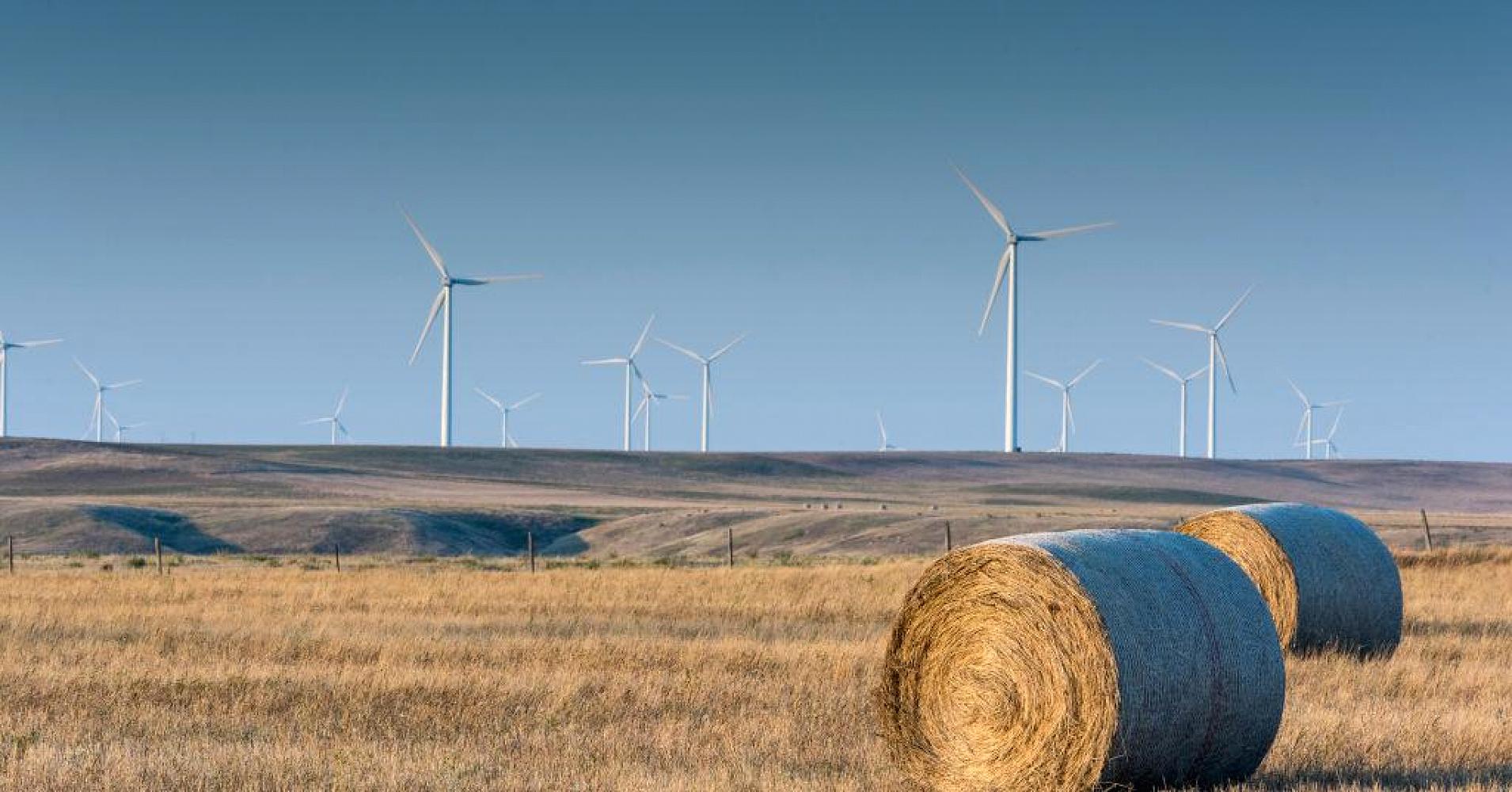
With their considerable height and large blades, modern wind turbines are instantly recognizable.
How they produce energy can be broken down into several parts. Put simply, when the wind blows, a turbine’s blades turn around a rotor. As the U.S. Department of Energy (DOE) explains, the rotor is connected to a main shaft, which in turn rotates a generator to produce electricity.
Wind energy can be produced both offshore and onshore. While the U.S. offshore wind industry is still in its infancy – America’s first offshore wind farm only began commercial operations last December– it is well established in other parts of the world.
According to the GWEC, at the end of last year Europe was home to 3,589 offshore wind turbines. Furthermore, almost 88 percent of the world’s offshore installations were based off the coast of 10 European countries.
The U.K. is a world leader in offshore wind, representing just shy of 36 percent of installed capacity, with Germany and China close behind.






