

Under the current Enhanced Cooperation Agreement between the U.S. and the Philippines, Manila allows American forces to access five of its air bases, including the Antonio Bautista base off the Spratly Islands and the Basa base near the Scarborough Shoal — both are disputed areas claimed by Beijing and Manila.
Washington is now looking to construct facilities for American troops and equipment on both those stations.
This “would enable the U.S. to maintain strategic presence and deterrence posture in the South China Sea against China’s maritime expansions, and could facilitate rapid deployment of U.S. assets in a crisis event,” explained Stratfor Senior East Asia Analyst Zhixing Zhang.
While Manila and Beijing have an agreement to peacefully manage disputes and refrain from occupying new land features in the disputed region, the Philippines “understands the need to preserve the U.S. alliance structure as its ultimate negotiation strength in the South China Sea,” Zhang said.
Earlier this year, Duterte approved Washington’s construction request for Basa Air Base but rejected the Bautista proposal. However, behind-the-scenes discussions signal that’s not the full story, according to Heydarian.
While Duterte is playing “good cop” by opposing the idea of American intervention in the resource-rich South China Sea, the Philippine military and the Pentagon are hoping to “do the bad cop thing of developing latent deterrents against further Chinese expansion in the area,” Heydarian said.
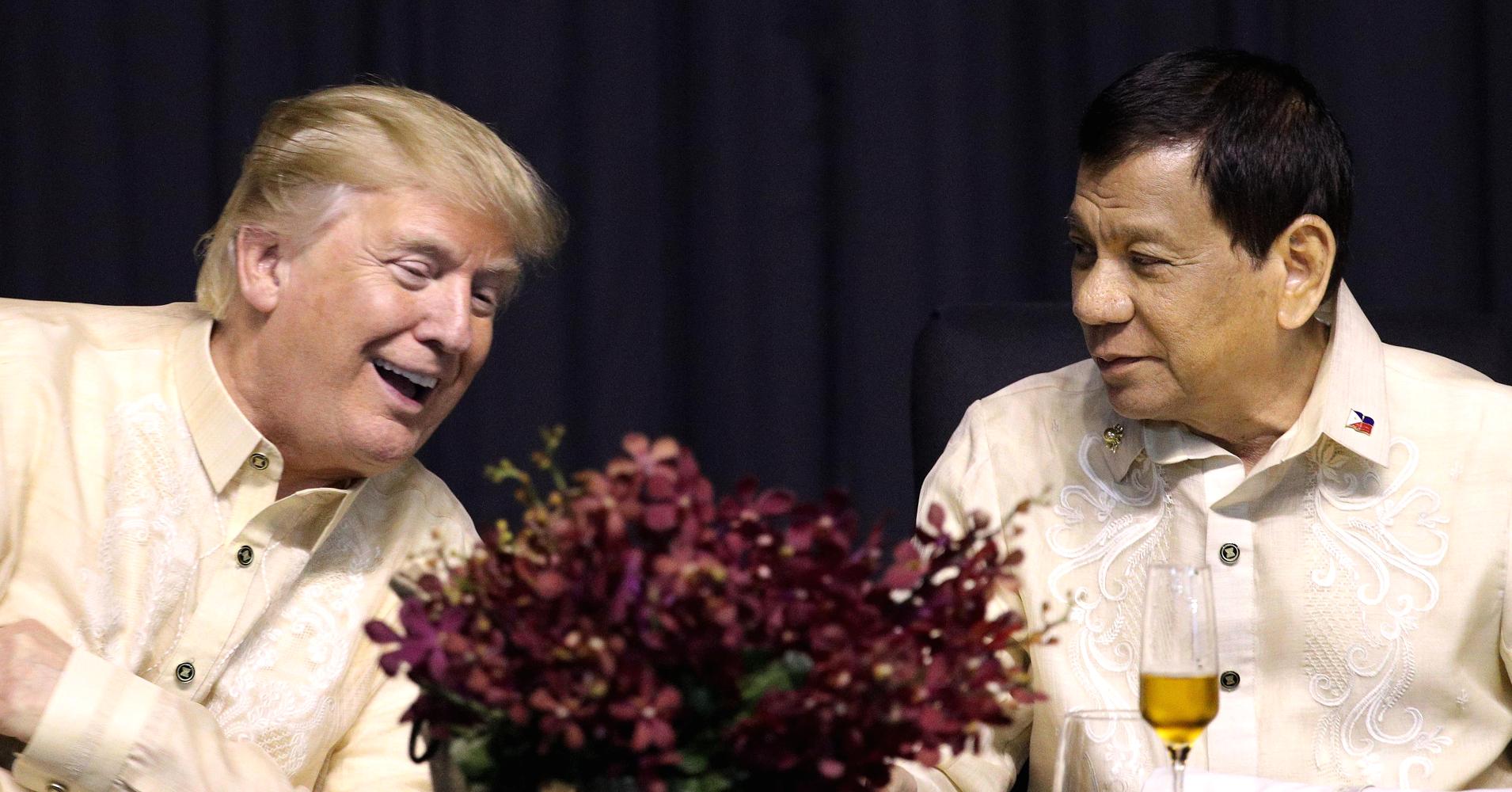
In a joint statement released on Monday, Trump and Duterte made no mention of the two airbases but reiterated their commitment to upholding freedom of navigation in the strategic sea and agreed to refrain from actions that would escalate tensions, including militarization.
On Sunday, Trump said that he was prepared to mediate between South China Sea claimants, which also include Vietnam, Brunei and Malaysia. In response, China’s state-run propaganda outlet The Global Times ran an op-ed saying external powers should not get involved in the South China Sea.






