

Getty Images
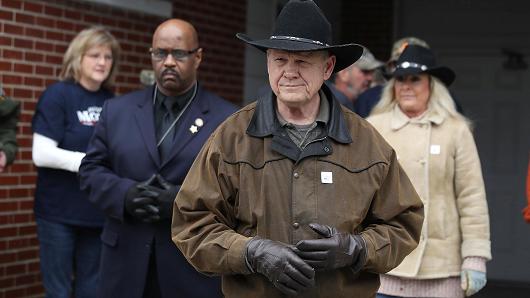
Republican Senatorial candidate Roy Moore exits after casting his vote at the polling location setup in the Fire Department on December 11, 2017 in Gallant, Alabama.
The factor unique to Alabama is easy to dismiss. In Roy Moore, Republicans saddled themselves with a candidate facing credible allegations of child molestation. Even with the endorsement of President Donald Trump, who beat Hillary Clinton in Alabama by nearly two to one in 2016, Moore’s baggage proved too heavy a burden for the Republican campaign horse to bear.
But other influences on in that hotly contested race will reverberate across the electoral landscape. And they now jeopardize the GOP majority in the Senate as well as the House.
Trump’s 48 percent approval among Alabama voters last night was not as weak as he is nationally, but that’s soft, nonetheless, in an exceptionally conservative state. Weak presidents endanger their parties, and Trump remains the least popular first-year chief executive in the history of polling.
Young voters, with far different views on issues such as race, gay marriage and the environment, keep asserting their influence as Republicans have lashed their fortunes to older whites. In Alabama, as in Virginia last month, big margins among those under age 45 overcame deficits among their elders for Democratic campaigns geared toward the future rather than the past.
Trump-era Republicans are hemorrhaging support from key white voter groups, especially college graduates and women. Doug Jones doubled the 15 percent share of Alabama’s white vote that former President Barack Obama received in 2012 and, at a moment of broad national concern over sexual harassment, nearly broke even among white women who have graduated from college.





