
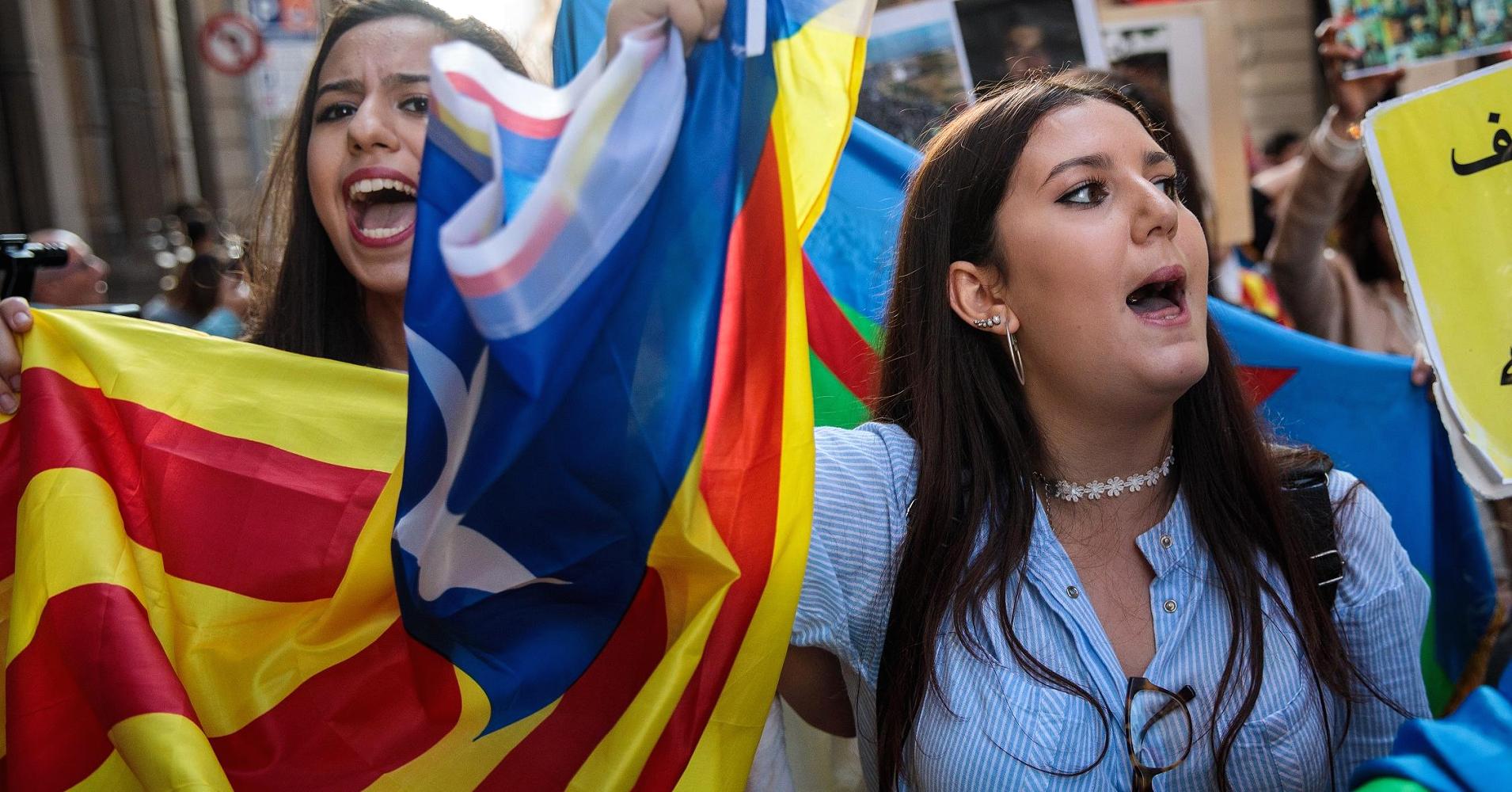
Polls currently suggest that the three pro-independence parties will attain around 67 or 68 seats (the number needed for a majority) in the 135 seat parliament, meaning that they are at the point where a majority hangs in the balance.
This pro-independence coalition, Junts pel Catalonia, led by Puigdemont is a pro-secession force in the election race but there has been considerable fragmentation within the movement with several pro-independence parties and politicians running against Puigdemont, including his former deputy Junqueras.
Meantime, the secessionist movement is facing stiff competition from Ciudadanos, a key ally of Spain’s ruling Popular Party led by Prime Minister Mariano Rajoy, and a party that is strongly opposed to independence.
Polls suggest that voters will be broadly split between the pro-unity and pro-independence camp, however. The two parties expected to gain the most seats individually are the pro-unity Ciudadanos and Junqueras’ pro-independence ERC, seen level-pegging in polls with each potentially gaining 32 or 33 seats.
Lasheras at the European Council on Foreign Relations said that the last election in 2015 was a lot clearer in terms of political narrative and policies but that fragmentation had now made things unclear.
“In the last 2015 elections, the secessionists had a parliamentary majority but not a popular vote majority,” Lasheras said. “(Now) you have Puigdemont in Belgium, you’ve got Junqueras (Catalonia’s deposed vice-president) in prison so it’s unclear as they’ve lost the narrative in a way” he said.
Wolfango Piccoli, vice president at risk consultancy Teneo Intelligence, agreed that the regional election is likely to lead to a hung parliament with no one party gaining a majority.
“Even if pro-independence parties obtain a majority of seats, it is not a foregone conclusion that they will be able to quickly form a government,” he noted.
“The separatist movement remains divided on who should be the next first minister and whether the next government should continue to push for independence unilaterally. Government-formation negotiations will likely be protracted,” he added.
Piccoli said that, all being well, an investiture vote would take place early next year, triggering the two-month deadline for parliament to elect a first minister. “If parties fail to do so, parliament would be automatically dissolved and new elections would be held within 40-60 days following the date of the dissolution,” he said.