
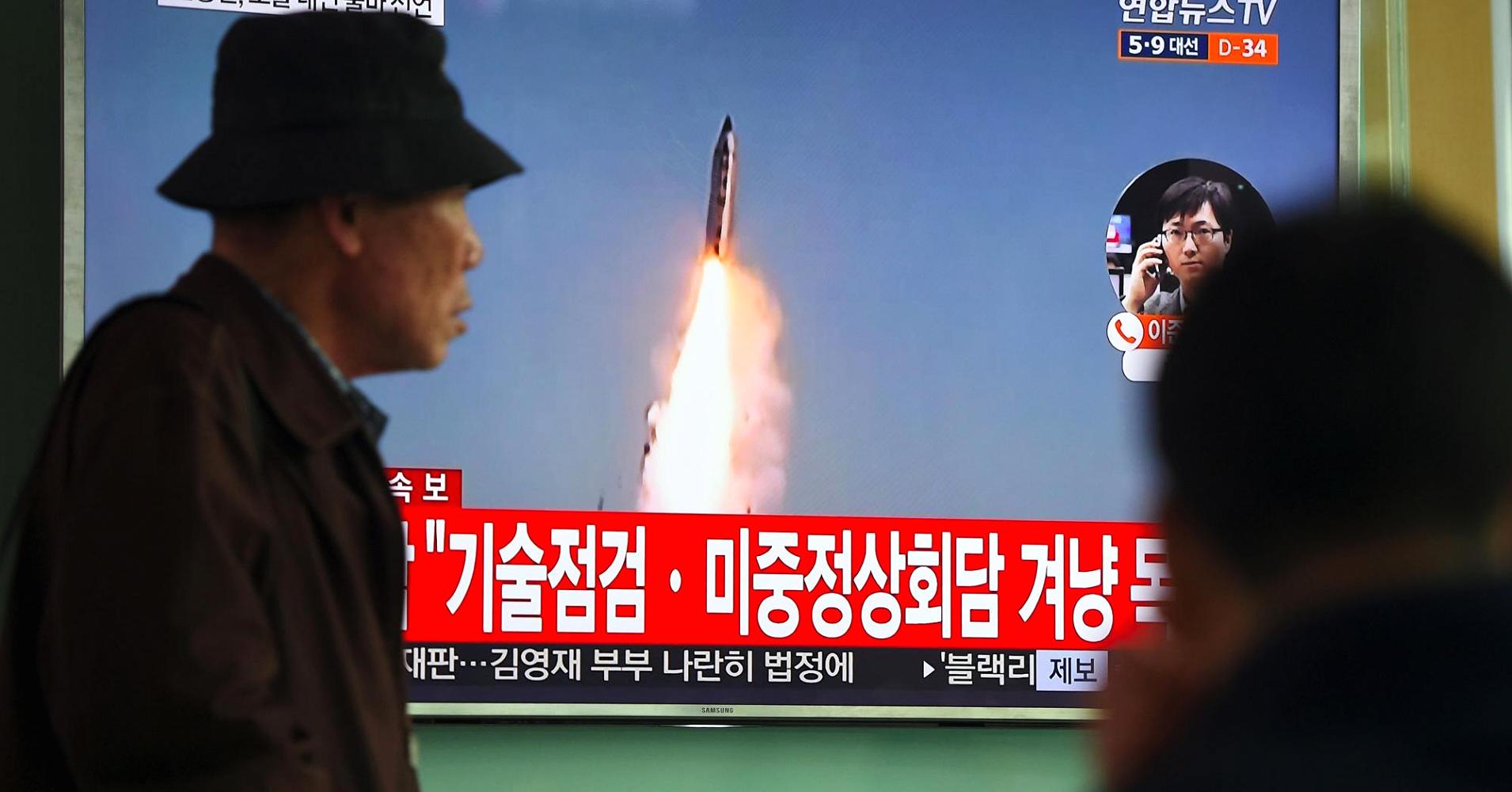
“For as long as U.S. security guarantees are reliable, I don’t think South Korea has any need at this time for nuclear weapons,” said Acton. “The U.S. has pledged to defend South Korea, including if necessary with the use of the U.S. nuclear arsenal.”
That said, South Korea has “serious concerns about the reliability of those guarantees under President Donald Trump,” Acton said. He said Trump has done “a lot to disrupt the U.S.-South Korean relationship — and I think it’s very important that the disruption stop.”
Experts say the areas where Washington has strained the alliance include Trump’s threat to terminate a “horrible” trade deal with South Korea as well as suggestions in April by the president that Seoul should pay $1 billion for the THAAD (or Terminal High Altitude Area Defense) anti-missile defense system.
Also, Trump suggested on the presidential campaign trail that South Korea should pay more money for its own defense, even suggesting that if they didn’t he would be prepared to yank the roughly 28,000 U.S. forces stationed on the peninsula. And after he took office some allies became nervous since Trump was seen as slow to support NATO’s Article 5, the collective defense clause of the alliance.
“Donald Trump’s statements about allies needing to pay their fair share and his hesitation about whether the United States would back up NATO’s Article 5 commitment… has all given people in South Korea greater anxiety about the American military commitment to help protect South Korea,” said Daryl Kimball, executive director of the Arms Control Association, a Washington-based research and advocacy group
According to Kimball, the introduction of nuclear weapons into South Korea, either by the U.S. or by South Korea pursuing its own indigenous nuclear program, would have far more negative consequences than some people might otherwise think.
“It would further solidify North Korea’s commitment to keep its own nuclear weapons and initiate an arms race in East Asia involving China and South Korea that would not be necessarily stable,” said Kimball. “The allure of South Korean nuclear weapons on the superficial level is understandable, but you look at the consequences and they would cause much greater insecurity for South Korea than they would provide security.”