

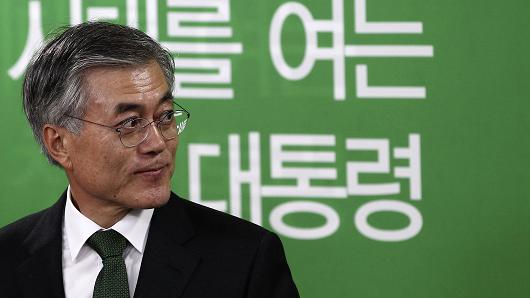
SeongJoon Cho/Bloomberg/Getty Images
Moon Jae-in, former leader of the Democratic Party and front-runner for the 2016 presidential election. He previously ran for the country’s top job during the 2012 election.
Saenuri, the ruling conservative party whose reputation was hit from Park’s scandal, has yet to produce a strong contender, leaving left-leaning opposition parties in the lead.
Moon Jae-in from the Democratic Party, has been topping polls so far, with a 29.9 percent approval rating, according to a weekend survey of 2,046 citizens by the Korea Research Center — the highest figure among presidential hopefuls. A separate survey by Realmeter on Saturday showed the Democratic Party, who has four presidential candidates in total, obtaining 45.7
percent support, the most of any political group.
Traditionally, liberal governments have pursued different foreign policy agendas from their conservative peers. If such a policy shift were to occur, it would be particularly significant amid North Korea’s recent missile launches and Chinese retaliation over the Terminal High Altitude Area Defense (THAAD), an anti-ballistic missile system designed to protect South Korea from North Korean weapons.
“If Moon is elected, we will see big changes in South Korean policies towards North Korea, Chinaand the U.S.,” summed up Woo Jung-Yeop, visiting fellow at Sejong Institute, a Seoul-based think tank.
“One of the outcomes of this current situation in South Korea is going to be different foreign policy, regardless of who takes office,” echoed Jonathan Berkshire Miller, international affairs fellow at the Council on Foreign Relations.





