

Trump also said last week that he would either renegotiate or terminate a “horrible” trade deal with South Korea.
But even Thailand, which had faced concerns it might end up on the U.S. Treasury Department’s examining table due to its trade surplus with the U.S., didn’t appear overly concerned.
Veerathai Santiprabhob, governor at the Bank of Thailand, noted that his country wasn’t classified as a major trading partner.
“I wouldn’t think that Thailand would be the key target of any protectionism policies that could come out,” Veerathai told CNBC on the sidelines of the ADB meeting.
He also noted that much of Thailand’s exports to the U.S. weren’t finished products.
“U.S. manufacturing companies [are] using Thailand as a base to be able to provide intermediate goods into the supply chain in the U.S. to make U.S. exports more competitive globally,” he said.
Veerathai pointed to another reason Thailand wouldn’t really quake at U.S. protectionism: Only about 10 percent of its exports head directly to the U.S.
“We have diversified our exports markets markedly during the past decade,” he said, noting that exports to neighbouring Cambodia, Myanmar, Laos and Vietnam account for another 10 percent, while growing at double-digit rates.
“We might be in a better position than some other countries, some other emerging markets that have depended more on the U.S. economy,” he said.
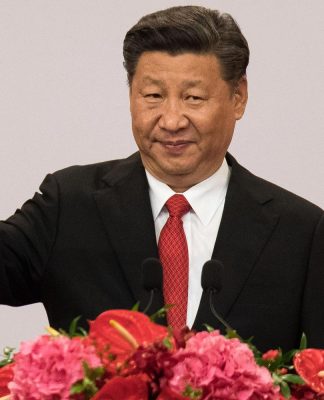
The Philippines’ Lopez offered another reason his country might not be too worried about U.S. protectionism: The archipelago’s growing relationship with China, with President Rodrigo Duterte saying his relationship with Chinese President Xi Jinping was “like brothers.”
Lopez also noted that China had increased investments in the Philippines, with the mainland purchasing more of the archipelago’s agricultural products.
—By CNBC.Com’s Leslie Shaffer; Follow her on Twitter @LeslieShaffer1