
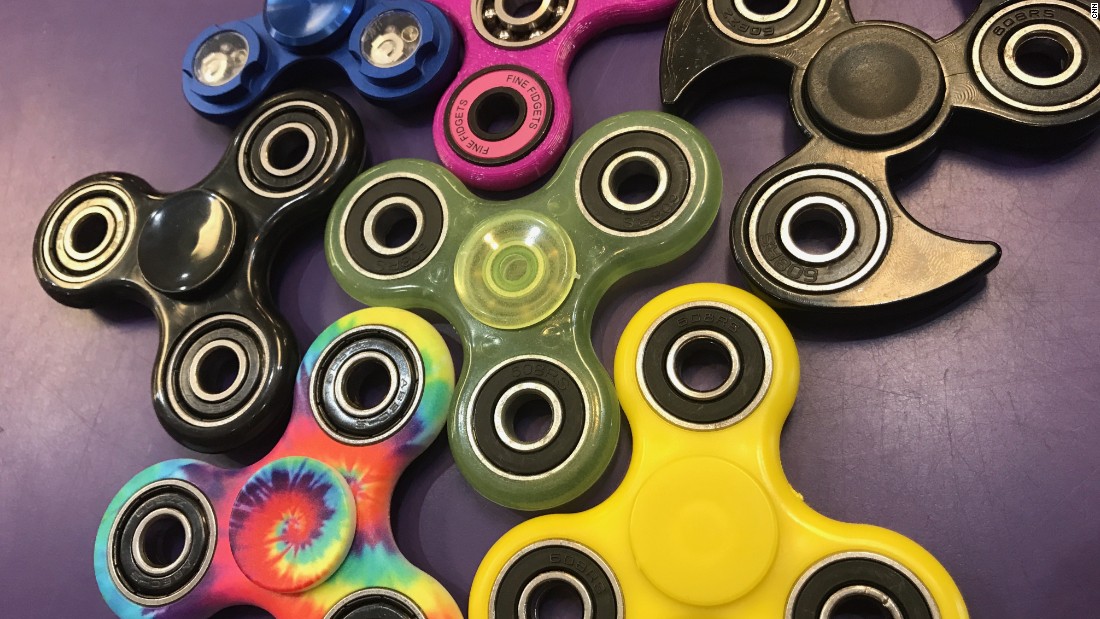
In late May, Navalny was captured on camera spinning the small hand toy while awaiting trial in Moscow.
“Probably it is not a coincidence that they started selling the spinners at events by the opposition,” Rossiya 24 host Alexey Kazakov said.
In the report, Kazakov cites an Omsk-based journalist’s suggestion that the gadget could be used as “an instrument for zombifying” users, triggering a kind of “hypnosis.”
It was not the channel’s first segment on the device, which featured in another news broadcast that aired last month.
Fidget spinners “were already seen in the hands of a non-systemic opposition,” Kazakov claimed in the piece. Kazakov’s co-anchor, Nikolay Sokolov, raised suspicion over the provenance and dissemination of the toy.
“It’s a mystery why it only recently became so popular in Russia. Who is pushing it into the masses?” Sokolov asked, suggesting that fidget spinners had been sold at an opposition protest against corruption on June 12.
CNN’s Mary Ilyushina and Yon Pomrenze contributed to this report from Moscow.