

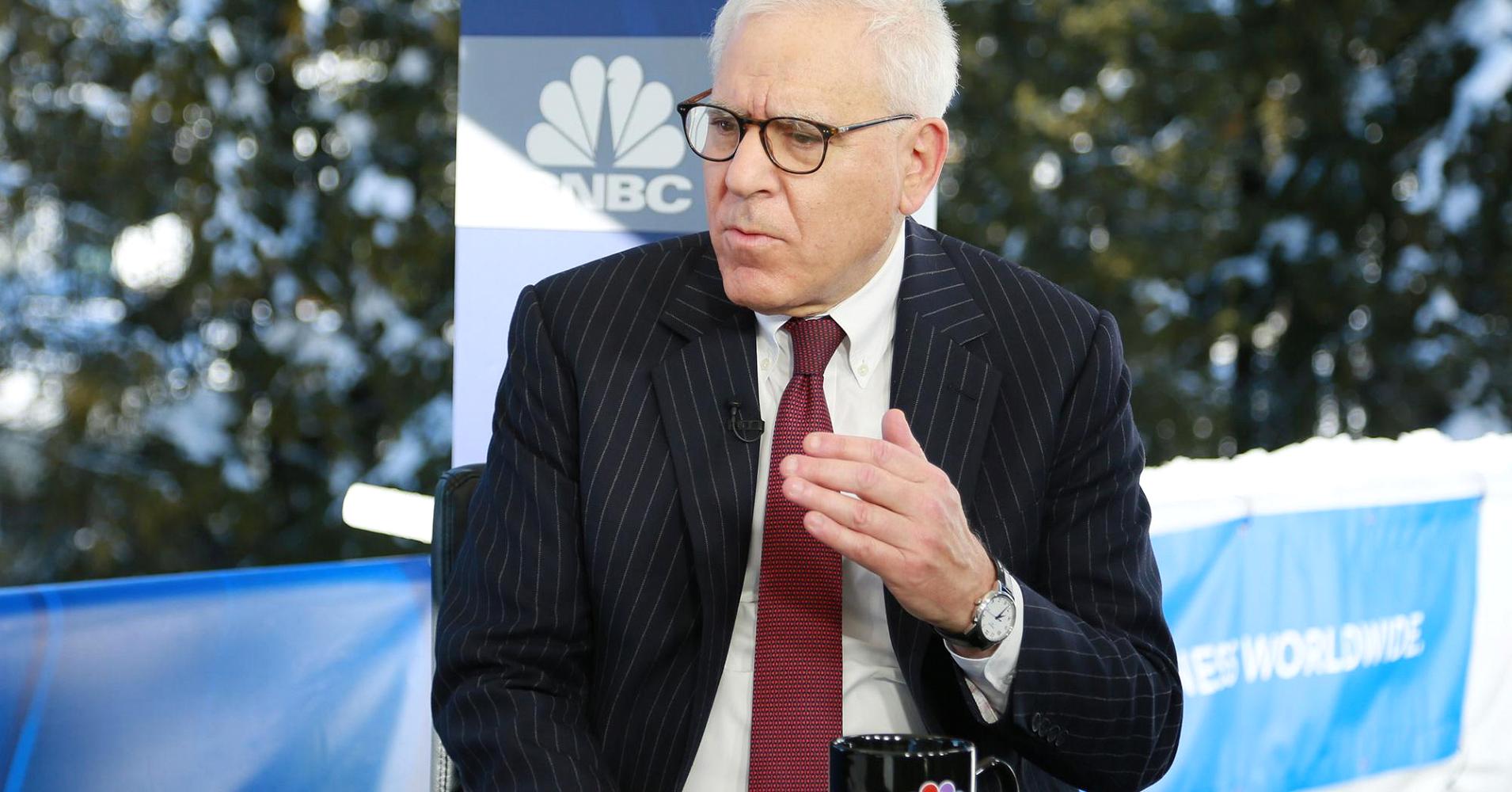
“I do worry that governments have a little bit too much debt, and maybe they have too many entitlement programs they’re ultimately not going to be able to honor. At some point, people are going to wake up and say the U.S. government has $20 trillion dollars of debt and unfunded liabilities that are hard to fathom.”
Trepidation over mounting global debt is not new; numerous CEOs and finance officials have cited greater leverage across both emerging and advanced economies as among the greatest threats to global economic stability.
Rubenstein continued, “I worry about geopolitical things we can’t anticipate, the so-called black swans,” suggesting a slew of potential threats from a “9/11 type event” to pandemics and conflicts involving Iran, Russia and China.
Meanwhile, the CEO of Bank Pekao, Poland’s second-largest bank, made a similar warning about what he believed to be a sort of oblivious optimism.
“Obviously there are many reasons to be optimistic — the U.S. economy is growing fast, positive IMF outlook, emerging markets are growing fast,” Pekao’s Michal Krupinski told CNBC Wednesday.
“The problem is that once you’re not able to find an imbalance in the global economy, you should always be aware of what is the weakest link. This makes me worried.”
“Secondly, we have unprecedented actions from central banks,” he added, referring to central banks’ prolonged quantitative easing policies. “The drug will be cut one day, and we’re facing lots of structural problems.”
A common theme at Davos, and indeed over the past several months among investors, is whether the current skyrocketing growth of market valuations and increased capital flows are a harbinger of the next crash. David Rubenstein seems to think so.
“I think when everybody is complacent, that’s usually when you have to be nervous,” he said.






