

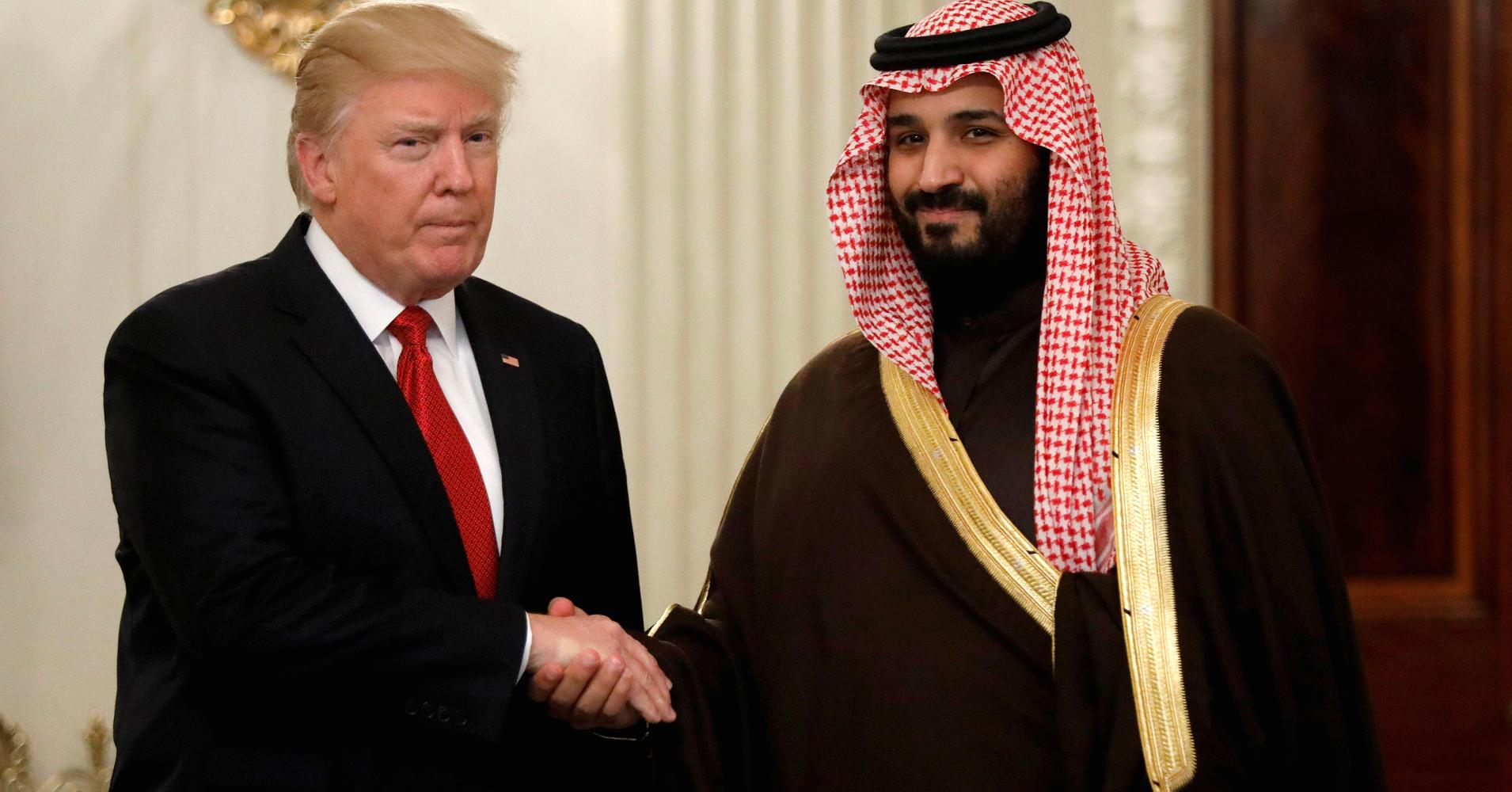
OPEC’s oil production alliance appears to be on shaky ground, and crude prices continued a weeklong dive, as Saudi Deputy Crown Prince Mohammed bin Salman visited the White House on Tuesday.
Bin Salman represents the new face of Saudi Arabia, and he is the draftsman of a plan to reform the kingdom and diversify it away from oil. He is also seen as a key figure backing the deal between OPEC members and nonmembers like Russia to curb production and stabilize the market price. In Washington, among the topics he was expected to discuss were the war in Yemen and the Iranian nuclear deal.
Analysts say while it appears to be frayed, there is a good chance OPEC and its partners will ultimately keep their deal intact and extend it, because oil in the low $40s per barrel would strain the budgets of producing nations and make it much more difficult for the types of reforms that the deputy crown prince is trying to achieve. But between now and then, oil prices could be rocky. OPEC members have said they would assess extending the agreement to cut 1.8 million barrels in production when they meet in May.
“If MBS is here to talk about broader economic issues, selling the Saudi IPO, selling the broad Saudi Vision 2030 plan, the reality is Saudi Arabia looks more economically attractive in a higher oil price environment,” said Helima Croft, global head of commodity strategy at RBC. “This is the tension. In a lower oil price environment, the math on that becomes more challenging.”
Known as MBS, bin Salman is the favorite 31-year-old son of King Salman and is seen as a contender for the throne.
On the surface, the market bought the idea that the OPEC production plan was working well – and oil prices were holding in the $50s. That was until Saudi Energy Minister Khalid Al-Falih revealed at the CERAWeek by IHS Markit conference in Houston last week that he was not happy with the compliance of some producers and that Saudi Arabia would not carry an unfair amount of the cuts or be used by others.
He also said OPEC was more aligned than ever and said Saudi Arabia was producing below the key psychological 10 million barrels a day level.
“Coming after Khalid Al-Falih’s deliberate comments about compliance, his criticism of some other parties keeping up their end of the agreement, it feeds a narrative of Saudi backing away from the agreement. If Saudi backs away, there is no agreement. Saudi drives the OPEC bus. I do think this is more a shot across the bow,” said Croft.
At the same CERAWeek conference last week, Iraqi Oil Minister Jabbar Ali Al-Luiebi said that Iraq would be producing 5 million barrels a day by the second half of the year, after just reaching 4 million barrels a day in mid-2016. He also said export capacity could ultimately get to 7 million barrels a day, but he told CNBC after his remarks in Houston that Iraq does not want to “unsettle” the market.
“I think that Iraq production is not really coming off. They seem to be focused on exports and even the export numbers are not really coming off. I think a little bit of this is the Saudis are probably tacitly OK with the narrative that they’re not going to shoulder the burden on their own,” said Michael Cohen, head of energy research at Barclays. “They’re also concerned about non-OPEC compliance, namely Russia and they’re not seeing the cuts coming through.”






