

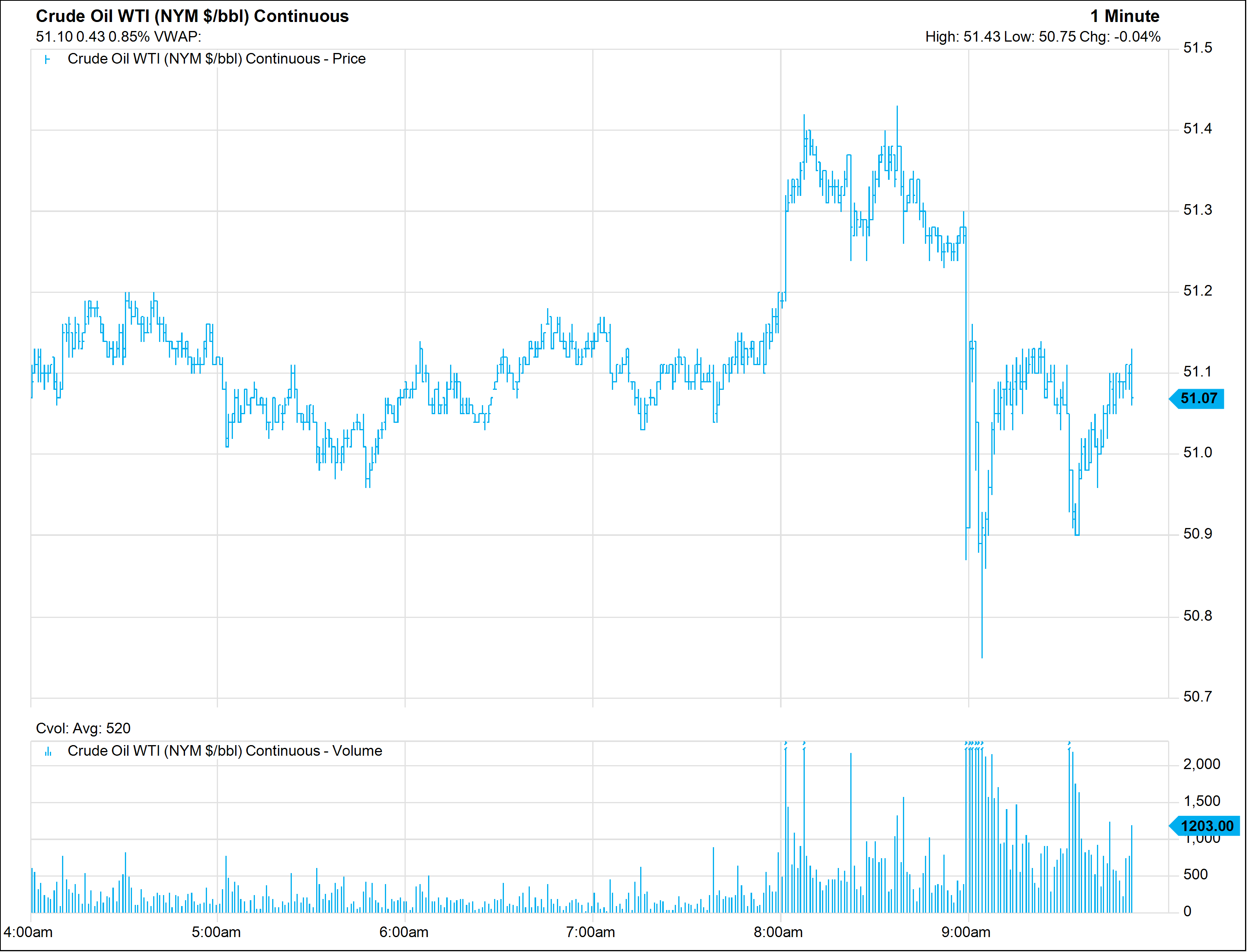
Oil prices swung from one-month highs to session lows in volatile trading on Monday as investors awaited a signal on output policy from OPEC’s two biggest producers.
U.S. West Texas Intermediate crude jumped to $51.06 a barrel in early trading, its highest level since April 19, on signs that consensus among OPEC members is forming around extending coordinated production curbs. But WTI futures gave up gains after sources told Dow Jones Saudi Arabia and Iraq remain at an impasse over the length of that extension.
De facto OPEC boss Saudi Arabia favors a nine-month extension, while the Iraqis prefer to roll over current policy only for the remainder of 2017, the sources said. WTI last traded at $50.83 a barrel.
U.S. crude for July delivery
Saudi Energy Minister Khalid al-Falih flew to Baghdad to hold discussions with his Iraqi counterpart, Jabar al-Luaibi, on Monday. The two are scheduled to hold a press conference at 11 a.m. ET (1500 GMT), Reuters reported.
“Going to Iraq to shore up support and push not just for six months but to push for nine months is getting the attention of the market,” said John Kilduff, founding partner at energy hedge fund Again Capital.
OPEC Secretary General Mohammed Barkindo said OPEC members agree an extension is necessary, but will not agree on a time frame until their meeting on Thursday, Dow Jones reported.
Kilduff said he will be watching to see how elusive the Iraqi oil minister is during Monday’s press conference. “There are rumors that they want out of the deal. They want an exemption like the Iranians,” he said.
Under OPEC’s deal to remove 1.2 million barrels a day from the market in the first six months of this year, Iran is allowed to grow production to a certain level as it rebuilds its industry following years of crippling sanctions. Nigeria and Libya are entirely exempt from cutting as they restore production sidelined by internal conflicts.






