

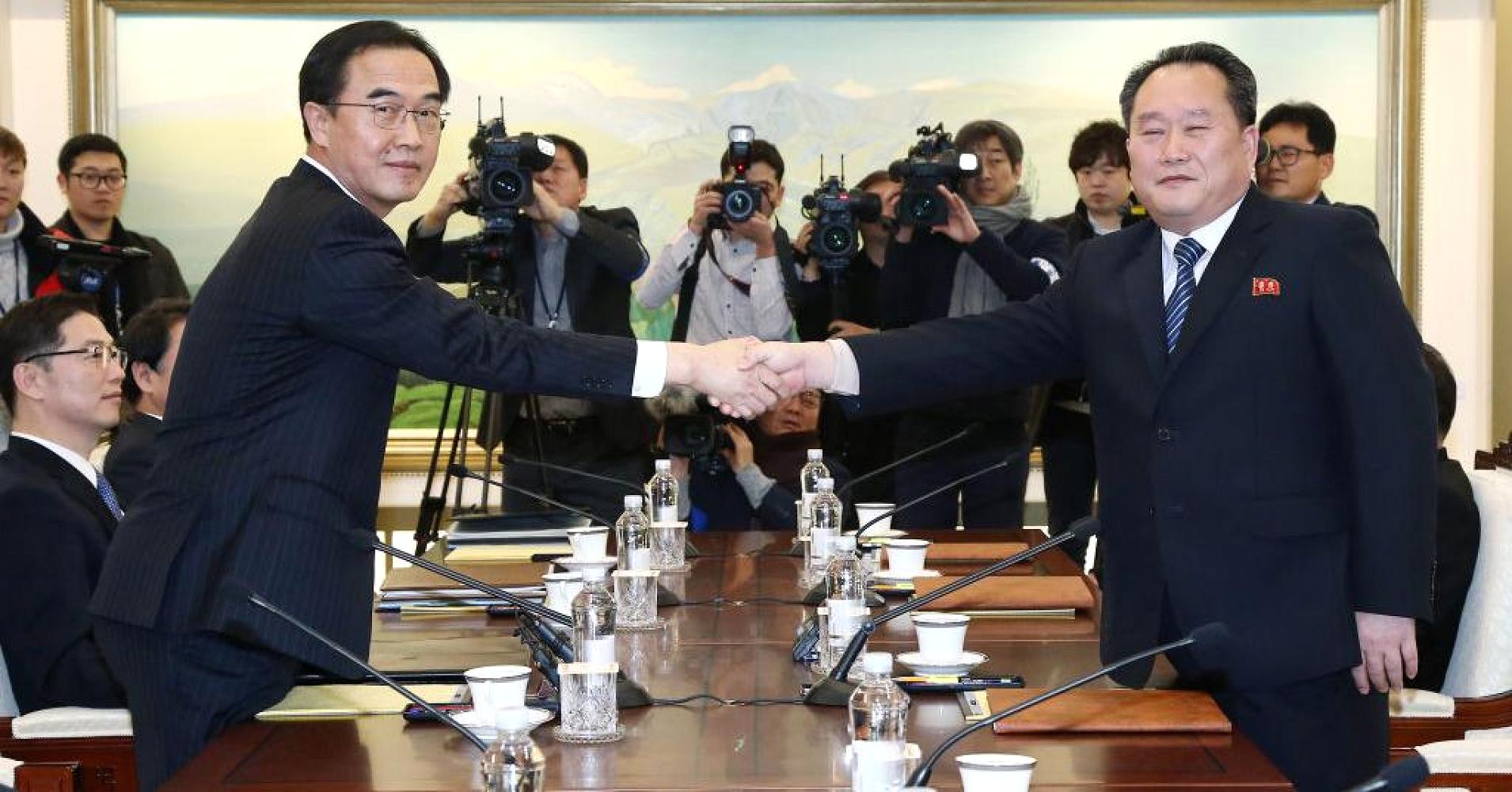
Both sides concluded the first round of talks promising further discussions, though somewhat tellingly the North Korean delegation returned to the Panmungak (a North Korean building in the infamous demilitarized zone that separates North and South Korea) on the north side of the border for lunch, according to NBC News.
The fast-thawing relations are in stark contrast with the atmosphere at the start of the year, when North Korean President Kim Jong Un gave a New Year’s Day address in which he said the Communist state’s nuclear weapons could reach anywhere in the United States — an important ally with South Korea — and threatened that he has a nuclear button on his desk.
The address provoked a furious response from President Donald Trump who tweeted that he had a “much bigger and more powerful” nuclear button. The comments prompted fears that one or the other of the impulsive leaders could press their buttons, making this week’s rapprochement even more extraordinary.
Alison Evans, deputy head of Asia-Pacific Country Risk, IHS Markit told CNBC Tuesday that the talks were a “positive change” but not foolproof.
“It’s easy to be cynical about these talks and think that North Korea is perhaps trying to get something out of South Korea that it wants, but nonetheless there are reasons to be enthusiastic about these talks, they are the first ministerial talks since December 2015 and indeed daily contact between the South and North Korea governments and military has been cut since February 2016 … So I still think this is a positive change,” Evans said.






