
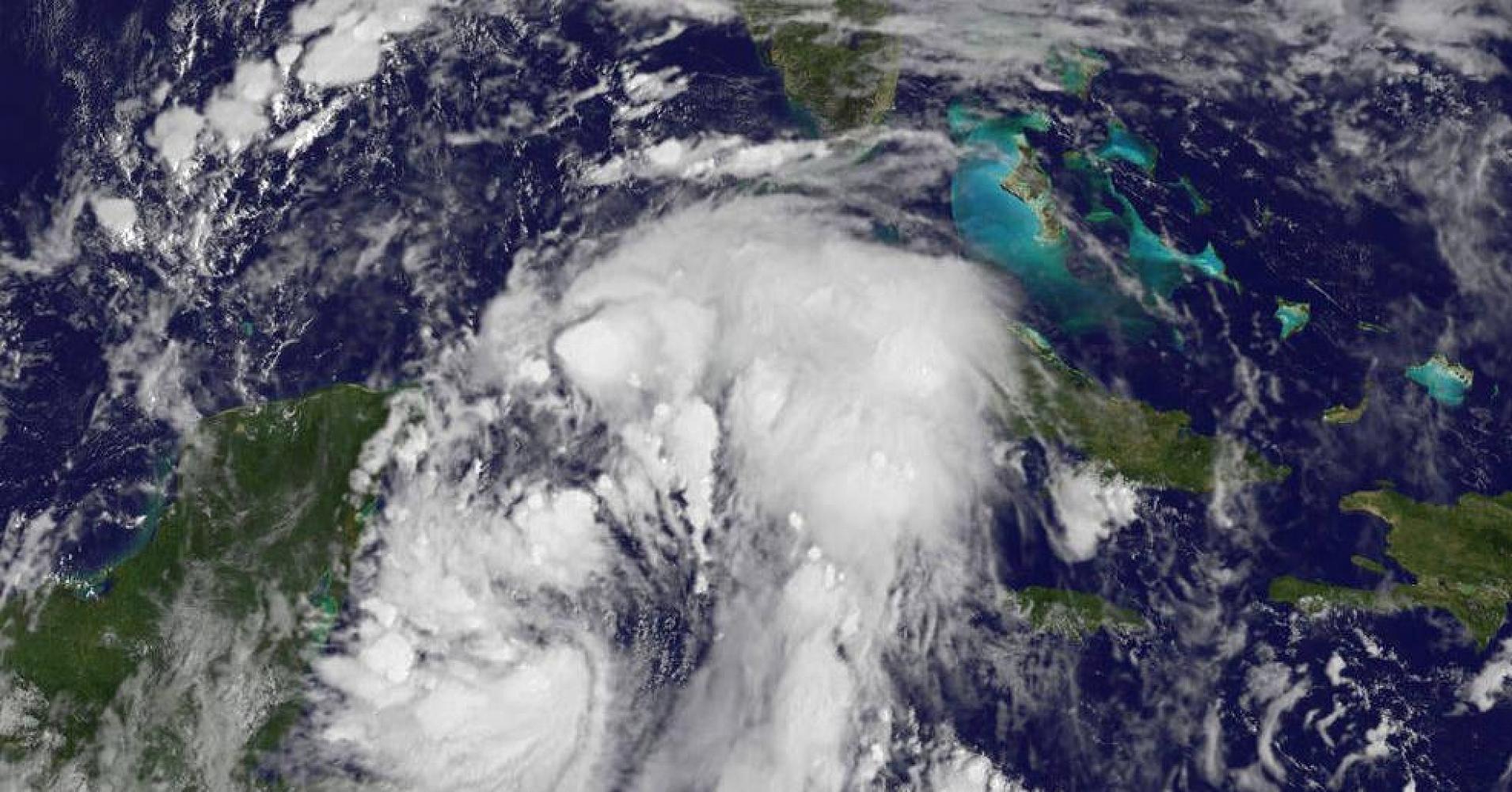
Nate follows a succession of big Atlantic hurricanes, Harvey, Irma and Maria, that have devastated areas of the Caribbean and southern United States in the last two months.
The storm’s center will move inland over Mississippi and across the deep south, Tennessee Valley and Central Appalachian Mountains through Monday, the National Hurricane Center said.
Heavy rainfall and storm surge flooding continued to be a danger across the region, the center warned.
Nate made its initial landfall near the mouth of the Mississippi river on Saturday evening and then made a second landfall early on Sunday near Boloxi, Mississippi, where its 46,000 residents were warned that the highest storm surge could reach 11 to 12 feet.
The storm surge brought flood waters over Highway 90 and up to oceanside casinos in Biloxi, while flood waters swept over streets in communities across Mississippi and Alabama, according to reports on social media.
National Geographic photographer Mike Theiss captured the scene as the storm surge hammered Boloxi, subsiding slightly through the night.
Tweet: #StormSurge coming inside entrance of Golden Nugget casino in Biloxi #HurricaneNate
“We have a restaurant and one of our main bars open so they have been ok so far,” said Chett Harrison, the general manager at the Golden Nugget hotel and casino in Biloxi where 300 guests were hunkered down.
“No one has tried to leave, thank goodness, because everything is flooded around us,” he told a local CBS TV affiliate.
In Hancock County, Mississippi, northeast of New Orleans, rain and wind were gaining intensity and many streets were washing over. Conditions were likely to worsen in the next few hours, said Brian Adam, director of emergency management for the county.
The county evacuated people from low-lying areas and imposed a curfew.
On Saturday states of emergency were declared in Louisiana, Mississippi and Alabama, as well as in more than two dozen Florida counties.
In Alabama Governor Kay Ivey urged residents in areas facing heavy winds and storm surges to take precautions.
At least 8,000 customers were without power in Mississippi, Mississippi Power reported, while more than a thousand people had arrived at shelters, the Mississippi Emergency Management Agency said. In Alabama, some 59,000 customers were without power, Alabama Power said.
Rainfall of 3 to 6 inches (7.6 cm to 15.2 cm), up to a maximum of 10 inches, were expected east of the Mississippi River from the central Gulf Coast into the Deep South, in the
eastern Tennessee Valley, and southern Appalachian mountains, the NHC said.
Rainfall in the Ohio Valley and into the central Appalachians could be 2 to 5 inches with a maximum of 7 inches.