
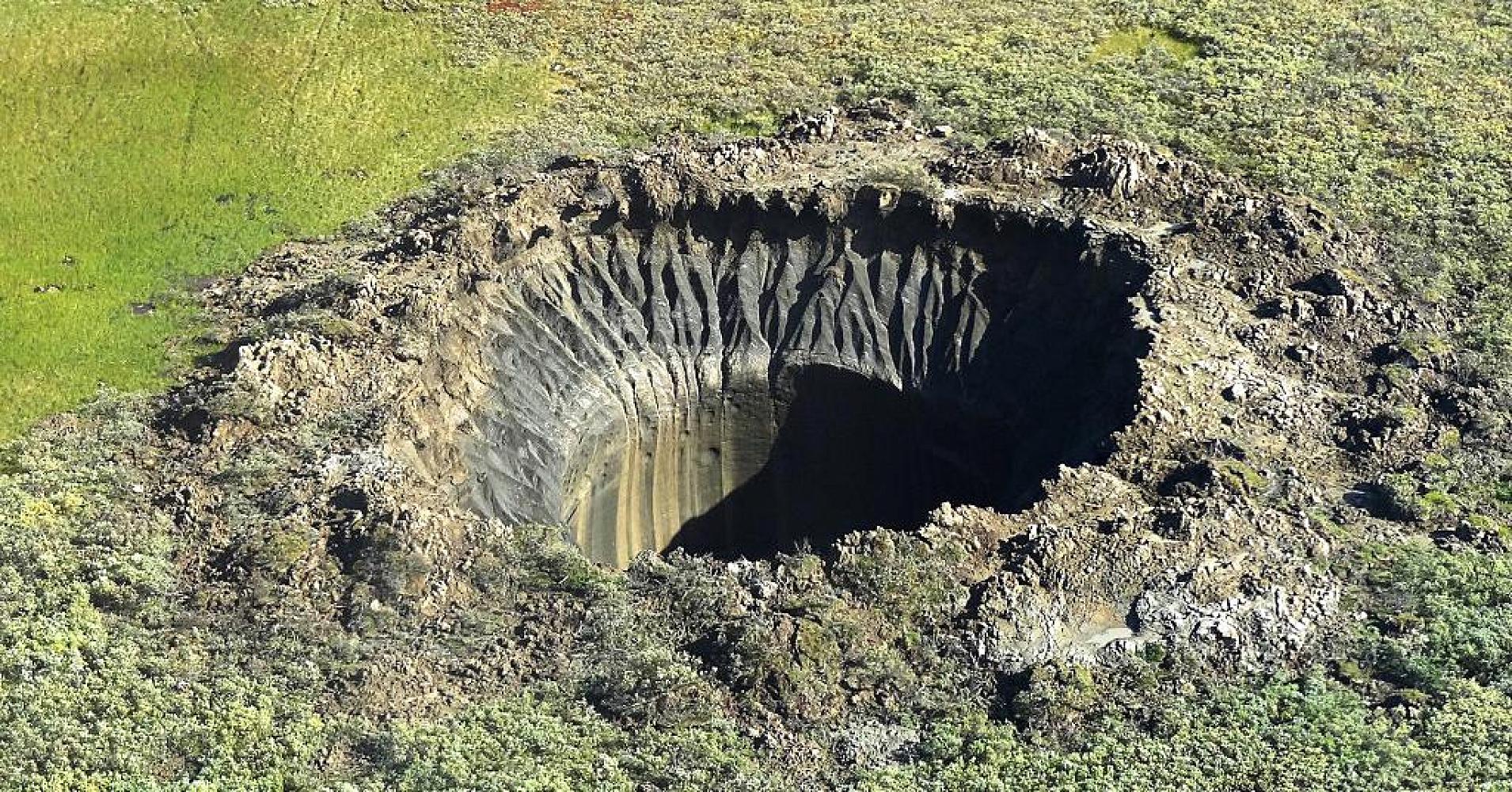
One theory suggests that the holes are created when trapped gases explode. Carbon dioxide and methane, both greenhouse gases, are released in the process.
According to conventional estimates, methane warms the planet by 34 times as much as carbon dioxide over 100 years. But such estimates ignore the fact that atmospheric methane decomposes into carbon dioxide, a less potent greenhouse gas, after 10 to 20 years.
Over a 20-year period, methane’s warming potential is 86 times that of carbon dioxide, according to the Intergovernmental Panel on Climate Change.
It’s still a question if the formation of these craters contributes significant amounts of greenhouse gases to the atmosphere, researchers say.
“There is no estimate for how much methane is released into the atmosphere because we don’t know how” such craters are formed, Romanovsky said.
According to Henderson, scientists are also uncertain about the rate and types of gases ejected – specifically, whether methane decomposes into carbon dioxide before or after its release.