

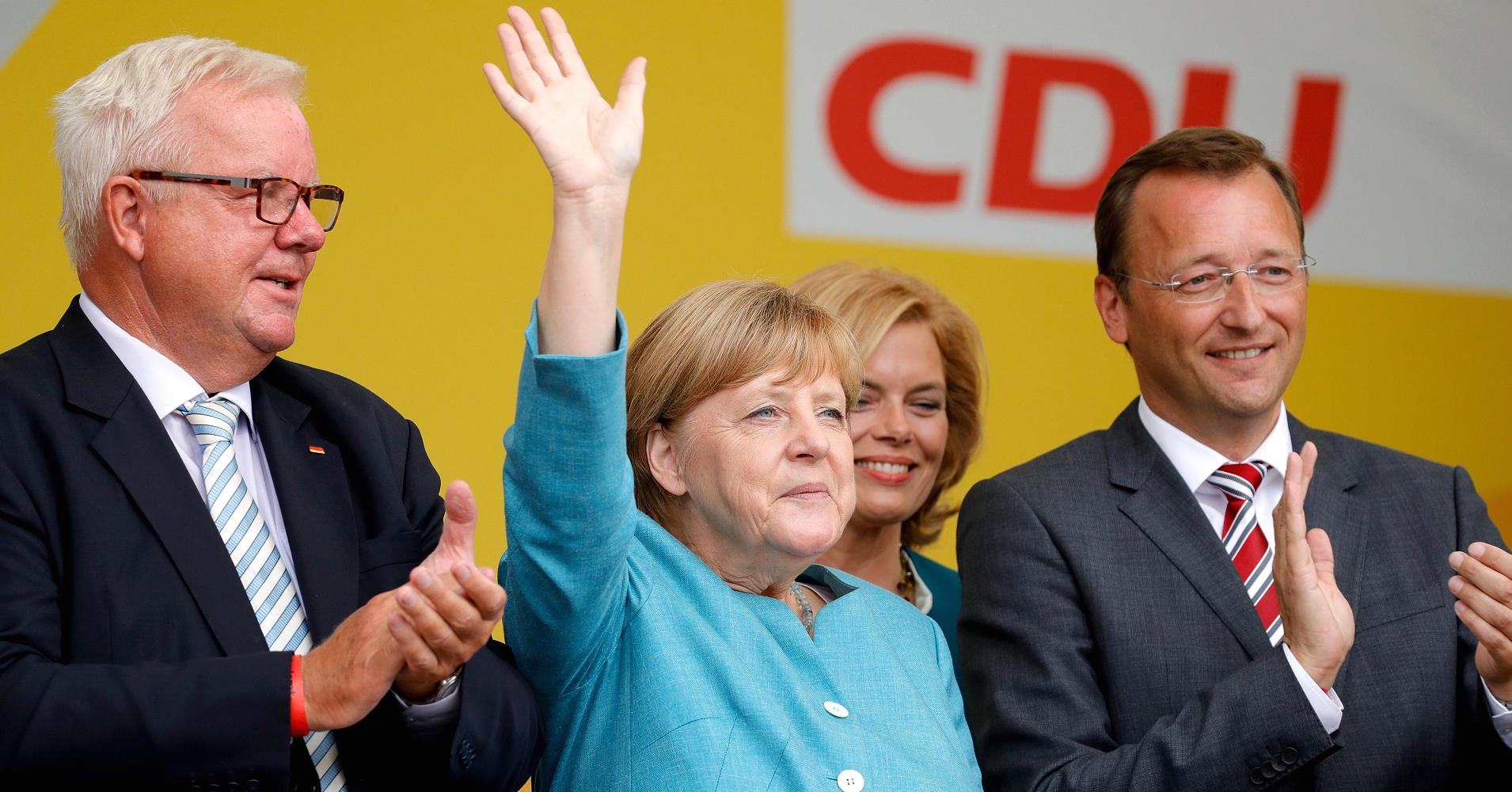
Incumbent Chancellor Angela Merkel is hoping to secure her fourth term in power, but with anti-establishment opponents continuing to capture segments of the electorate it appears likely that she will fall short of the support required to secure a majority. This means Merkel would need to strike another coalition deal with one or more of the country’s opposition parties.
On Sunday evening, Merkel appeared to fend off competition from political rival and Social Democratic Party (SPD) leader, Martin Schulz, as the two leading candidates went head-to-head in their only televised debate ahead of this month’s German election.
The incumbent emerged in the lead following a 97-minute duel, which focused on the European migrant crisis, Turkey’s accession to the EU, and the handling of President Donald Trump.
A survey conducted by Infratest Dimap moments after the debate showed that Merkel was viewed as more convincing by 55 percent, versus 35 percent for Schulz.
While Fuchs described Merkel’s showing in the polls shortly after the televised debate as “marvelous”, he was also careful to emphasize that such feedback is notoriously unreliable.
“We will wait and see (the election results) but I am a little bit confident that we are going to make it again,” he said.






