

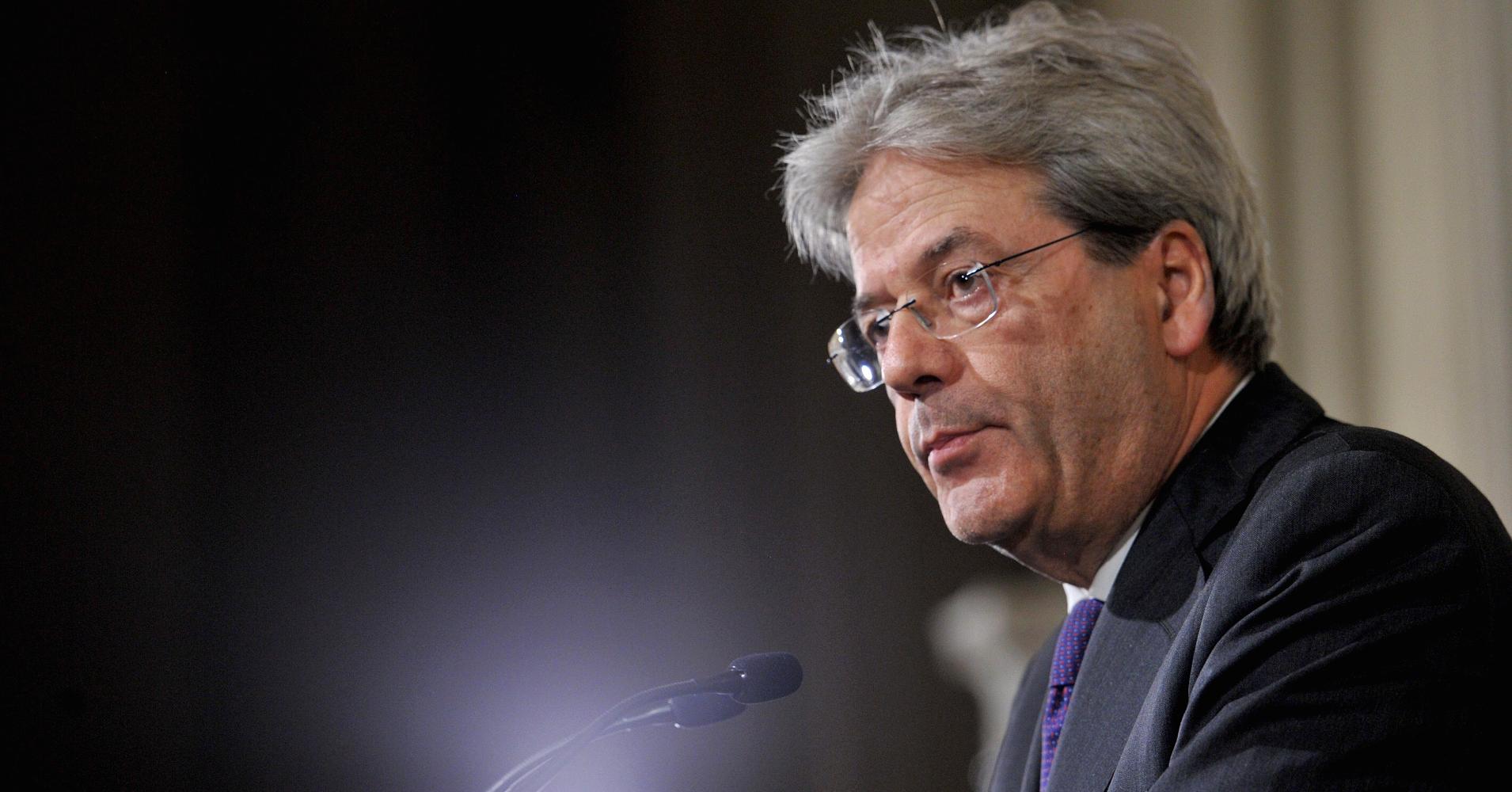
Italy’s economy has only just started to recover from a long period of intermittent recession, hence more uncertainty is unwelcome. Gentiloni said the election was a key moment for the country.
“We are exactly on the right track because the economy is back in growth — just one year ago the IMF (International Monetary Fund) had a forecast for 2017 of 0.7 percent growth in Italy but now it has been revised by the IMF to 1.6 percent growth for 2017 — but as we all know the fact that we have positive (growth) numbers doesn’t mean automatically that we’ve solved our social and political problems.”
“So we have to be very careful with this election not to disrupt the reforms that we’ve realized in the last five years with the effort of Italian workers and enterprises. To disrupt this would be very serious,” he said.
According to the latest poll by Tecne released on January 22, the anti-establishment, Euroskeptic Five Star Movement (M5S) under Luigi Di Maio is leading voter polls, with 27 percent of the vote.
Second is the Democratic Party, fronted by party secretary the former Prime Minister Matteo Renzi, is seen with 22.3 percent of the vote.
In third place as a sole party is the center-right Forza Italia led by former Prime Minister Silvio Berlusconi, with 18.2 percent of the vote, followed by Lega (Nord), a right-wing pro-Northern Italy party with 12.6 percent of the vote. The two parties could form a coalition government with the help of the smaller Fratelli d’Italia party, which is also Euroskeptic.
Gentiloni had little expectations that such an alliance would survive, saying that the center-right coalition was one of “very different positions.”
“One is a conservative party (Forza Italia) and the other one and two are populist, anti-EU parties (Lega Nord and Fratelli D’Italia). I think that this coalition won’t stay in place,” he said.
Prime Minister Paolo Gentiloni, who was given the role after Matteo Renzi resigned following a failed referendum on constitutional reform, is not running for re-election although he is popular with the business community.
“I am in good health but my commitment was, 13 months ago, to try to bring the country to the end of our legislature, addressing reforms and a couple of very serious crises on migration and the banking system. This was my commitment and the commitment ends with the election, after the election we will see,” he said.






