
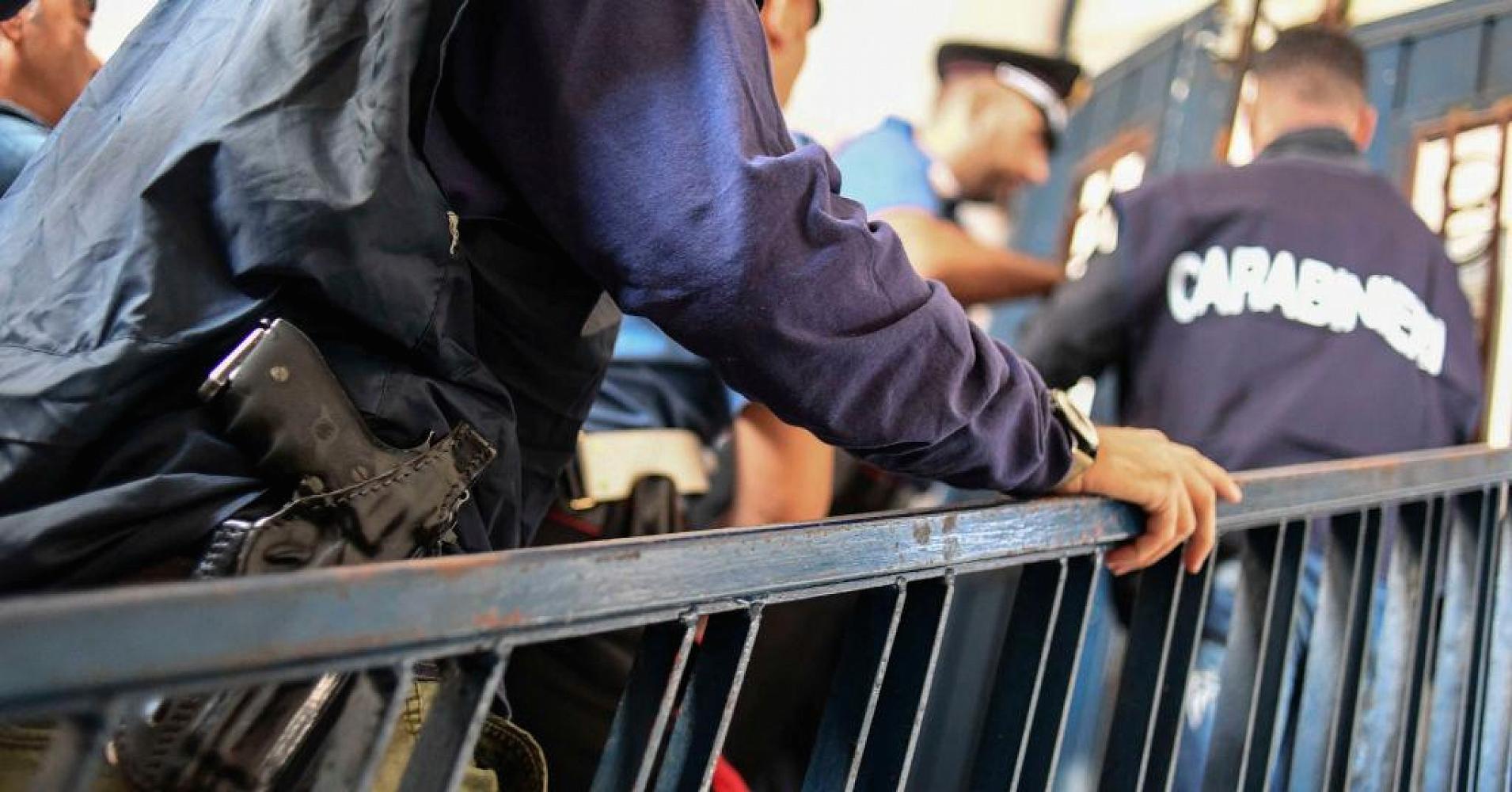
Italy’s Anti-Mafia commission has produced extensive research and reports and overseen reforms in order to combat the perennial problem in Italy of organized crime.
It’s believed to be a widespread problem in the country still, and there are other organized crime groups in Italy that the commission investigates too, including “La Sacra Corona Unita” based in Puglia (southern Italy) and “Stidda” (which means “star” in Sicilian dialect) a loose band of criminal gangs in Sicity often seen as rivals of the Cosa Nostra.
Italy is the euro zone’s third largest economy and yet the Mafia, whose activities range from selling contraband and counterfeiting goods to extortion, drug trafficking, prostitution, fraud, racketeering and more (you name it, the Mafia has probably done it) is an economic power in itself.
While hard to estimate the real amount of Mafia activities, Italy’s statistics agency Istat said in 2017 that the country’s “economia non osservata” or black economy (defined as undeclared economic and illegal activities) was worth a combined 208 billion euros dollar conversion in 2015, an amount equivalent to around 12.6 percent of Italy’s gross domestic product, with illegal activities around 17 billion euros within that total figure.
The highest-value sectors of the illegal economy in 2015 were drug trafficking (worth 11.8 billion euros) and prostitution (worth 3.6 billion euros), while connected transport and storage activities accounted for 1.3 billion euros, Istat said.
Not only a domestic issue, major profits from large-scale illegal activities mean the Mafia has infiltrated many parts of the wider legitimate economy in Italy and Europe, laundering its “dirty money” in real estate investments and participation in public and private contracts, “particularly in the field of construction, public utilities and waste disposal,” according to a 2016 report by Eurojust, the European Union’s judicial cooperation agency.
“In addition to laundering in foreign countries the proceeds of illicit activities carried out in Italy, these organized criminal groups have massively infiltrated the legitimate economy of many (EU) Member States, such as Spain (particularly favored by the Italian Camorra), the Netherlands, Romania, France, Germany and the U.K.,” Eurojust said.
Rosy Bindi, the head of the Anti-Mafia commission, said Wednesday that organized crime groups were becoming more sophisticated and increasingly recycling money earned with drugs in legitimate economic activities.
“The fight against the Mafia can no longer be delegated only to specialists because today’s mobsters know more than ever to blend in with our world,” she said, according to Corriere della Sera.