

Italy’s vote on Sunday to determine who’ll govern the nation appears unlikely to yield the parliamentary majority needed to sustain a viable government.
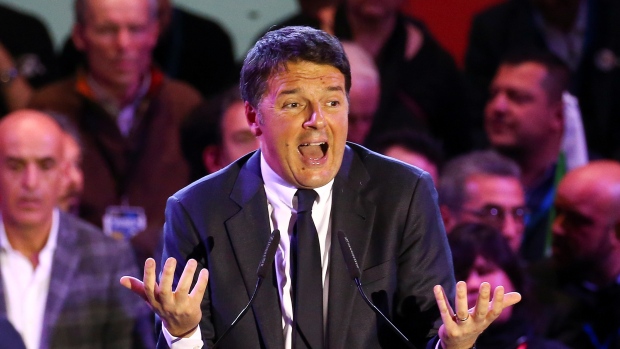
Analysts predict the vote will produce three blocs — the 5-Star Movement of Luigi Di Maio, former prime minister Silvio Berlusconi’s alliance of centrist and right-wing groups, and a centre-left group led by former prime minister Matteo Renzi.
While polls have consistently placed the anti-establishment 5-Star Movement as the top vote-getter for a single party, its margin isn’t expected to be enough to govern alone.
That could give the edge to Berlusconi’s coalition of his Forza Italia party, the anti-immigrant nationalist League and the right-wing Brothers of Italy.
On the left, the Democratic Party’s Renzi is still the main force, but polls indicate his party is no longer the country’s most popular.
Pollsters predict the election will result in a hung parliament in which in no particular party or coalition ends up with an absolute majority of legislators.
Protracted political negotiations might be needed to form Italy’s next government.
Berlusconi can’t run for office because of a tax fraud conviction, but he has flagged as Forza Italia’s prime ministerial candidate European Parliament President Antonio Tajani, who is seen as a moderate.
The anti-establishment 5-Star Movement of Luigi Di Maio could emerge as the biggest party, but it looks unlikely to be able to form a government without the support of one of the other blocs.
Ruling party trailing in polls
The Democratic Party under current Prime Minister Paolo Gentiloni is trailing in the polls, while Berlusconi could make a comeback at the age of 81 if his alliance can form a government with League leader Matteo Salvini.
Salvini took over as head of the right-wing Northern League in 2013, but recently rebranded the party’s name, dropping “Northern” in a bid to broaden the party’s base.
But how the election plays out might well depend on the biggest bloc in the opinion polls: those saying they’re undecided who will get their vote or if they’ll even vote at all, along with those who say they’ll boycott the vote.
“The situation is pretty bad, that is there aren’t candidates valid enough. Sincerely, I would never opt for Berlusconi, I don’t think he’s capable to govern again” said Paolo Mercorillo who is from Ragusa in Sicily, and said he will not vote.
Italy’s underdeveloped south, where youth unemployment runs 50 per cent or higher, and the jobless rate among all ages is nearly double that in the relatively affluent north, will be a battleground for Italy’s political elections.
Whichever party can convert voters’ palpable anger in the south into support in Sunday’s election could very well determine who governs Italy.
“I have positive expectations, I hope Italians will be reasonable, and (when voting) they’ll keep in mind all the problems we have, and that aren’t easy to solve. But with everybody’s collaboration, participation and common sense, we can make it” said Rome resident Liliana Eusebi, who confirmed she will go to cast her vote.
There are 46.6 million Italians eligible to vote for the Chamber of Deputies and 42.9 million for the Senate — but some analysts predict that between 7 and 9 million Italians haven’t yet made up their mind.
Voters must be 18 or older to cast ballots for the Chamber and 25 or older to vote for the Senate.






