

Johannes Eisele | AFP | Getty Images
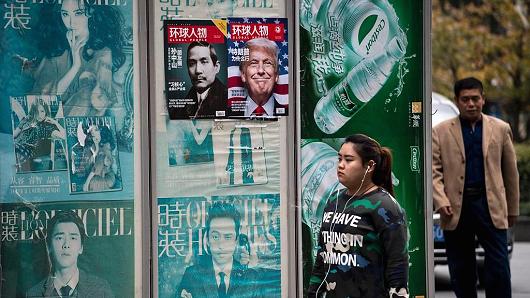
A youth wearing a shirt that reads ‘we have nothing in common’ walks past a news stand advertising local Chinese magazine Global People, showing cover portraits of Sun Yat-sen (centre L), founding father of the Republic of China, and US president-elect Donald Trump (centre R), in Shanghai on November 14, 2016.
China is tightening its grip on online media, with new government regulations that aim to curb information published and distributed on the internet.
The rules, issued by the Cyberspace Administration of China (CAC), become effective June 1 and apply to websites, blogs, livestreaming video, mobile messaging and social platforms. The government also specifically singled out topics including politics, economy, military, foreign affairs and “other areas of public interest.”
All services must have a Chinese citizen as the top editor, and all editorial staff must be officially credentialed and approved by regulators. While this has been a longstanding requirement of traditional news media operating in China, online channels have fallen into a gray area.
The new curbs are meant to “strengthen management of information on the internet, promote the healthy and orderly development of internet news, in accordance to law,” the CAC said in a statement published online.





