
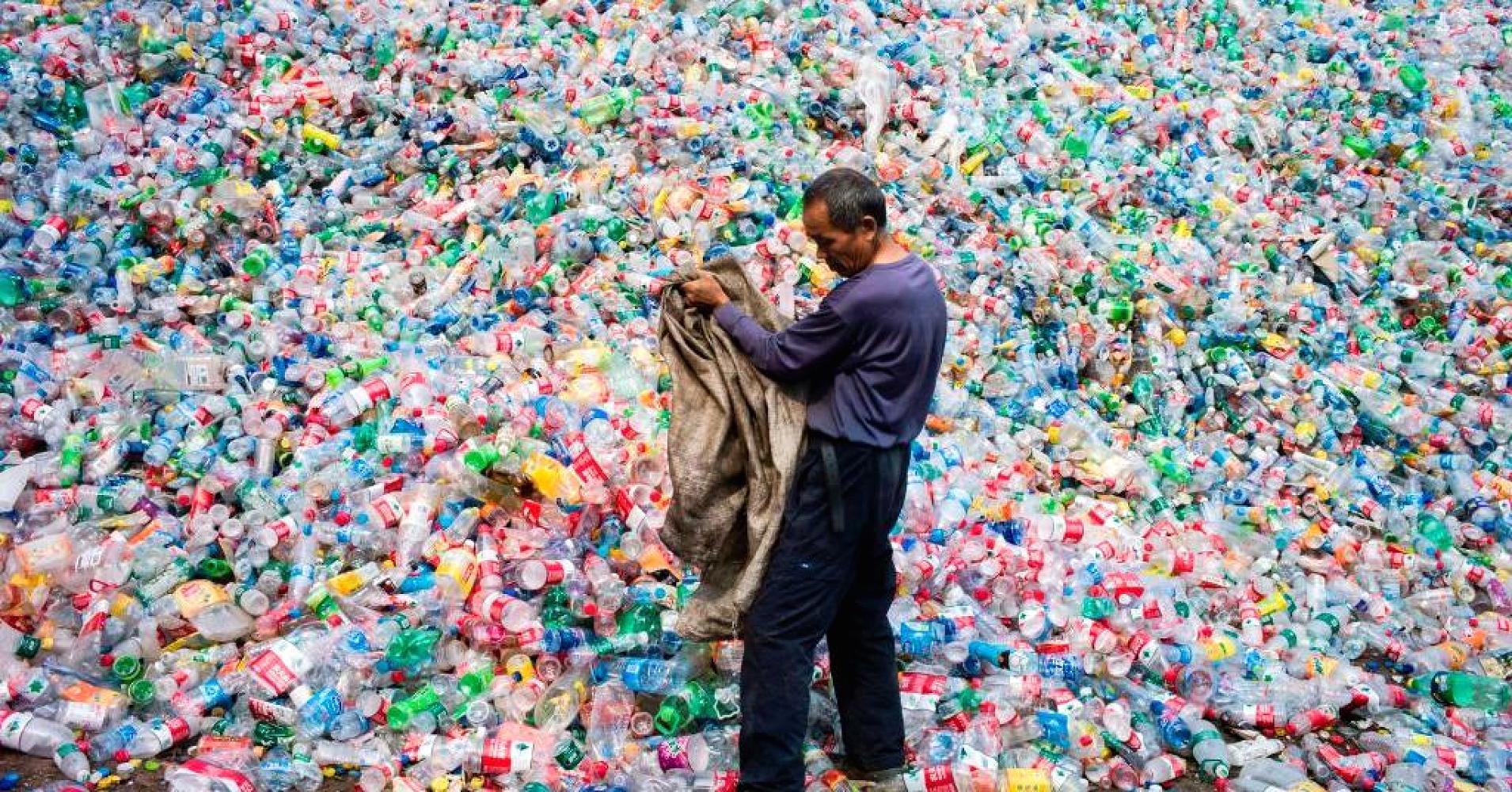
“It’s a process involving metathesis between polyethylene and the shorter alkanes which are very cheap and have low values,” he added. “The metathesis between the polyethylene and the shorter alkane will result in the breakdown of the polyethylene into shorter alkanes, which are suitable for diesel fuels.”
The team believe they may have made a breakthrough in their research. “This process needs a lower temperature compared to the conventional methods,” Huang said. “It can degrade the polyethylene into a relatively clean product under milder conditions.”
The end results seem to show promise for the future. “In our process, we can get the oil hydrocarbons as the major products and some waxes as the minor products,” Chuan Qin, a student at SIOC, said. “The major products can be used as a fuel, such as diesel,” Qin added.
SIOC’s Zheng Huang went on to explain that, as far as the research he and his team were carrying out, there was still work to be done.
“At this early stage, we need to develop a method which can degrade plastic into a useful product, but eventually we need to develop a more efficient system which can make the process economically viable,” he said.
Currently, their technology was limited to the degradation of polyethylene, but Huang said the hope was to develop a way of degrading other types of plastic.