
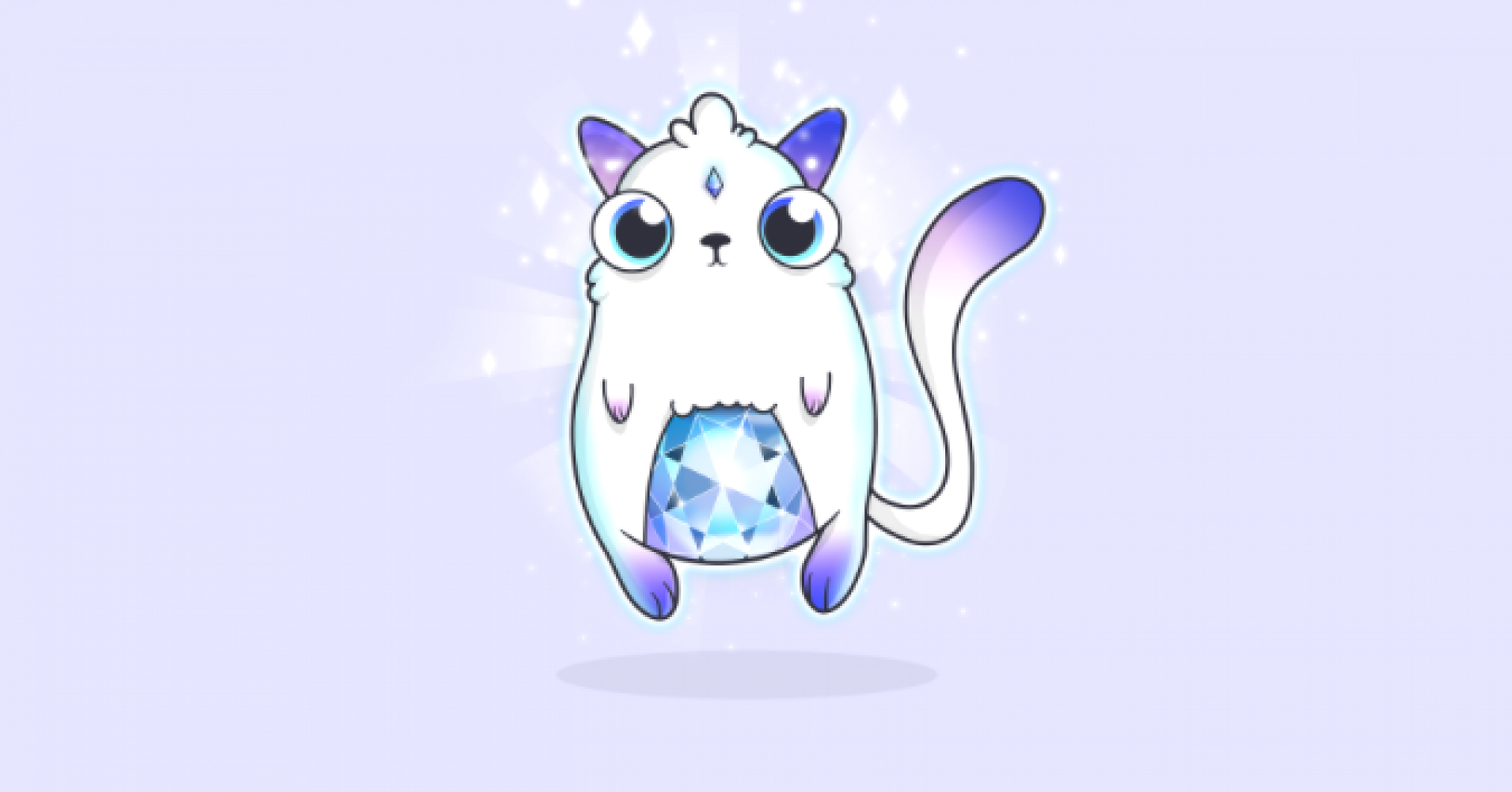
There will be 4 billion possible combinations of cats. The company does not own or control all the cats because CryptoKitties themselves can’t tell when a certain type of cat will be born. It’s all based on combinations of traits. For example, Giang’s favorite cat is a not yet released dragon cat — but he has no idea when the right sets of cats will meet each other in order to create it.
You have to pay to play, so if you want to breed your own kittens you’ll need at least two. You can buy the first generation “Gen 0” cats from the company which spawn every 15 minutes until November 2018, or you can purchase offspring from users in the auction-based marketplace.
Pricing is determined by supply and demand: “Fancy” cats with rare traits that look like birds, vampires or sailors go for more than common cats. To complicate matters, some cats may have unusual recessive genes that make them more valuable.
Each transaction is recorded on a blockchain ledger, so faking ownership or losing your cat is virtually impossible.
“In the end of the day, it’s a cute game, a pioneer in its field and many are to follow,” Daniel said, pointing out there’s already a competitor CryptoPuppies game in the works.
Giang adds that the person who bought the $100,000 kitten could have purchased the ether coin at a lower price, so it’s possible they weren’t, in fact, spending that much on a digital collectible. Still, it’s not the company’s intention to make a game for the rich.
“What I would like is to create an ecosystem where a larger population can engage with the cats,” he said. “I look forward to the future where someone who wants to spend $3 can buy one.”
As for why the company went with cats as opposed to other animals, it’s because cats rule the internet.
“If you were going to build a consumer internet application, you would need to explain why you are not using cats – not why you are using them,” Flavelle said.