

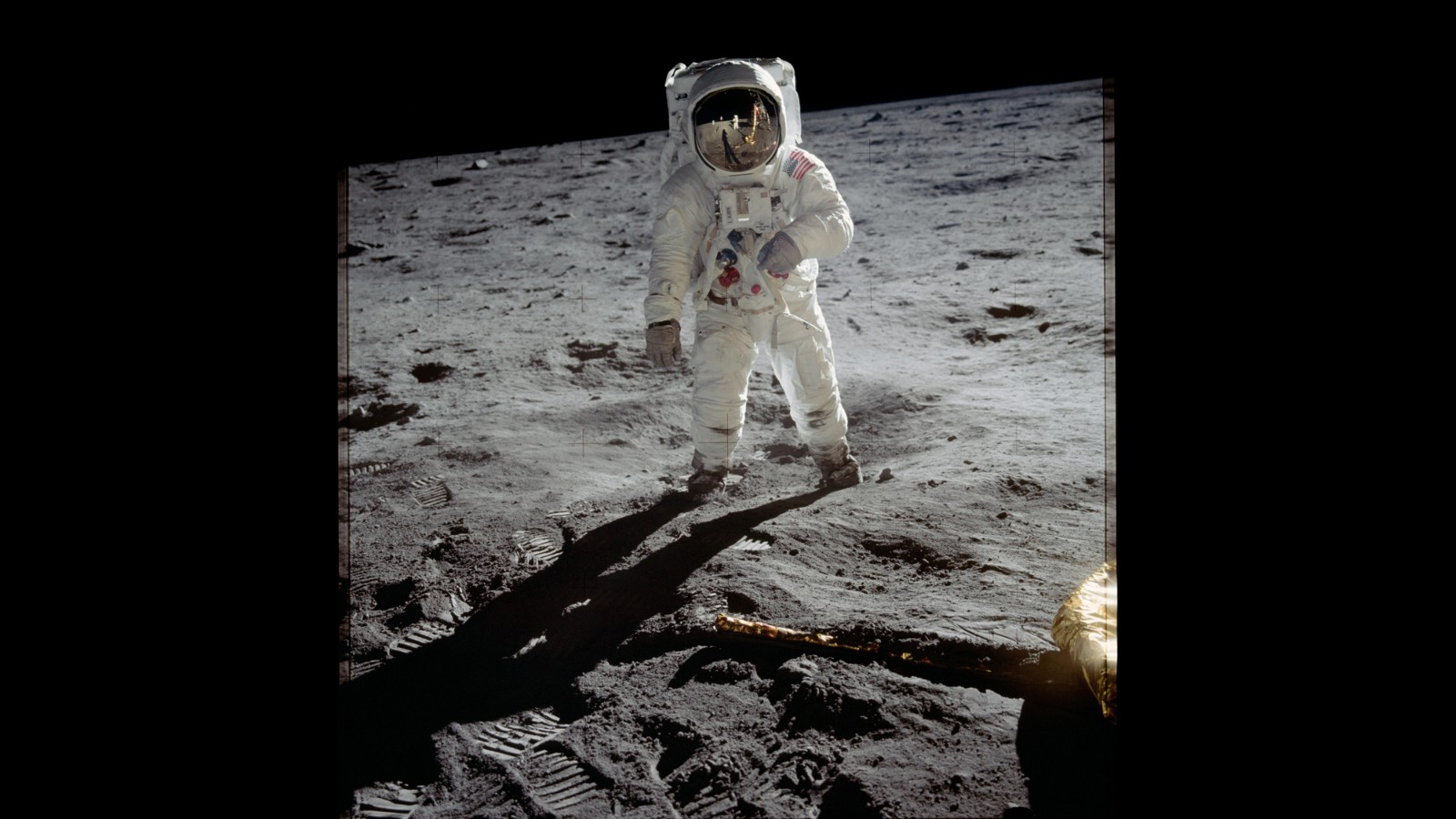
Facts:
The United States ended its human spaceflight program with the launch of Atlantis on July 8, 2011, and landing on July 21, 2011.
Timeline:
October 4, 1957 – The Soviet Union launches Sputnik I, the first artificial satellite, which starts the “space race” between the Soviets and the United States.
– to orbit a manned spacecraft around Earth.
– to investigate man’s ability to function in space.
– to recover both man and spacecraft safely.
April 12, 1961 – Soviet cosmonaut Yuri Gagarin is the first human in space aboard Vostok 1. He spends 108 minutes in space and makes one orbit around the earth.
May 5, 1961 – Project Mercury astronaut Alan B. Shepard is the first American in space aboard Freedom 7. He spends 15 minutes in sub-orbital flight.
– to subject man and equipment to space flight up to two weeks in duration.
– to rendezvous and dock with orbiting vehicles and to maneuver the docked combination by using the target vehicle’s propulsion system.
– to perfect methods of entering the atmosphere and landing at a preselected point on land.
– to gain additional information concerning the effects of weightlessness on crew members and to record the physiological reactions of crew members during long duration flights.
June 16, 1963 – Soviet cosmonaut Valentina Vladimirovna Tereshkova is the first woman in space, aboard Vostok 6. She spends 70 hours in space and orbits the earth 48 times.
– to establish the technology to meet other national interests in space
– to achieve preeminence in space for the United States
– to carry out a program of scientific exploration of the Moon
– to develop man’s capability to work in the lunar environment
March 18, 1965 – Soviet Alexei Leonov is the first man to walk in space.
June 3, 1965 – Ed White becomes the first American to walk in space, during Gemini 4.
April 1971 – Salyut, a manned orbiting space lab, is launched by the Soviet Union.
– to prove that humans could live and work in space for extended periods
– to extend our knowledge of solar astronomy well beyond Earth-based observations
June 18-24, 1983 – Sally Ride is first American woman in space aboard mission STS-7.
October 29, 1998 – A 77-year old John Glenn becomes the oldest human ever to go into space, aboard the Space Shuttle Discovery.
February 1, 2003 – The Columbia breaks up upon re-entry during mission STS-107, killing all seven crew members. It is the second loss of a shuttle in 113 shuttle flights.
October 15, 2003 – Yang Liwei is first Chinese man in space aboard Shenzhou 5.
July 21, 2011 – With the landing of the 135th and final space shuttle mission, the US space shuttle program ends.
June 16, 2012 – China launches Shenzhou 9 with a crew of three, Liu Wang, Jing Haipeng and Liu Yang, from the launch pad at Jiuquan Satellite Launch Center in western Gansu province. Liu Wang is the first female taikonaut to go into space.