
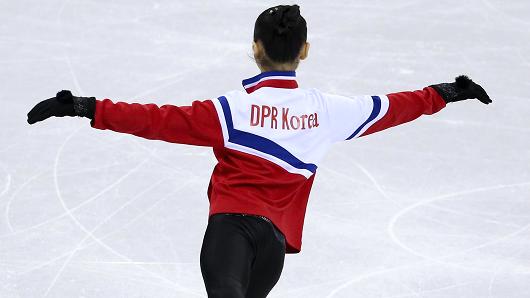
Jean Catuffe | Getty Images
Tae Ok Ryom of North Korea warms up during the Figure Skating Pairs Skating Short Program on day five of the PyeongChang 2018 Winter Olympic Games.
“The emphasis on sports is part of Kim Jong Un’s strategy to construct and highlight more of what makes life fun, such as culture and entertainment,” explained Benjamin Katzeff Silberstein, associate scholar at the Philadelphia-based Foreign Policy Research Institute. That’s in stark contrast to previous administrations, which focused on “urging citizens to tighten their belts,” Silberstein continued.
“When something is deemed particularly important and crucial to develop, such as sports, North Korea finds a way of getting what it needs for it,” he added.
Experts note that elite talent has always been well fed and funded, even during years of famine in the late 1990s.
Simon Cockerell, general manager at Koryo Tours — a Beijing-based firm that brings foreign tourists to North Korea — said he’s witnessed a definite increase in government support for sports.
One of Koryo’s most popular tours is centered on the Pyongyang Marathon. Around 1,000 foreigners ran in 2017’s edition, by far the highest number, Cockerell said.
Among ordinary North Koreans, popular sports include soccer, basketball and volleyball. The latter is particularly favored since it requires less space and is non-contact so men and women can play together, Cockerell noted.