

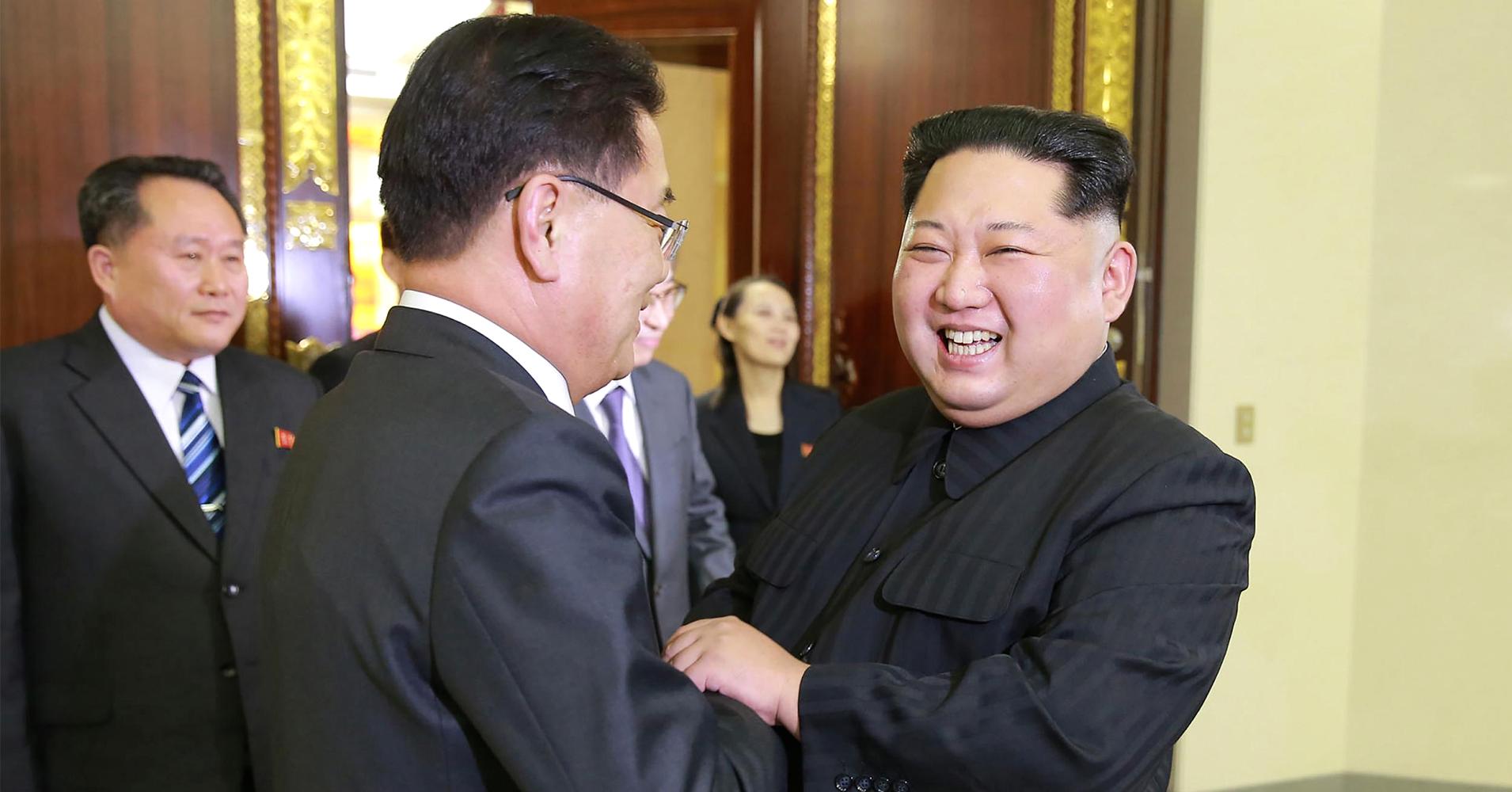
The news “represent the next step in North Korea’s 2018 charm offensive,” Miha Hribernik, senior Asia analyst at global risk consultancy Verisk Maplecroft, said in a note.
“If past experiences are anything to go by, Kim Jong Un is hoping to extract a loosening of sanctions or other assistance by feigning a willingness to disarm,” Hribernik explained. “The North Korean economy is straining under the weight of sanctions, forcing the country to resort to a well-worn playbook.”
Years of failed negotiations, most notably during the 2003-2009 Six-Party Talks, indicate the North’s long-standing pattern of offering talks in exchange for fuel oil, aid or a release of frozen funds.
A breakdown in dialogue is possible “at any time, particularly if Pyongyang fails to obtain significant concessions,” according to Hribernik.
Analysts also point out that President Bill Clinton’s administration provided a security guarantee to Pyongyang in 1994 as part of a deal to halt the country’s nuclear program but both parties didn’t keep to their side of the bargain.
The Clinton administration promised Pyongyang heavy fuel oil shipments and construction of light-water reactors, but these were delivered only partially or not at all, noted Leonid Petrov, a Korean studies researcher at the Australian National University.






