
The views expressed here are solely those of the authors.
Piper Perabo: Exposing the problem is a first step
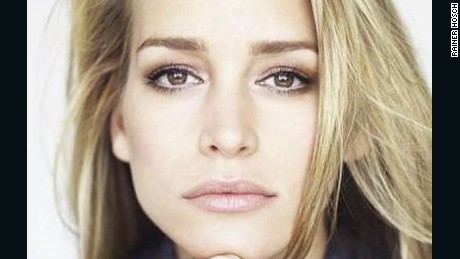
I had a similar feeling after recent news stories recounted allegations against Harvey Weinstein. These famous incidents make the news, but they are not singular. This behavior of white male dominance is understood and cherished — that’s what I hear in the shared laughter on that “Access Hollywood” tape. These conversations expose all the work we have to do, just to admit where we’re at, so we can find our way to equality, and I see that as a sign of hope.
Poorna Jagannathan: Does violence against women not count?
As a teenager on a New Delhi bus, I would invariably feel a hand down my shirt or up my skirt. It was an everyday occurrence. That, on top of an assault at 9, just made the extraordinary event of sexual violence, into the most ordinary thing. I did what most of us do: kept silent.

But even at 9, it was a calculated choice. I chose to stay silent because it was better than telling parents and teachers and they not doing/unable to do anything about it. By staying silent, I betrayed just myself. Speaking out would have led to my betrayal by the people I loved the most.
Her story inspired me and so many women across India and the world to break our silences. We’d had enough. The dam had simply burst. We began to see the violence as extraordinary again.
Silence is a hard thing to understand. I thought it protected me, but it protected my perpetrators. I thought it would end the violence, but it was actually what was perpetuating it. I thought the silence was all mine, but it was what made me deeply complicit in the culture of violence.
My silence, layered on top of the silences of millions of other women, created a system where there was no accountability. When we broke it, we were sure the system would collapse, that our breaking of the silence would end the cycle of violence.
But as more women dare to break their silences, many times at enormous costs to themselves, we are faced with an entirely new reality. There is no real fallout, no real consequences.
The system will support his slow integration, while it will continue to betray those who have the courage to speak out.
Poorna Jagannathan is an actress and producer best known for her portrayal of Safar Khan in the Emmy-nominated show “The Night Of.” In response to the 2012 gang rape and death of Jyoti Singh Pandey, she initiated and produced the play “Nirbhaya,” written and directed by Yael Farber.
Rachel Sklar: This is an everywhere story
The allegations against Harvey Weinstein are grotesque and horrifying and familiar. How many women read about Weinstein literally blocking a woman’s path, and thought, “Yep, I’ve been there”? How many women remembered their own experiences pushing away unwanted embraces and uninvited hands? Or worse?

Don McPherson: Men have to break the silence

I have been working to prevent men’s violence against women since I retired from pro football in 1994. Awareness of the problem has grown, but critical, underlying causes remain unchecked. Men are still silent.
I came to realize we don’t raise boys to be men, we raise them not to be women. In other words, we don’t deliberately nurture boys to be emotionally whole (and nonviolent). We leave them vulnerable to a broader culture dominated by patriarchy and traditions of silence from men — about themselves, and the sexism and misogyny that harm women.
To break that silence I examined the culture in which I was nurtured. This led me to a crucial question I ask all men. “What’s the worst insult you heard as a boy?” The answer: “You throw like a girl!” This charge enforces a narrow view of masculinity — demanding that boys “man up” — and delivers an insidiously dangerous message that girls and women are “less than.”
My work is focused on the deliberate and intentional engagement of boys and men, not simply to prevent violence against women, but to help boys and men recognize how sexism diminishes them while simultaneously supporting a culture of misogyny and silence about men’s violence against women.
Danai Gurira: Listen and learn what if feels like to be a girl

She must function in a world that too often treats her like prey, clips her wings, burdens her with tormented memories of fear and shame. Remember that girl today, the same girl inside so many women, full of wounds but bandaged over with silence and a smile.
Remember the world she is in, so often hostile to her truth, to the fullness and volume of her voice. The world that convinces her she is always to blame. Take the time today not only to remember, but to listen, to learn, to start to understand what if feels like, in this world, for a girl. And resolve to make it better. For her.
Erin Richards: We need to teach men how to communicate their feelings to women

I was speaking to my executive producer about the stories surrounding Harvey Weinstein — a man whose alleged despicable lechery and abuse of power was widely known among women in my line of business. And we came to the conclusion that though it’s been too long coming, these revelations are a positive step forward. As media moguls like Weinstein, Bill Cosby, Roger Ailes and others fall, they send a strong message to other predators that this level of harassment will no longer be tolerated.
But the bigger issue is that we don’t teach men how to appropriately communicate their feelings to women. We don’t explain to them that being rejected does not make them less of men. We need to give them the correct vocabulary to express themselves. We need to help ingrain in them messages of self-love so that they don’t act out their repressed frustrations on others. That’s how we will make a safer society for us all.
Reshma Saujani: We need to take power and make opportunity for ourselves

I joined the fight to close the gender gap in tech after a political campaign where I saw coding and robotics classes full of boys. I couldn’t stop coming back to the faces I didn’t see — I kept thinking, where are the girls?
I started an organization to do something about that, but these days you can’t flip on the TV or check your news feed without hearing about horrible mistreatment of women. Whistleblowers from college campuses to Silicon Valley to Hollywood have begun to bring rampant, closeted sexual harassment out of the shadows, yet for every brave woman who speaks out, hundreds of powerful men remain silent and thus complicit.
These men could turn the tide far faster than women can — that’s a sad but true fact — and yet they don’t. As a result, casual, small acts of sexism may hang around for another whole generation.
That’s the bad news. The good news is that as any psychologist or self-empowerment guru will tell you, how we respond and act in the face of that is up to us. I believe we need to stop trying to wrestle for power, respect and opportunities from others and instead make them for ourselves.
Alice Stewart: This is not about politics, it’s about an alleged sexual predator

At the end of the day though this is not about politics. This is about a man whose behavior was demeaning and damaging to countless women. Isolated incidents of sexual abuse happen — what we have here is a trend enabled by people looking the other way for fear of retribution.
The culture of complicity cannot continue. Let’s hear these women out, let’s support their courage, and let’s hold this man accountable for his actions.
Alice Stewart is a CNN political commentator and former communications director for Ted Cruz’s 2016 presidential campaign.
Roxanne Jones: Women who wait to report abuse and harassment aren’t heroes

It’s become the vogue in Hollywood for women to wait decades before speaking out about past sexual assaults or harassment they’ve faced over their career by powerful men. And while it’s nice that these women are finally telling their painful stories publicly, I don’t think they are heroes, or even especially courageous.
Too harsh you say? Not at all. For me, settling for a huge financial settlement from your employer, writing a book or even worse — staying silent when confronted by a predator at work — is the weakest move we can make as women who profess to want full equality and respect. And while it may keep you safe for a moment or gainfully employed, your silence puts every other woman at risk for harassment, or much worse.
Workplace harassment isn’t just a Hollywood problem. Working women face these predators every day. I’ve been there myself as a young woman on a fast-track career, who was harassed and groped by a bully at work. Many advised me to stay quiet. Instead, that week I reported the incident not just to human resources but to the head of the company. And yes, I was terrified that I’d ruin my career. I didn’t, as far as I know.
Let’s stop hiding our pain in the closet hoping it will go away. Hoping men will accept us if we stay pretty, silent and compliant. Each of us finding our voice is the only path to true empowerment.
Roxanne Jones, a founding editor of ESPN Magazine and former vice president at ESPN, has been a producer, reporter and editor at the New York Daily News and The Philadelphia Inquirer. Jones is co-author of “Say it Loud: An Illustrated History of the Black Athlete.” She talks politics, sports and culture weekly on Philadelphia’s 900AM-WURD.
Porochista Khakpour: Women in America are second-class citizens at best, and this is unacceptable

I’m sad to say I’ve been aware of gender inequities since I was a young child, a refugee leaving Iran. It was clear that with the mandatory veil the new regime in Iran had decided that women were not worthy of choice. One would have hoped that traveling to the West and relocating to America would have meant an end to all that, but the sexism I experienced in the United States was consistent and with no end in sight — in the classroom by pupils and teachers, in the workplace by colleagues and bosses, everywhere.
I’ve been raped, assaulted or sexually harassed so many times in my life. I now think with the Trump administration we are further than ever from resolving all this. Our greatest impediment is a President who has proudly harassed and allegedly sexually assaulted numerous women. We need to set ourselves apart from this and work harder than ever to make this place safer for the generations to come. Women in this supposedly greatest nation in the world are currently second-class citizens at best, and we need to let it be known vocally this is unacceptable.
Porochista Khakpour is the author of the novels “Sons and Other Flammable Objects” and “The Last Illusion” and the forthcoming memoir, “Sick.”
Jill Filipovic: How far misogyny can take you in America

I’ve been writing about women’s rights for more than a decade, mostly online, with the attendant verbal attacks — first in blog and website comment sections, and later on social media. I’ve had stalkers and received rape and death threats. There is not a day that goes by without someone berating me online, not a misogynist slur I have not been called hundreds of times. I thought I knew misogyny.
And then the Republican nominee for President was caught bragging about grabbing women by their genitals, and won the election anyway.
Women — and men — need to acknowledge what this means: We already knew that sexual abusers could for years operate under the radar of high-profile industries, as has been alleged with Harvey Weinstein.
But women are even further away from safety and equality than the most cynical feminists believed when an admitted sexual predator can actually win a national election.
It wasn’t a surprise that someone such as Donald Trump would yuck it up about sexual assault, or that women accused him of doing what he said he did. Nor was it a surprise that the more craven members of the Republican Party would back him if it meant getting their way on racist immigration bans or tax cuts for the rich they sought. But nearly all of them?
I assumed we could mostly agree that misogyny and sexual violence were bad; I assumed my online tormenters were sexist outliers. It turns out we can’t, because they are Trump’s America. They’ve always been haranguing women on Twitter. I just didn’t think they’d make it to the White House.
Penn Jillette: Look to Moxie

I get asked a bunch, “Is your son into magic?” He couldn’t care less.
I have never been asked, “Is your daughter into magic?”
Lack of women in magic is not in the top million most important feminist issues, but magic is my field and Mox is in my family. Magic is still a boy’s club, and most magic patter is just formalized mansplaining.
Mox can fix all that. Mox might become the greatest magician in the world.
Penn Jillette, a writer, television host and frequent guest on a wide range of shows, is half of the Emmy Award-winning magic act duo Penn & Teller. His most recent book is “Presto.”
Ai-jen Poo: Understanding where the inequity lies

The first step to achieving gender equity is understanding where the inequity lies. Discovering that requires the bravery of women to come forward with their stories. In this context, we assume the moment of courage is breaking the silence — which requires immense courage — but in reality, life after the silence is broken can be the hardest part.
When I was in college, I worked as a hotline volunteer at a domestic violence shelter for Asian immigrant women. The women I spoke to were mostly mothers, and a significant motivation for leaving their abusers was the safety of their children. The majority of those women worked in garment factories, restaurants and in homes as caregivers or house cleaners. Many worked long hours, but it never seemed to be enough to pay the rent or put food on the table. And so they often ended up back in the shelter or back with their abusers.
That women suffer abuse, harassment or inequity in the workplace is undeniable. But the challenges faced after speaking out are so enormous that many women keep their stories silent for years and years, as we read in the news, or are forced back into cycles of violence, as I heard on the hotline. We need to ensure women are heard, but also supported — with economic opportunities and supportive communities — afterward. The only thing worse than silence is isolation and vulnerability after the silence is broken.
Oset Babur: The biggest impediment to equality is a lack of trust in women

As someone who attended a women’s college, I’ve been asked time and time again, often by men, what the objective of such an institution is in the 21st century. After all, women can now apply to schools whose classrooms were once off-limits and find themselves at the head of boardrooms that were once inaccessible, right? But in this century, the President of the United States brags that his star power gives him rights to women’s bodies, as a trusty tool in committing sexual assault, and in this century, our first instinct is to subject repeatedly every decision women make (whether it be about their reproductive health, or speaking up against abuse) to an intense level of scrutiny that could do wonders if it were put to use in, say, anti-gun legislation, universal health care or education.
The biggest impediment to gender equality I see in 2017 is a universal lack of trust toward women. This distrust is reinforced every single time a senior executive repurposes a female colleague’s ideas as his own, and every time someone without the ability to become pregnant makes a decision on behalf of those who can. And while it’s true that trust is usually earned, it just isn’t up to women anymore to earn this trust; it’s up to everyone else (from Harvey Weinstein to Donald Trump) to show that they are deserving of it.
Oset Babur is an editor and culture writer whose work has appeared in Teen Vogue, Vice and The Guardian.
Peggy Drexler: Women aren’t turning out for feminism

It’s commendable, of course, that after the raft of horrendous sexual harassment allegations against Harvey Weinstein and other major power brokers in the media, more and more women are speaking out against the men who abuse positions of power at their expense. Or against the industries that compensate men at a higher level than women. But the root of the problem lies much deeper.
These are women who aren’t turning out for feminism, or who don’t take it seriously — who view the fight as outdated because they never had to fight it themselves. Or so they think. Because the fight is far from over. The allegations against Weinstein are only the latest expression of this. My greatest hope is that those who have the power, and need, to stand up for women will realize it’s not only entirely relevant, but essential that they do so. My greatest fear, however, is that they will not.
Peggy Drexler is the author of “Our Fathers, Ourselves: Daughters, Fathers, and the Changing American Family” and “Raising Boys Without Men.”
Naaz Modan: Being judged by what you wear

Shortly after I decided to wear the hijab, I noticed a shift in how I was perceived in public and professional settings. My contribution to academic discussions as a college student was received with surprise at my intelligence, and now my work as journalist is oftentimes taken with a grain — or mountain — of salt by readers. Comments I’ve received range from “The author of this wears a scarf” to “We don’t need to hear about America’s problems from you in a hijab.” My perceived intellect and the amount of influence I command in a room are dictated in others’ minds by the clothes I wear.
There is a similar struggle on the opposite end of the spectrum, where a woman’s value and experiences in the workplace are determined by the amount of skin she chooses to show and how she chooses to show it.
This kind of gender-based power dynamic permeates every woman’s experience to some extent, whether she is fully covered or not, sometimes even before she enters the workplace.
Most recently, I was advised to exclude my photo from job applications — it is much easier to land an interview if I’m misperceived as a male from an ambiguous background whose name might be a variant of “Nas” than as a visibly Muslim woman who covers. I have wondered more than once how many times I got rejected from life-changing opportunities because of the way a male on the other end of the hiring process judged my worth based on the way I dressed.
Naaz Modan is a content editor for Muslim Girl, a publication focused on Muslim women’s issues and empowerment.
Jeff Yang: Whose stories get believed

I feel like there wasn’t any singular moment when the degree of work needed was suddenly made plain. It’s always been there — but always suppressed, overlooked and dismissed. I think that the reporting around sexual harassment in Silicon Valley, in which a disproportionate number of the victims stepping forward were Asian-American women, in particular hammered home to me that there are layered aspects to who’s targeted, how they respond, whose stories are believed. Women of color are most frequently ignored, and Asian-American women frequently subjected to stereotypical expectations of silence and passivity.
That intersectional context is too often set to the side in these debates, and it shouldn’t be.
Jeff Yang is a frequent contributor to CNN Opinion, a featured writer for Quartz and other publications and the co-host of the podcast “They Call Us Bruce.” He co-wrote Jackie Chan’s best-selling autobiography, “I Am Jackie Chan,” and is the editor of three graphic novels: “Secret Identities,” “Shattered” and the forthcoming “New Frontiers.”