

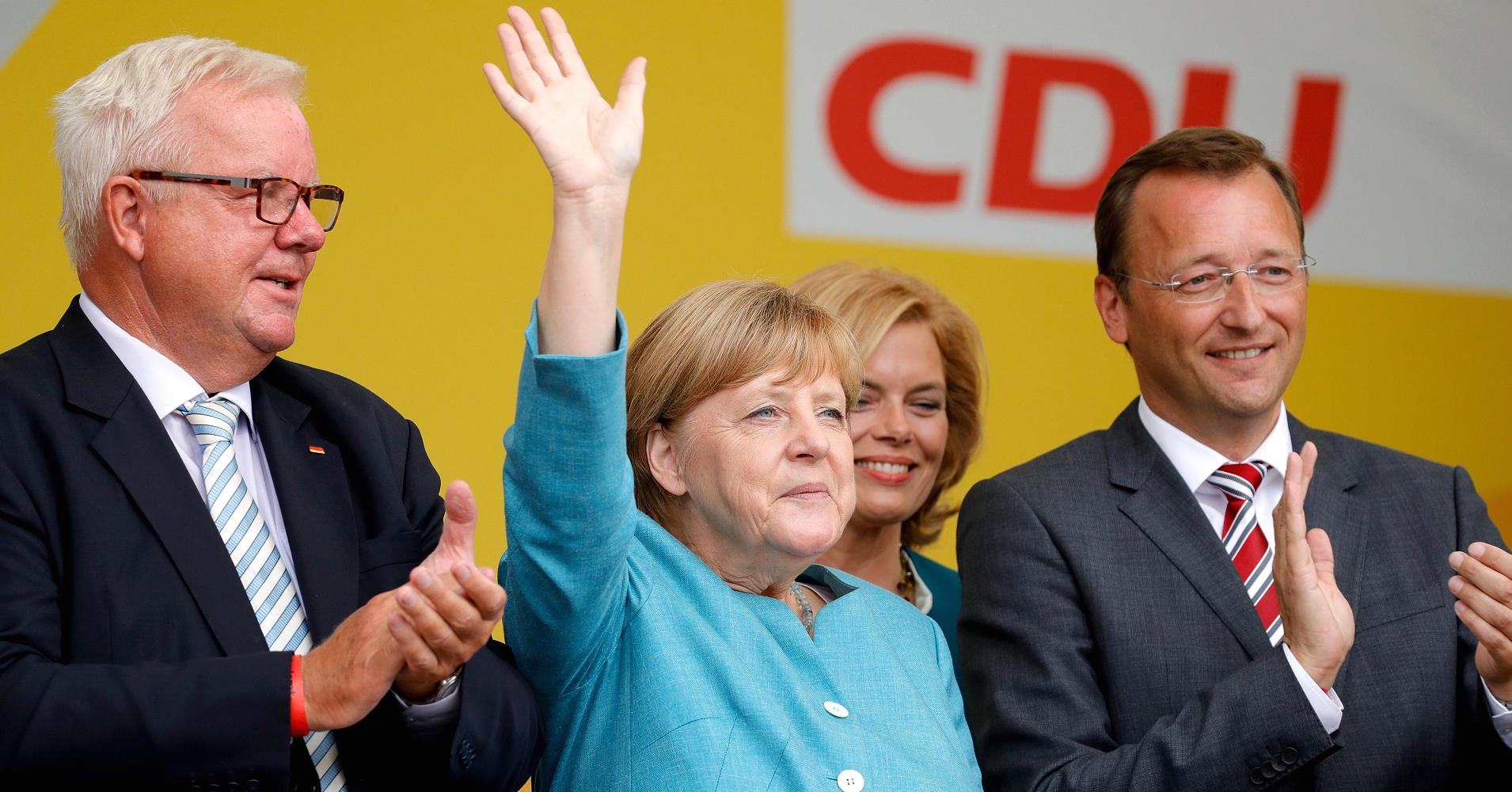
Although Merkel’s CDU/CSU alliance won the highest share of the vote, it has not won enough that it can govern alone, meaning it will have to find coalition partners from smaller parties in order to form a four-party government not seen in Germany for decades.
On a practical level too, the Bundestag has 30 days to convene following the election and then the parliament itself must elect the chancellor, although this will be Merkel, as Germany’s biggest party always puts forward its leader as the candidate for chancellor.
The CDU/CSU’s former junior coalition partner, the SPD, said it would quit the “grand coalition” of the last four years and would instead go into opposition following its dismal election result.
Calling the result a “bitter loss,” Reuters reported, Martin Schulz, formerly head of the European parliament, said he would stay on as the party’s leader. However, after what has been generally viewed as a lackluster election campaign, whether that position is tenable in the long-term remains to be seen.
All political parties ruled out a coalition with the nationalist AfD party and setting aside the SDP, the most likely coalition is the so-called “Jamaica” option with the CDU/CSU approaching the pro-business Free Democratic Party (FDP), which gained 10.7 percent of the vote, and the Greens, which gained 8.9 percent.
The process of trying to form a governing coalition could take months, according to Societe Generale’s research team Guy Stear and Brian Hilliard – and could affect the wider direction of the European Union (EU).
“With a poor election result for the CDU and SPD… we expect the forming of a new coalition to take longer than usual. In addition, with strong results for both the AfD and the FDP, we suspect that Germany’s EU policies will be more cautious and restrictive, irrespective of which coalition takes office,” they said in a note Monday.






