
The Federal Communications Commission voted Thursday to repeal Obama-era net neutrality rules, a move that has triggered protests from consumer groups, Internet companies and Democratic lawmakers.
The repeal passed on a 3-2, party-line vote.
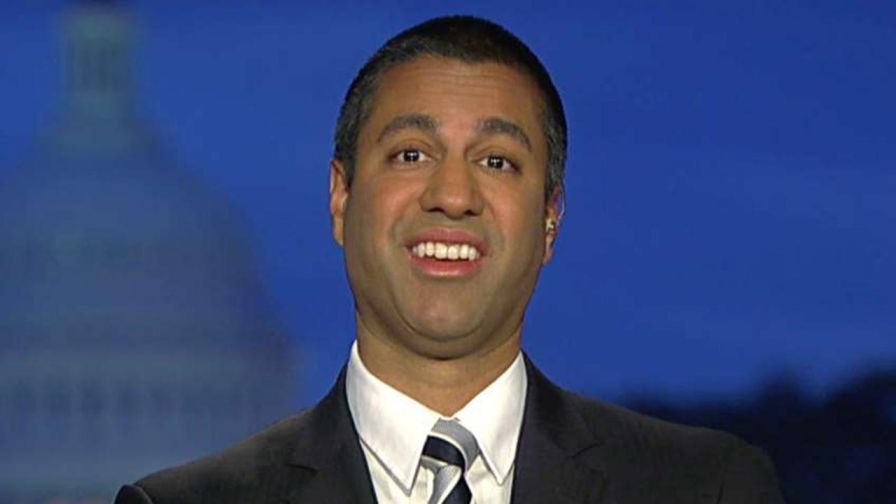
FCC Chairman Ajit Pai, a Republican, announced plans in November to eliminate the rules, calling for a “light-touch regulatory approach” to the Internet. A longtime opponent of the regulations, Pai had signaled plans to undo the rules since taking over as chairman of the FCC this year.
“It is time for the Internet, once again, to be driven by engineers and entrepreneurs and consumers rather than lawyers, accountants and bureaucrats,” Pai said in remarks before the vote.
In a moment indicative of the heated atmosphere surrounding the proposal, the FCC hearing room in Washington was briefly cleared Thursday just before commisioners were set to vote on repealing the rules.
Pai was delivering a prepared statement on the vote when he was handed a note and stopped mid-sentence.
“On advice of security, we need to take a brief recess,” Pai said.
After the room was cleared, law enforcement officers with dogs were seen surverying the room. A few minutes later, commissioners and others were let back in, and the meeting resumed.
The net neutrality regulations imposed utility-style regulation on Internet service providers such as Comcast, AT&T and Verizon to prevent them from favoring their own digital services over their rivals – for instance, by blocking or slowing certain content.
But Pai argues the net neutrality rules adopted during the Obama administration discourage the Internet service providers from making investments in their network to provide better and faster online access.
HOW THE FCC’S MOVE ON NET NEUTRALITY COULD IMPACT CONSUMERS
Democratic Commissioner Mignon Clyburn, who opposed the proposal, said Thursday she’s “among the millions who is outraged” because the FCC is pulling “its own teeth, abdicating responsibility to protect the nation’s broadband consumers.”
“There has been a darker side to all of this over the past few weeks,” she said. “Threats and intimidation. Personal attacks. Nazis cheering. Russian influence. Fake comments. Those are unacceptable. Some are illegal. They all are to be rejected.”
House Speaker Paul Ryan celebrated the move after the vote.
“Despite its unassuming name, the Obama administration’s net neutrality regulation threatens the free and open internet that has done so much to advance modern society,” Ryan said in a statement. “The Trump administration’s action to roll back this egregious government overreach into the most innovative space will benefit all users of the internet.”
Still, there have been hundreds of public protests against Pai’s plan and more than 1 million calls to Congress through a pro-net neutrality coalition’s site.
Smaller tech websites such as Reddit, Kickstarter and Mozilla put dramatic overlays on their sites Tuesday in support of net neutrality. Twitter on Wednesday was promoting #NetNeutrality as a trending topic. Other big tech companies were more muted in their support.
Public-interest groups Free Press and Public Knowledge are already promising to go after Pai’s rules in the courts. There may also be attempts to legislate net neutrality rules, which the telecom industry supports. Sen. John Thune, a South Dakota Republican, on Tuesday called for “bipartisan legislation” on net neutrality that would “enshrine protections for consumers with the backing of law.”
But that will be tough going. Democrats criticized previous Republican attempts at legislation during the Obama administration for gutting the FCC’s enforcement abilities. Republicans would likely be interested in proposing even weaker legislation now, and Democrats are unlikely to support it if so.
Fox News’ Jodie Curtis and The Associated Press contributed to this report