

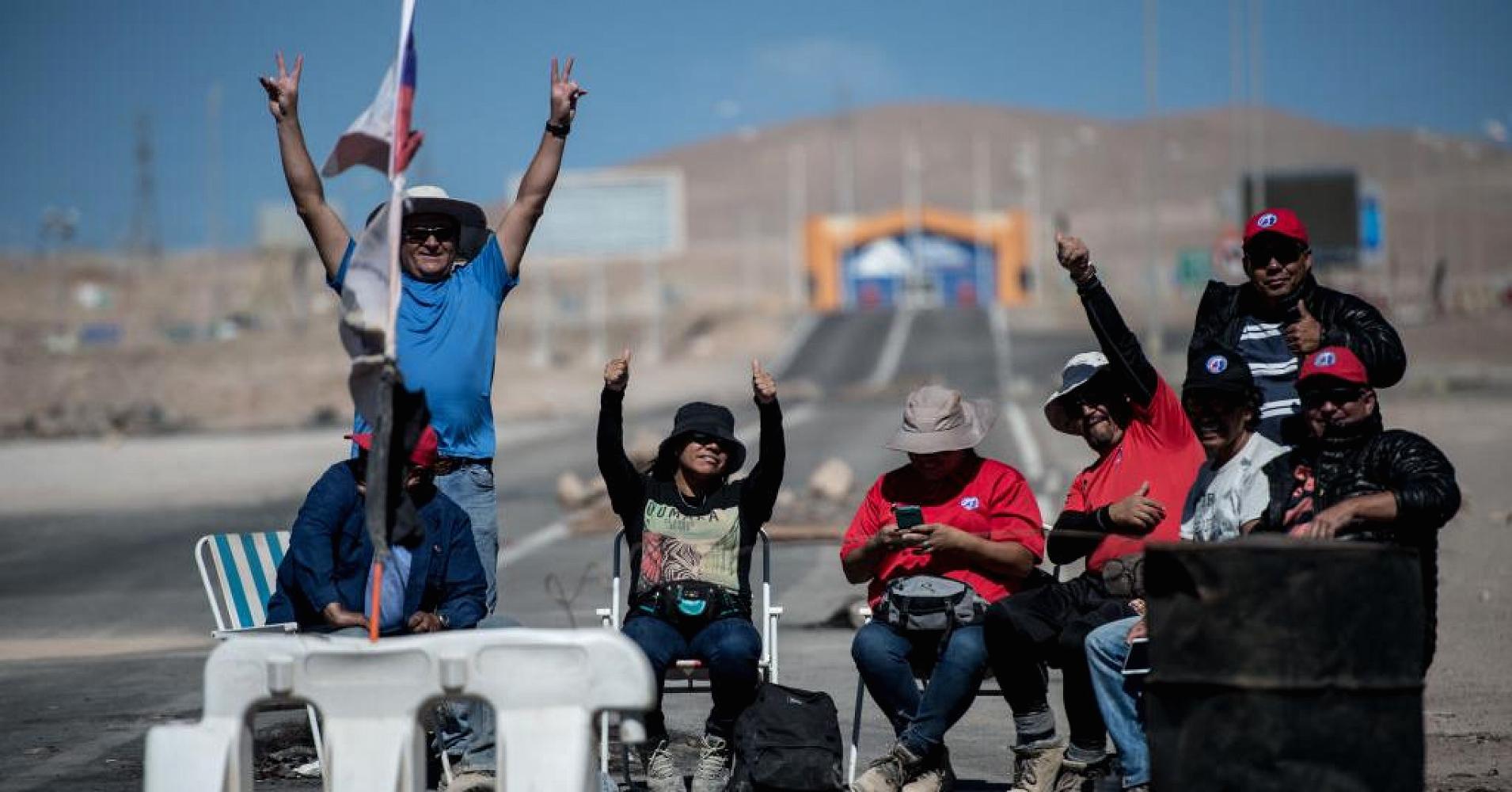
Returning to their former contract means workers will enjoy existing benefits and working conditions and hold the next talks under an upcoming labor law that strengthens their hand. But they will also lose out on a bonus typically paid when the contract is signed and on any pay raise.
“The money is important,” a truck worker who requested anonymity said outside the union meeting, “but the benefits that we have fought for over years are good for us.”
The use of Article 369 would be “complex” for Escondida, mine President Marcelo Castillo said earlier on Thursday.
“Having collective talks in 18 months … would require us to revise our plan, our operating model, our structure in order to allow us to make our mining business viable,” he said.
BHP declined to comment further on the union’s decision.
Throughout the dispute, the union has said it would not budge on three key points: giving new workers the same benefits as existing workers, maintaining current benefits and keeping shift patterns from becoming more taxing.
Both sides see the uniform benefits issue as particularly important. The new labor law that takes effect in April requires a company to offer the minimum benefits in a previous contract as the negotiating floor.
Industry veteran and analyst Juan Carlos Guajardo said he thought Thursday’s outcome of the dispute was “very bad.”
“It just prolonged it for a year and half without resolving any major points,” he said. ” … This could affect other negotiations.”
Escondida is majority-controlled by BHP with minority participation by Rio Tinto and Japanese companies including Mitsubishi. It produced slightly more than 1 million tonnes of copper in 2016.






