

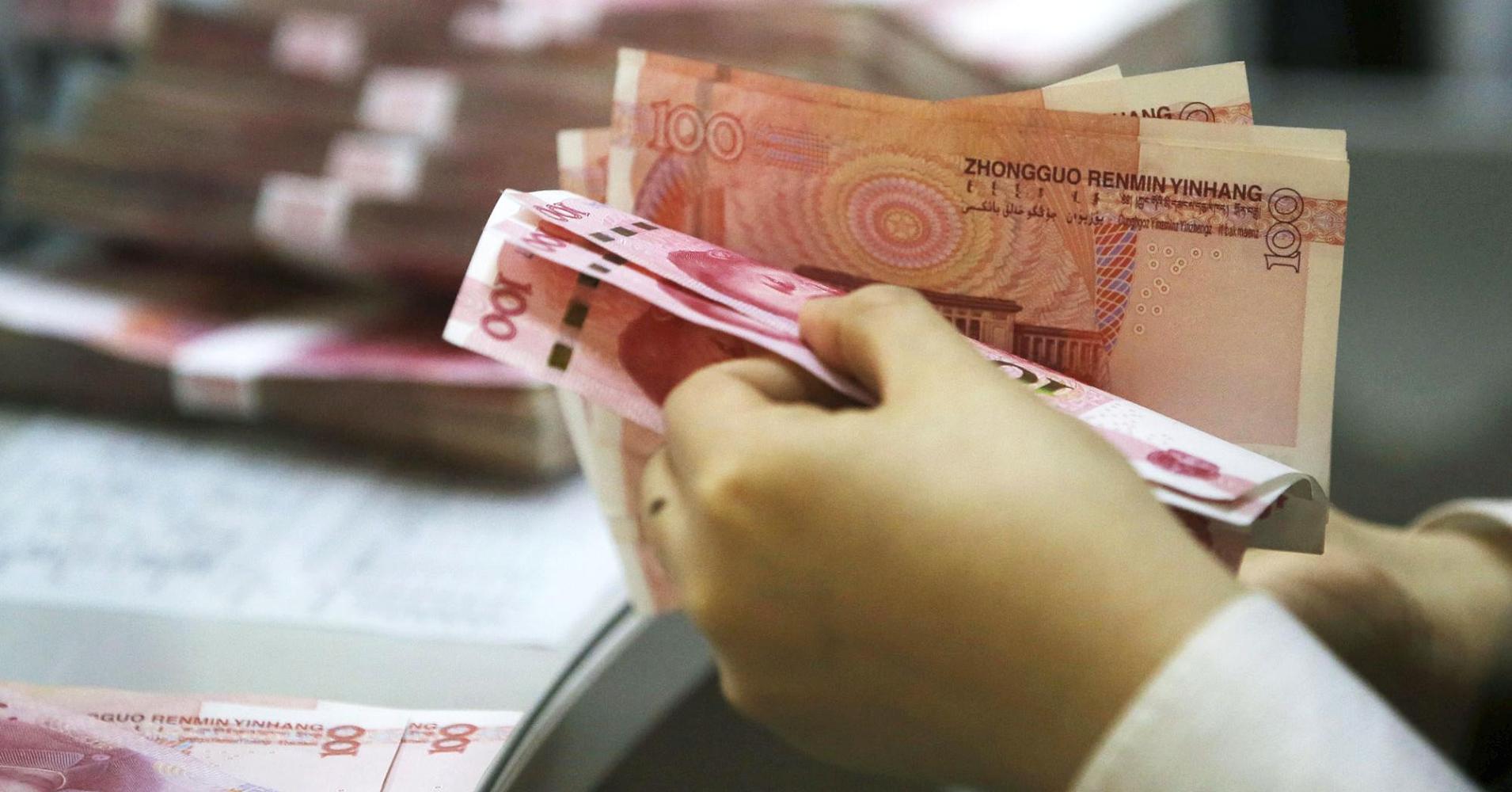
“The combination of improving economic data in China and the ongoing weakness in investment sentiment towards the dollar, is encouraging for the yuan,” said Jameel Ahmad, chief market analyst at FXTM, a forex broker.
At the beginning of the year, many analysts were expecting the yuan to continue its slide against the dollar. But it has instead improved so much this year that it’s already beat many year-end forecasts, prompting analysts to play catch-up with their estimates.
Capital Economics, for instance, issued on Aug. 31 its latest adjusted forecast, with expectations that 6.60 yuan would trade for a U.S. dollar by the end of the year, 6.40 in 2018, and 6.20 in 2019.
But at 9:50 am on Wednesday, the spot rate for the yuan was trading at 6.5311 — already beating the firm’s forecast only a week out of its latest revision. While his firm was early in its calls for the yuan to appreciate, the speed by which it’s occurred has taken many by surprise, said Capital Economics China economist Julian Evans-Pritchard.
Macquarie also sees the yuan appreciating further, forecasting it to hit 6.40 yuan against the dollar over the next 12 months.
Still, a number of risks remain — most notably a longstanding concern that China’s economic growth may falter, and thus, diminish the case for sustained strength in the yuan. There’s also a risk that “strains building in China’s financial system after years of rapid credit growth will precipitate a crisis that in turn will trigger sharp currency depreciation,” wrote analysts at Capital Economics in a recent note.
Another unknown is what reforms, if any, China may choose to pursue after the fall party congress, said Mitul Kotecha, head of foreign exchange strategy for Asia Pacific at Barclays.
Also, it’s important to remember that major moves in any direction for the yuan may not be a good thing from Beijing’s perspective — given its emphasis on keeping calm in the markets this year.
“Stability still seems to be the prime interest here,” said Kotecha. “Dampening volatility, keeping relative stability is probably going to continue to be the aim.”






