
Thomas Peter / Pool / Getty Images
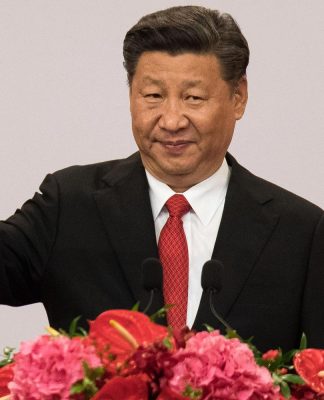
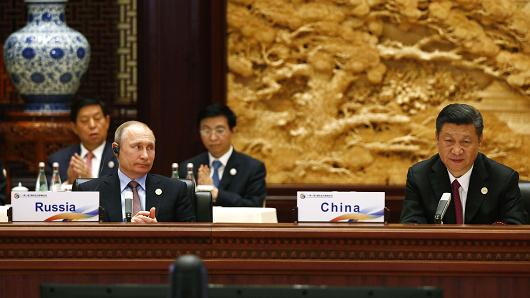
Russian President Vladimir Putin and Chinese President Xi Jinping at the Belt and Road Forum on May 15, 2017 in Beijing.
Beijing has repeatedly opposed New Delhi’s bid to enter the 48-nation Nuclear Suppliers Group. Additionally, the mainland warned last month of serious damage to relations following an April visit by the Dalai Lama to Arunachal Pradesh — an Indian state that’s also partly claimed by Beijing.
New Delhi and Beijing have a long history of territorial disputes; Aksai Chin is another source of contention in addition to Arunachal Pradesh. Located alongside the China-India border, that region is administered by China, but New Delhi says at least 38,000 square kilometers belong to India.
“India is concerned that OBOR disguises China’s territorial ambitions, including strengthening its claims on parts of northeastern India that it claims as its own territory,” explained Eswar Prasad, professor at Cornell University. More broadly, New Delhi is concerned about being encircled if Beijing does build strong relations with neighboring countries such as Pakistan and Myanmar, Prasad continued.
Chinese activities in Gilgit-Baltistan, an area administered by Pakistan but claimed by India, is another source of animosity. Over the weekend, Beijing and Islamabad signed a memorandum of understanding to construct and fund five dams along the Indus River, two of which are located in Gilgit-Baltistan.
“The optics of China funding projects in territory that Delhi deems to be disputed is likely to be seen as highly provocative in India,” said Pratyush Rao, senior South Asia analyst at Control Risks. “The Modi government is likely to react by fast-tracking hydro-power projects in Indian-administered-Kashmir, that could in turn impact water flows downstream into Pakistan and trigger new water disputes.”