

Everyday she checks the news fearing she’ll see more headlines about worsening ties between the country of her birth, South Korea, and her adopted home, China.
In a sprawling barbecue restaurant atop a mall in Wangjing, an area of Beijing popular with the city’s large Korean population, Jeong said that she and many other Korean expats felt increasingly uncomfortable, as even Chinese friends seemed to look at them differently over THAAD.
But she was optimistic the new South Korean president — Moon Jae-in, elected this month — would be able to fix things: “We hope he can do it,” she said.

Patching things up
Moon will be attempting to start the healing process Thursday, when South Korean special presidential envoy Lee Hae-chan meets with Chinese Foreign Minister Wang Yi, and two more senior officials Friday.
Kim Sung-hee, a restaurant owner in Wudaokao — another area of Beijing popular with Korean residents — was also optimistic Moon could patch things up. She told CNN her business had seen a 50% drop in customers since the THAAD issue first began.
But analysts warned that Moon will have a difficult path to weave, with THAAD already near fully operational. “Both countries want to improve relations,” said Tong Zhao, an analyst at the Carnegie Tsinghua Center for Global Policy. “But THAAD is still the most critical barrier for the relationship to go forward.”

Walking a tightrope
Throughout the election campaign, Moon called for deployment of THAAD to be halted and the decision about its future to be taken by the new government and the country’s parliament.
Zhao said this was likely intended to force Moon’s hand. “The system has already achieved initial operation capability,” he said. “Short of a major improvement in the North-South (Korea) relationship or the US-North Korea relationship, I don’t see how Seoul can argue for the US to withdraw the system or even suspend its functioning.”
This may be unacceptable to China, which argues THAAD is part of a US effort to contain its growing military power and spy on activity within China using the missile system’s powerful radar.
Adam Cathcart, an expert on China and Korea at the University of Leeds, said Beijing “has really backed itself into a corner on the THAAD issue, having made it an explicit red line issue for the Chinese public.”
“China can be more flexible,” Zhao said. “Instead of insisting on the withdrawal of this system, China can accept some technical modifications to the system and make it less threatening to the country’s nuclear deterrent.”
But he warned there had been no public signaling Beijing was ready to take such a step just yet.

Neighborly quarrels
One development that might make it easier for Beijing and Seoul to improve relations are worsening ties between China and North Korea.
Relations between Beijing and Pyongyang have worsened as the US has increased pressure on China to help rein in North Korea’s nuclear program.
This month, North Korean state media warned China was crossing a “red line” in relations between the two countries, as Beijing danced “to the tune of the US.”
Some Koreans in Beijing told CNN they hoped China would move away from the North and towards the South. Park Chung-Hwa, a Chinese-Korean tour operator in Wangjing, said he felt a certain level of kinship with North Koreans, “as we’re of the same ethnicity, and North Korea is also a socialist country,” but he added he found understanding the decisions of Pyongyang difficult, and strained ties between Beijing and Seoul were hurting his business.

Inside the North Korean embassy in Beijing, photos adorn the walls of Chinese officials meeting with the North Korean founder Kim Il Sung and his son and successor Kim Jong Il.
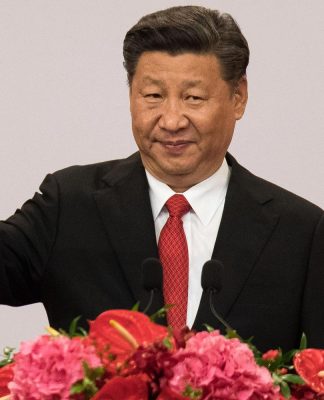
But the current North Korean leader, Kim Jong Un, has never met Chinese President Xi Jinping, nor has he ever visited Beijing, and relations between the two allies — said to have been “forged in blood” after the Korean War — are at their worst point in years.
Cathcart said “things are certainly fraught in a way that is worrisome, if not indicative of a wholesale shift in Beijing,” but he added that the opaque nature of politics in the two neighboring authoritarian regimes meant reading the tea leaves was always difficult.
“Like an iceberg, the vast majority of Chinese-North Korean exchange, dialogue, and resentments go undetected, and they have a way of muddling forward,” he said.