

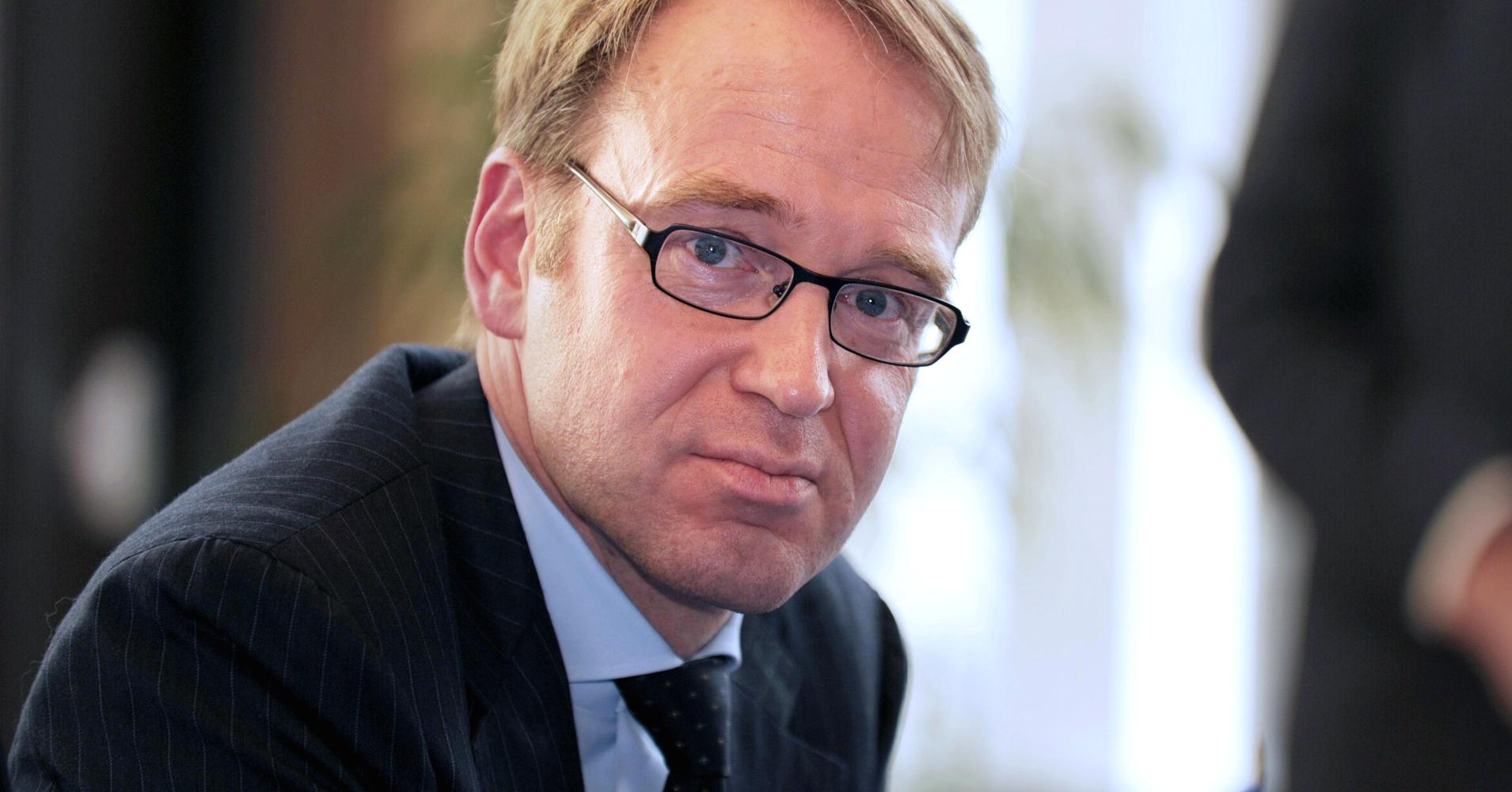
Despite the rise in populist sentiment seen across the European continent, the German central bank president says he has no doubts about the current state of the euro zone.
“Not at all. I didn’t talk about doubts about the existence of the euro zone or its composition,” Jens Weidmann, the president of the Bundesbank told CNBC on Thursday.
“There was not at all the point in my talk. Some of your colleagues ask about the target risks and I explained to them a hypothetical case in which these would become a risk for the Bundesbank.”
“But I do believe that this is a purely hypothetical scenario and we are not in a way accommodating these risks in our balance sheet as you can see,” he added.
In June 2016, the U.K. voted to leave the European Union, and the U.S. administration has also given its own views on the current state of the euro zone and the political economic bloc. 2017 is expected to see a raft of elections, including those in Germany and France, where talk of leaving the European Union and criticism of the euro zone has been raised by certain parties.
Weidmann’s comments come as the Bundesbank released its annual report on Thursday. In the report, Germany’s central bank posted a distributable profit of 399 million euros for the 2016 financial year, compared to 2015’s figure of 3.2 billion.
According to Reuters, this net profit was the lowest seen since 2004, with the Bundesbank attributing this to writedowns and higher provisions.
Follow CNBC International on Twitter and Facebook.






