

A number of Roman ruins dating from the first to third century AD washed ashore, the latest remnants to emerge of the ancient Anatolian city of Amastris.
“We know from old travelers’ reports there were some very spectacular temples in Amastris,” Aydin says. It’s possible, he adds, that parts of the find came from these Roman temples.
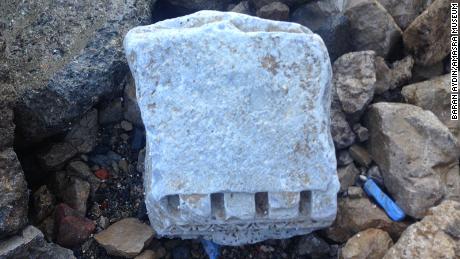
How the ruins ended up in the sea is more of a mystery. Speculation is rife that objects could have been discarded at sea many years ago by construction workers.
“I guess those fragments were dumped in history,” says Aydin, adding such an occurrence is not unusual for Amasra. “In those times people didn’t know the meaning of these ruins.”
There’s a certain poetry to their fate: according to Ancient Greek writer Memnon of Heraclea, Amastrine was drowned at sea at the hands of her two sons.

Archaeologists have found the Black Sea, east of the Mediterranean, a source of perennial curiosity. Its waters below 500 feet contain no oxygen, aiding preservation, and some estimate hundreds, maybe thousands of shipwrecks lie on the seabed in remarkable condition.
“Every year it happens,” says the museum director, talking down his good fortune. “We are living on an ancient city and there are many, many ruins underneath.”

The next step is to further assess the find. Approximately 10 artifacts were retrieved, says Aydin, and experts are poring over them before enrolling museum-worthy items into their inventory.
“I’m very careful about such ruins,” the director adds, “they are valuable for us because of their cultural meaning.”
Careful as the museum may be, the ruins have already survived what Aydin says locals are calling the worst storm in 40 years. For Amasra at least, there was a silver lining.