

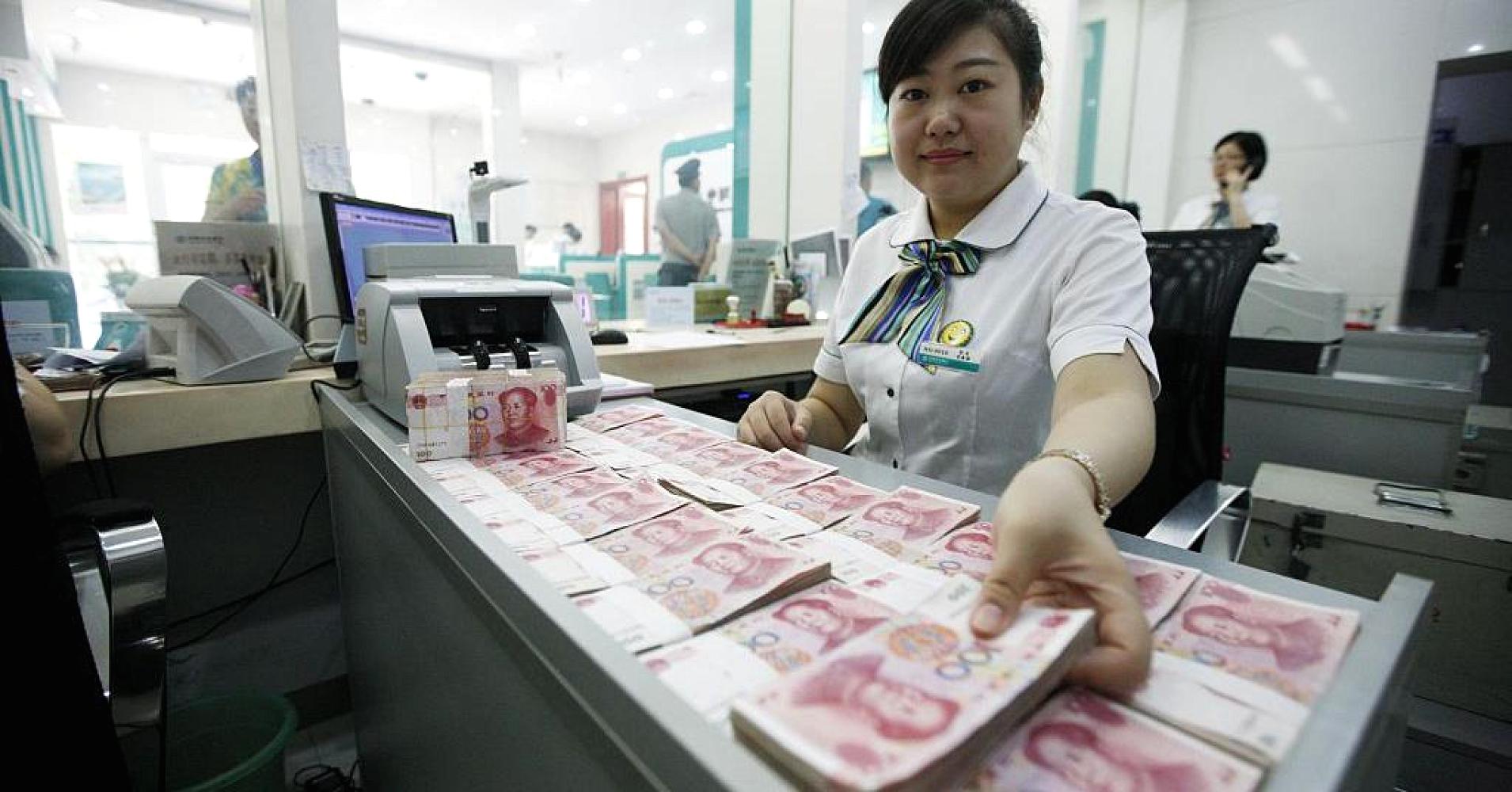
China is on a drive to promote the use of its currency globally but the yuan is still far from upsetting the greenback, according to an important global metric.
Data released this week from Swift, the global interbank system that transfers trillions of dollars worth of currency daily, showed that just 1.61 percent of domestic and cross-border payments processed in December were denominated in yuan (also known as renminbi, or RMB.)
“The RMB has had a difficult year in 2017 and struggled to realize its potential for growth,” Michael Moon, Swift’s head of payments markets for Asia Pacific, said in a news release.
Swift noted in its report that, despite the growing importance of China in the global economy and various strategic measures to support its currency, yuan usage remains low and “the pace of adoption remains lower than expected,” Alain Raes, Swift’s chief executive for Asia Pacific and Europe, the Middle East and Africa, wrote in a report about the Chinese currency.
It’s pretty much still a dollarized world, Swift noted in its report, with the U.S. currency accounting for just under 40 percent of cross-border payments in December 2017. While that was lower than the same month in 2015 and 2016, it was not the yuan but the euro that gained over the greenback.
The third and fourth most dominant currencies were the British pound and the Japanese yen, respectively.
In fact, the Chinese currency’s share as a total of global payments fell against the year-ago period. The yuan accounted for 1.68 percent of international payments in December 2016. The currency’s share was 2.31 percent in December 2015.
A major reason why the renminbi has not gained traction among international users is that the government has instituted strong controls over its financial system, particularly regulatory measures to stem the money moving overseas for property and other purchases.
Uncertainty about capital controls and regulation will likely persist this year, so the usage of the yuan isn’t poised to increase, Moon suggested.






