

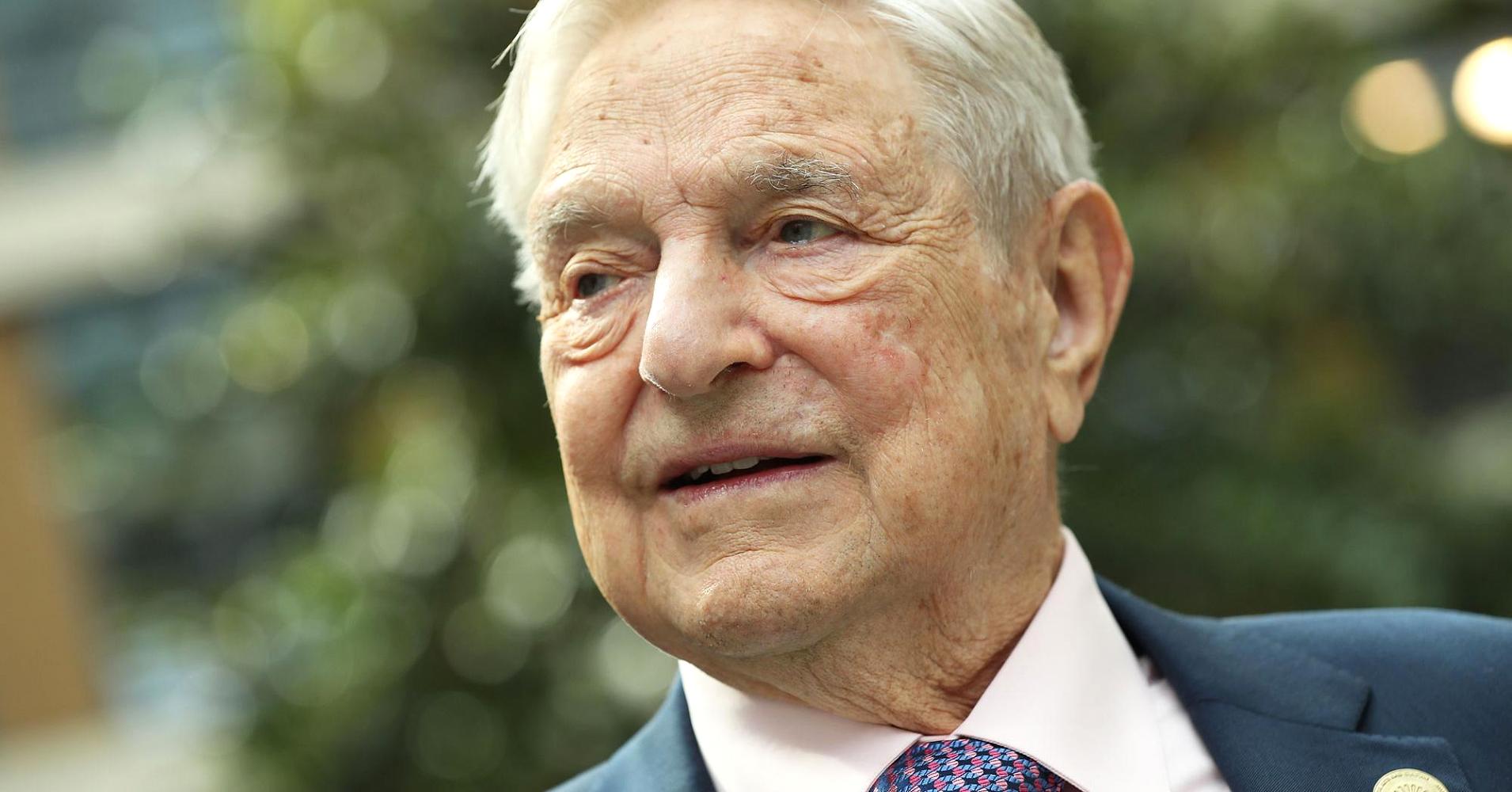
Fame brings nothing but trouble, George Soros’s father warned him. By concealing his family’s Jewish identity, Tivadar Soros helped save them from deportation from Hungary to Nazi death camps. The younger Mr Soros — now aged 87 — has taken a different approach, embracing public prominence as a billionaire investor and later as a liberal philanthropist. But it has come at a cost.
Over the past year, Mr Soros and the Open Society Foundations he founded have become the target for an escalating — and at times orchestrated — campaign of vilification by opponents of the liberal agenda that he promotes.
Among countless conspiracy theories circulated by rightwing critics, Mr Soros has been accused of staging chemical weapons attacks on Syrian children, toppling the government of Macedonia through psychological warfare and engineering the migration of millions of Muslim migrants to Europe.
But some of the attacks have been more serious. In Hungary, he was the subject of a state-funded, multimillion euro campaign of negative advertising. One MP from the ruling Fidesz party in December posted a picture on Facebook of a burnt carcass of a pig with the words “This was Soros” carved into its skin. In December he conceded that Central European University, the elite research university he established in 1991, may be forced to leave Budapest in the wake of new laws seen by critics as an attack on academic freedom.
Meanwhile, in Romania, the leader of its ruling party saw Mr Soros’s hand in anti-corruption demonstrations, saying he had “financed evil”.
More from the Financial Times:
The attacks on Mr Soros are one of the most striking manifestations of shifting political sands, especially in central and eastern Europe. After the fall of the Berlin Wall, Mr Soros’s foundations epitomised the optimism about the spread of western-style democracy in the former Soviet bloc. Yet the same foundations have now becoming a lightning rod for the nationalist and at times authoritarian voices that are exerting a much greater influence across the region amid the wilting appeal of liberalism.
“It’s déjà vu all over again with one big change — the dominant ideology in the world now is nationalism,” Mr Soros said in a Financial Times interview in his home in upstate New York. “It’s the EU that’s the institution that’s on the verge of a breakdown. And Russia is now the resurgent power, based on nationalism.”
A Jewish billionaire is a convenient enemy for leaders such as Hungary’s Viktor Orban, according to historian Anne Applebaum: “They don’t want to be openly anti-American or anti-EU so they’ve identified [Soros] as a bogeyman figure that represents the parts of the west they dislike,” she says, adding that critics play on anti-Semitic tropes. “It’s a neat tactic because it avoids criticism of the EU and the US. And it’s a simpler, older kind of message.”
Within OSF, there has been an anguished debate about whether responding to the campaign would only spur further efforts to demonise Mr Soros. Some wondered whether publicising the endowment would invite even more attacks on the groups he supports.
But Mr Soros insists he will fight back. He had originally planned to wind down OSF before his death. Instead, he is doubling down on his project to foster the growth of democracies where governments encourage pluralism and accountability.
In November, he confirmed he had handed over an additional $18bn — the bulk of his personal wealth — to OSF, which he leads as chairman of the global board, turning it into one of the largest charitable foundations ever. His total transfers now amount to $32bn.
“I think you can say I’m quite lucky with my enemies,” he says brightly of the attacks. “It makes me feel more than ready to fight back and stand up for what is right.”
OSF is arguably a new kind of international actor, with a scale of resources more commonly associated with international relief organisations such as the Red Cross, but deployed in the service of an unashamedly liberal worldview.
It has spent nearly $14bn over the past 35 years — much of it on education and health programmes. In the 1990s, OSF helped reconnect water supplies and electricity for the besieged Bosnian capital Sarajevo and gave grants to struggling Russian scientists. Today it advocates for healthcare and economic opportunities for groups on the margins, including Europe’s 10m-strong Roma community, people with disabilities and drug users.
Active in 140 countries, it also supports groups that challenge governments, the kind of pro-democracy efforts from which other donors shy away. Mr Soros, through his personal donations, is also one of the US Democratic party’s biggest backers.
That worldview has always made him controversial on the right, but in recent years his activities have prompted accusations — which he denies — that he has helped topple governments in Georgia, Ukraine and most recently Macedonia.
The foundation has been expelled from Russia and Uzbekistan and Mr Soros says those who have received grants are also now facing threats in Hungary, an EU member, where Mr Orban has instructed intelligence agencies to investigate a “Soros empire” that he claims threatens national interests.
Nearly 20 semi-autonomous boards decide how OSF’s money is spent and recipients report donations publicly. But critics claim Mr Soros directs its every move, making it into an unaccountable liberal superpower. Breitbart News, alt-right website, calls it the “Death Star”.
Zoltan Kovács, spokesman for the Hungarian government, says the debate over OSF springs from “two clashing visions of democracy”. While Mr Soros believes civil society should act as a check on executive power, Mr Kovács argues that only elected representatives can legitimately “do politics”.
“Mr Soros has never been elected by anyone, the organisations — NGOs, human rights groups and so on — have never been elected by anyone,” he told the FT. “[They are] clearly engaging in determining how political decisions should be made. And this is wrong.”
An official at OSF counters that populist politicians think they “own” politics: “If you support local people expressing contrary views, they see it as trespassing on their territory.”
Mr Soros believes Russia is the source of much of the attacks against him. And it’s personal. “Putin doesn’t like me,” he says, describing a grudge he believes was stoked by his criticism of the Russian leader and his early support for Georgia’s Mikheil Saakashvili, the former president who rose to power after the 2003 Rose revolution.
Russia urged neighbouring authoritarian leaders to forestall a domino effect of revolutions by clamping down on civil society and pressuring OSF, according to Alisher Ilkhamov, who ran the OSF office in Uzbekistan before it was forced to close down in 2004. In 2015 Russian authorities followed suit and OSF was forced to leave Moscow, after authorities restricted its funding activities, citing security risks.






