
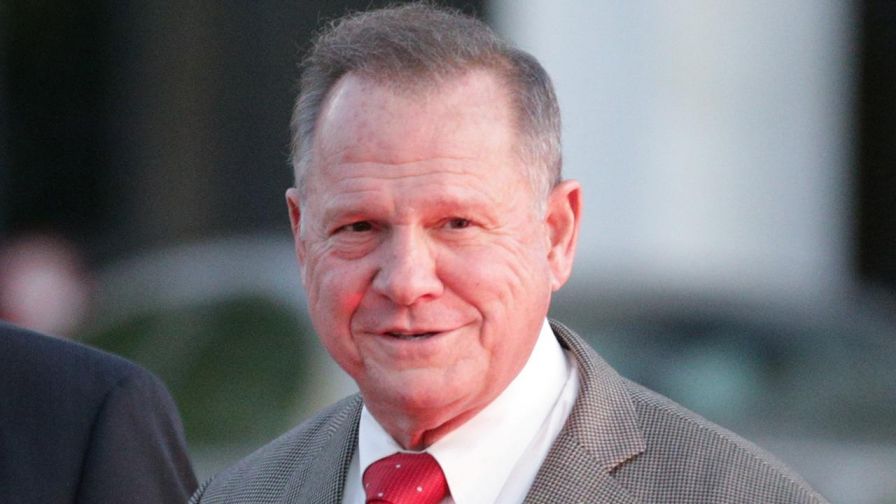
Alabama GOP Senate nominee Roy Moore found himself at the center of controversy Thursday afternoon after the Washington Post released a bombshell report detailing the accounts of four women who said he behaved sexually inappropriately toward them when they were teenagers.
Leigh Corfman, now 53, alleged that Moore first approached her in a courtroom in 1979. On other occasions, Moore took her to his house in the woods and kissed her, she said. On one particular visit, Moore took off her shirt and pants; touched her over her bra and underwear; and guided her hand to his underwear, she alleged. She said the two did not have sexual intercourse, and Moore took her home when she asked.
Moore’s campaign immediately responded to the allegations, calling them “baseless” and “the very definition of fake news.”
Since the allegations were published, several potential Republican colleagues in the Senate – including some who endorsed Moore – called on the former judge to step aside from December’s special election if the report is true.
Here’s a look at Moore and how he came to be the Republican’s pick for Senate.
The special election
Moore won the Alabama GOP primary runoff last month for a seat in the U.S. Senate, defeating incumbent Sen. Luther Strange.
Strange was appointed to finish out Jeff Sessions’ term when he was tapped as the U.S. attorney general. He was strongly backed by President Trump and Vice President Mike Pence, who both visited Alabama to campaign for the senator.
But former White House chief strategist Steve Bannon pitted himself against Trump in the race as he backed Moore and campaigned for him on the eve of the election.
ROY MOORE WINS ALABAMA SENATE PRIMARY: WHAT TO KNOW
Following the election, Trump tweeted that he spoke to Moore for the first time and credited him with running a “fantastic race.”
Previous political work
A former Alabama chief justice, Moore has been dubbed the “Ayatollah of Alabama” by critics who believe he too closely mirrored his political and judicial responsibilities.
He was twice removed from Alabama’s Supreme Court.
The first time, he was removed when he refused to move a boulder-sized Ten Commandments monument from the statehouse; he was permanently suspended in 2016 after he instructed probate judges to deny marriage licenses to gay people.
Moore used those Supreme Court controversies to boost his support among conservative evangelicals; he told Republican voters that those cases were akin to battle scars for standing up for what he believes. On his campaign website, Moore said he was suspended for “upholding the sanctity of marriage as between one man and one woman.”
Other controversies
Moore was also called racially insensitive when he used dated terms to seemingly describe Asian people and Native Americans during a recent campaign speech.
“Now we have blacks and whites fighting, reds and yellows fighting, Democrats and Republicans fighting, men and women fighting. What’s going to unite us? What’s going to bring us back together? A president? A Congress? No, it’s going to be God,” he said.
He also suggested the 9/11 terrorist attacks were a punishment from God and suggested that God was upset with the U.S. because “we legitimize sodomy” and “legitimize abortion,” CNN reported.
Fox News’ Kaitlyn Schallhorn and The Associated Press contributed to this report.