
Simon Maina | AFP | Getty Images
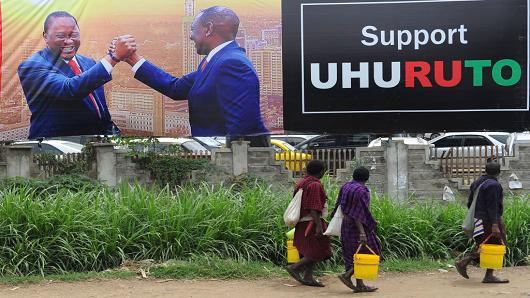
Pedestrians walk past a campaign poster of Kenya’s President Uhuru Kenyatta and Deputy-President William Ruto in the capital Nairobi on October 23, 2017.
Two elections in less than three months is a distraction for any country’s economy — but as Kenya gears up for a re-run Thursday of August’s initial vote, onlookers are positive about the country’s economic fundamentals.
Kenya’s political story in 2017 is a troubled one. Current President Uhuru Kenyatta is re-contesting early August’s election this week, following the original vote being invalidated by the country’s Supreme Court in September. The upcoming election is likely to be a shoo-in for the incumbent given that his main — and long-term — political rival, Raila Odinga, is boycotting the race.
“Clearly the old guard is continuing to play by the old rules,” Jared Jeffery, political analyst at South Africa-based research firm NKC African Economics, said in a note last week.
Political developments taking place on the sidelines are also casting shadows over the main event. One senior member of the Kenyan electoral commission fled to the U.S. last week citing fears for her personal safety. Meanwhile, ballot papers from Dubai have been arriving in the country ahead of the vote — though there has been debate on the neutrality of the firm printing these.
“The credibility of the poll will be low and the legitimacy of President Uhuru Kenyatta will take a knock,” Jeffery added.
Economic issues are on voters’ minds. Paul Gabriel, east Africa analyst at Control Risks, told CNBC that “inflation is a big campaign factor.” This is currently at 8.36 percent, up over 2 percentage points since January of this year. Gabriel added that food prices have risen due to a drought in the country, while prices of imports are higher due to a stronger U.S. dollar.