

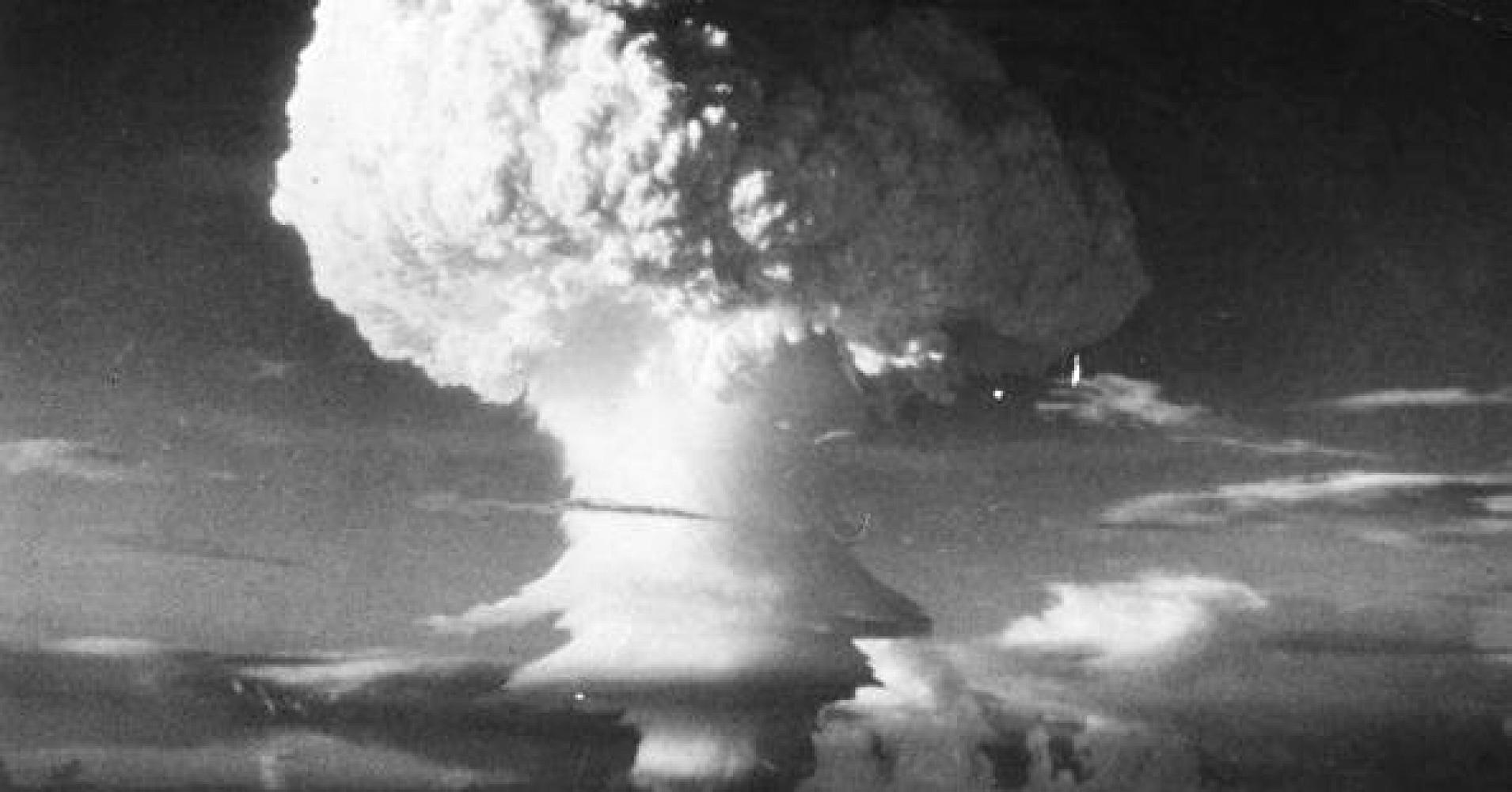
It is still unclear whether the weapon tested by North Korea was a hydrogen bomb but experts have begun analysis, using sniffer stations around the world that can detect radioactive pollution released by nuclear explosions.
In particular, monitors will be looking for isotopes of a gas called xenon, which is typically present in H-bomb reactions.
Analysis from Norsar, a Norweigan geoscience research foundation, suggests that the explosion created by Sunday’s test is far greater than that seen in North Korea’s last alleged H-Bomb test, which took place in September 2016.
It estimates the explosive yield of the recently tested bomb to be at 120 kilotrons TNT. This compares to about 20 kilotrons TNT this time last year.
“North Korea claims that this was a test of a hydrogen bomb; the same claim was made for previous tests,” Norsar said. “It is not possible from the seismic data alone to determine if this was a test of a hydrogen bomb, but we can say in general that the credibility of the claim increases with increasing explosive yield.”
Analysts suggest, however, that the tests could be an attempt by the North Korean President to uphold his regime and prevent interference by external leaders, rather than spark a mass conflict.
“The risk of a full blown war in the Korean peninsula has risen. However, we still think that the North will not intentionally start a war,” Anwita Basu, North Korea analyst at the Economist Intelligence Unit, said in a press note Monday.
“This will be a zero sum game for them. They are in fact simply taking advantage of the fact that Donald Trump is erratic and there is little prospect of a unified international front that can contain the North’s military aspirations for now.”






