
Biju Boro | AFP | Getty Images
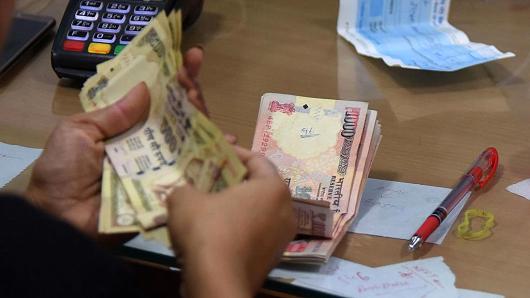
An Indian bank employee counts old 500 and 1000 rupee notes in Guwahati, the capital city of the north-eastern state of Assam on December 30, 2016.
As a result of demonetization, and in tandem with Modi’s ‘Digital India’ strategy, which aims to expand India’s online infrastructure, the country now sits on a treasure trove of data. The government has been gradually making enrolment to its national electronic database ‘Aadhaar’ mandatory for tax returns, opening of bank accounts and any purchases above 50,000 rupees. It is estimated that over 99 percent of Indians aged 18 and above are now enrolled in the scheme.
This means that the government can expect to see the benefits of taxation on previously hidden black money over the coming months and years.
India’s finance ministry says it is probing 1.8 million bank accounts where cash inflows during the demonetization period “did not appear in line with its tax profile,” meaning it can expect some belated tax payments.
“There are also long-term benefits from demonetization in terms of increasing income tax payments going forward and encouraging the use of digital payments over cash, a means of encouraging better tax compliance among businesses,” Riser-Kositsky explained.
However, whether it is a model to be replicated by other countries struggling to combat corruption and illicit money is not yet clear.
For Unlu, the initial economic fallout may be too much for other economies to stomach. “On balance, governments abroad are unlikely to replicate India’s experiment given the economic fallout,” he said. Traditionally, other governments have only embarked on demonetization schemes in times of extreme need, such as hyperinflation, political upheaval and wars.